Fabrication Theory
Mandrel Bending vs Crush Bending Exhaust: What Really Changes
Mandrel bending vs crush bending exhaust, explained simply: what each does to the pipe, when crush bends are fine, and when mandrel bends earn their cost.
The tube bending & fabrication magazine
Independent buying guides, technical explainers and free calculators for tube bending, exhaust work, roll cages and the home or professional workshop.
Mandrel bending vs crush bending exhaust, explained simply: what each does to the pipe, when crush bends are fine, and when mandrel bends earn their cost.
Looking for the best exhaust pipe bender for home garage builds? Compare crush benders, mandrel benders and pre-bent mandrel bends, with sourced…
Tube bender die compatibility, brand by brand: which dies makers say fit, which don't, pin sizes, and why cross-brand fit stays unknown…
Wall factor and D of bend explained: two simple ratios that predict wrinkles and flattening, how to read a mandrel chart, and…
Free engineering tools
Everything runs in your browser. Nothing you enter is sent to us.
Nine quick questions. You get the type of bender that fits your work, the reasons, a runner-up and what to check before you buy. Answers stay in your browser.
Your best match
As an Amazon Associate I earn from qualifying purchases. Disclosure
Arc length, tangent length, cut length, D-of-bend and wall factor for a single bend between two straight legs. Inches or millimetres.
Geometry is exact for the inputs. Real bends also stretch or "gain" slightly depending on machine and die, so calibrate with a test piece before cutting expensive tube.
There is no reliable universal springback table for tube — it changes with material batch, wall, radius and machine. Bend a scrap piece, measure it, and let the numbers tell you how far to over-bend.
A single bend drawn to scale. Change the diameter, wall, radius and angle to see how the geometry and outer-wall stretch change.
Dark band = tube wall, light band = bore. Dashed line = centreline.
What actually changes between the main kinds of bender. Capacities are typical for the class — always check the specific machine.
| Type | Best for | Typical capacity | Thin-wall bend quality | Repeatability | Power & space | Relative cost |
|---|---|---|---|---|---|---|
| Lever hand bender | Brake, fuel and instrument lines | Small OD, thin wall | Good within its rating | Angle marks on the form | None; portable | Lowest |
| Manual rotary-draw | Cages, chassis, bumpers, frames | Up to about 2"–2.5" OD depending on wall | Good at about 3× OD CLR and up; thin wall at tighter radii needs a mandrel | Good with a degree ring or stops | Solid floor mount; no power | Moderate, plus dies |
| Hydraulic rotary-draw | Heavy wall, frequent bending | Similar OD range; heavier walls | As manual rotary-draw | Good to very good with stops | Hand, air or electric pump | Moderate to high |
| Hydraulic ram ("pipe") | Schedule pipe for gates and rails | About 1/2"–2" NPS schedule 40/80 | Poor — tends to flatten or kink thin wall | Low | Hand pump; portable | Low |
| Mandrel bender | Exhaust, intake, thin-wall tube | Thin wall at about 1–1.5× OD CLR | Best — tube stays round | Very good | Power and dedicated space | High |
| CNC / electric | Batch production | Machine-specific | Depends on tooling (mandrel options) | Highest — programmed | Industrial power, floor space, training | Capital equipment |
Copied from each manufacturer's own pages (checked October 2026). Where a manufacturer's pages disagree we show the conflict. Confirm with the manufacturer before buying.
| Model | Drive | Round tube / pipe | Wall capacity notes | Max bend angle | Source |
|---|---|---|---|---|---|
| JD Squared (JD2) Model 32 | Manual ratchet; optional hydraulic adapter (10-ton cylinder recommended) | 1/2"–2-1/2" OD round | Manual: over 2" × .120" round needs hydraulics. Hydraulic: rated to 2" × .250" DOM. | Not stated on the pages reviewed (180° die sets sold) | Manufacturer Manual / chart |
| Pro-Tools 105HD | Manual ratchet; hydraulic package available | 1/2"–2" OD round; NPS 1/4–1-1/2 pipe | Round tube to .134" wall; 2" × .134" 4130 with the extension handle | 180° | Manufacturer |
| Rogue Fabrication M605 | Vertical rotary draw; manual hydraulic, air-over-hydraulic or electric | 2.00" OD | Manufacturer pages disagree: .188" (catalogue) vs .250" DOM (FAQ) — confirm with Rogue Fab | About 94° per stroke; continues past 180° | Manufacturer Manual / chart |
| Rogue Fabrication M625 | As M605 (same dies), heavier frame | 2.00" OD | 2.00" × .250" DOM | As M605 | Manufacturer Manual / chart |
| Baileigh RDB-050 | Manual, 3-speed ratchet; anti-springback mechanism | 3/4"–2.5" OD mild steel | 2" OD × .120" 4130 | Manufacturer page states both 190° and 200° | Manufacturer |
| Central Machinery 12-ton hydraulic pipe bender (Harbor Freight #32888) | Bottle-jack hydraulic ram (press bender) | 1/2"–2" Schedule 40/80 pipe | Manual says it is not intended for thin-wall pipe such as conduit or exhaust | Up to 90° | Manufacturer Manual / chart |
Pick a tube size, material and job to list the dies and support tooling to confirm with your bender's manufacturer.
Write down each bend in order with its angle, die and notes. Saved in your browser; export or print it for the shop floor.
Rate what matters most in your shop to see which class of equipment to research first.
Keep a simple list of builds, tube used and progress. Stored only in this browser.
No active projects yet. Add your first build to start tracking.
What each class of bending equipment does well, its typical capacity and its limits. Capacities are typical for the class — always check a specific machine's chart.
Manual · small tube
Brake and fuel lines, small frames, HVAC and plumbing tube
Manual · electrical conduit
Electrical conduit runs: stubs, offsets, saddles and back-to-backs
Rotary draw · ratchet or lever
Roll cages, chassis, bumpers, sliders, frames
Rotary draw · hydraulic, air-over-hydraulic or electric pump
Cages and chassis in volume, heavy-wall DOM and 4130, off-road armour
Ram / press · bottle-jack style
Heavy-wall pipe for gates, railings, brackets and non-structural work
Rotary draw with internal mandrel and wiper die
Exhaust systems, headers, turbo and intake piping
Programmable production machine
Batch production of multi-bend parts
Three-roll bending
Hoops, arches, handrail curves, rings
Joint preparation (not a bender)
Fish-mouth (coped) joints for cages and chassis
Before you buy
How to choose a tube bender in 10 steps: match capacity, CLR, dies, drive and floor mounting to your projects, with worksheets…
Woodward Fab WFB2 review from published specs: capacity, dies, listing conflicts on handle and weight, who it suits and the upgrade path.
A tube bender capacity chart built only from maker-published specs: OD, wall and 4130 limits for 9 benders, one source per row,…
The best hydraulic tube bender is a rotary-draw machine, not a bottle-jack ram. Research-based picks, power needs and upgrade kits, with sources.
Recommended equipment
Equipment categories chosen from manufacturers' published capacities and common shop practice — not hands-on product tests. How we evaluate equipment
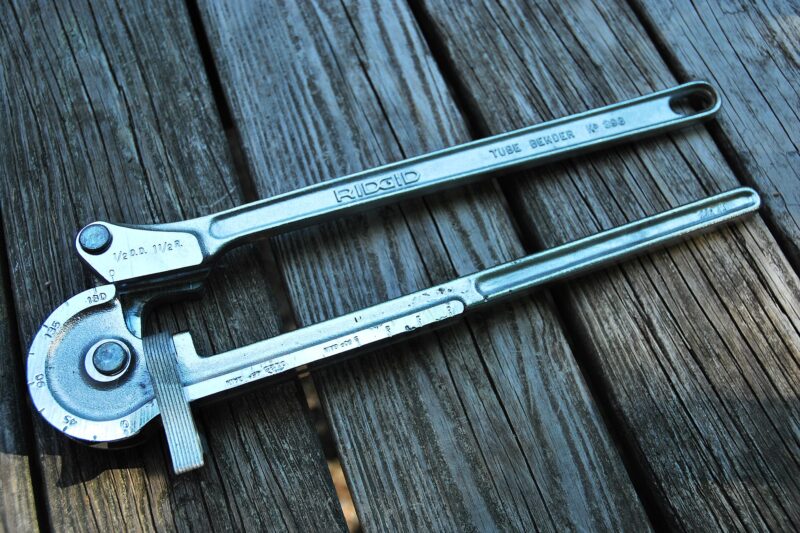
Best for beginners & small tube
Brake lines, fuel lines and small frames need clean bends in small, thin tube — not a big machine.
Look for
Not suitable for structural tube.
Best for a small home workshop
One machine covers bumpers, sliders, frames and cages, and many models can take a hydraulic upgrade later.
Look for
Budget for dies — each size and radius is a separate set.
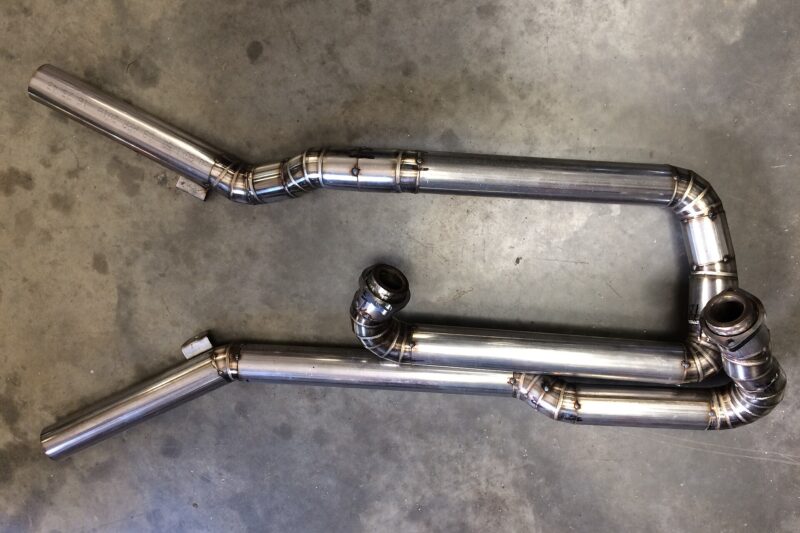
Best for exhaust fabrication
Thin-wall exhaust tube needs mandrel support to stay round at tight radii. Most home builders cut and weld pre-made mandrel bends.
Look for
Ram ("crush") benders reduce the bore through the bend.
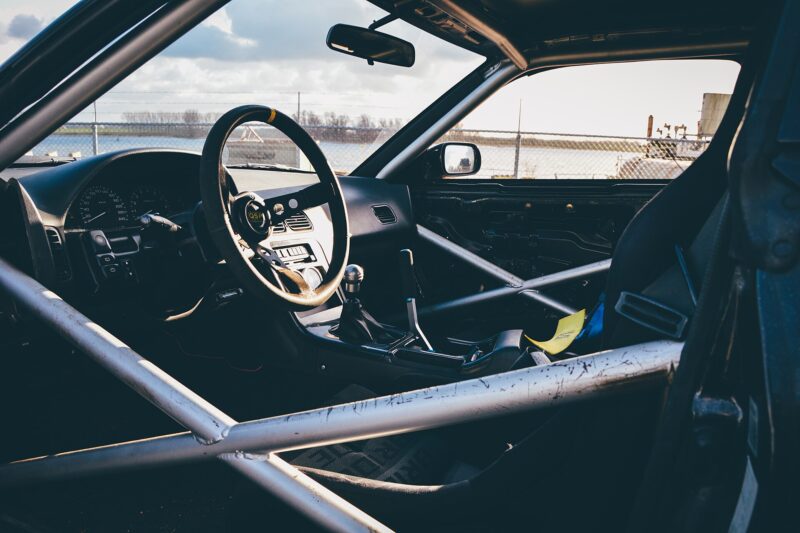
Best for roll cage & chassis
Cage work needs consistent radii and tight joint fit-up. Your sanctioning body's rules set tube size, material and minimum bend radius.
Look for
Safety-critical: confirm requirements in the current rulebook.
Best for professional & production work
When bends are daily work, hydraulic power and repeatable stops save time; CNC only pays off with batch volume.
Look for
CNC machines are capital purchases — get a demonstration on your parts.
Budget option for heavy pipe
For schedule 40/80 pipe in gates, railings and brackets where appearance and exact radius matter less.
Look for
Not for thin-wall tube, exhaust or roll cages.
As an Amazon Associate I earn from qualifying purchases. Disclosure
From the workshop
Springback in tube bending, explained simply: why tube relaxes after a bend, how to find your number with a test bend, and…
An honest guide to the Harbor Freight 12 ton pipe bender: what it bends well, why it kinks tube, and better rotary-draw…
The tube bend length formula made easy: arc length, tangent length and cut length, with worked examples for one bend, hoops and…
Manual vs hydraulic tube bender: how ratchet, air-over and electric-over-hydraulic drives compare, when to upgrade, and how to choose.
Centerline radius tube bending made simple: what CLR is, CLR vs inside radius, 4 ways to measure it, and how to choose…
Our tube bender comparison lines up JD2, Rogue Fab, Baileigh, Pro-Tools, Woodward Fab, Eastwood and Harbor Freight, with a source for every…
Fabrication pathways
Pick the work you do. Each path collects the guides and tools that matter for it.
Project cars, off-road armour, brackets and frames in a home garage.
Cat-backs, downpipes, headers and intercooler piping.
Cages and bars built to a sanctioning body's rules.
Chassis, suspension links, turbo and fluid plumbing for race cars.
Handrail, gates, structural pipe and daily shop production.
Repeat parts in batches, programmed bend sequences.
Process piping, spools and site work under a governing code.
Answer nine questions about your tube, projects and shop. The quiz explains which type of bender fits and why.
Take the quizTechnical knowledge hub
Routside = CLR + OD/2
Radius from the bend centre to the tube's centreline. Dies are sold by tube OD and CLR.
Read more — Centerline radius (CLR)D = CLR ÷ OD
CLR divided by OD. The smaller it is, the harder the bend. Around 3D is a common practical minimum without a mandrel.
WF = OD ÷ wall
OD divided by wall thickness. A higher wall factor means thinner wall relative to diameter — more risk of wrinkling and flattening.
The angle a tube relaxes after the bender releases it. It varies by material, batch and radius, so measure it with a test bend and over-bend to suit.
Try it in the tool — SpringbackL = CLR × θ (radians)
Length of tube along the centreline inside the bend. A 90° bend on a 6" CLR uses 9.42" of tube.
Try it in the tool — Bend arc lengthT = CLR × tan(θ/2)
Distance from where the bend starts to where the two straight legs would meet. Used to turn drawing dimensions into a cut length.
Try it in the tool — Tangent length & cut length(Dmax − Dmin) ÷ Dnominal × 100%
How out-of-round the tube is after bending. Acceptable limits depend on the application and any governing code.
Rotary draw pulls tube around a die for a consistent radius; a mandrel supports thin wall from inside; a ram presses tube between dies and can flatten it.
Read more — Rotary draw, mandrel & ramTube is sized by actual OD and wall; pipe by nominal size and schedule. 1-1/2" NPS pipe is 1.900" OD, so tube and pipe dies are not interchangeable.
Try it in the tool — Tube vs pipe sizesStart here
Selected by our editors as the best foundation for new fabricators.
FAQ
Short answers to the questions readers ask most often.
Start from the tube you need to bend, not the machine. For occasional bends in small tube (roughly 1" OD and under) a lever-type hand bender is usually enough. For structural tube such as 1.5"–1.75" DOM used in cages and chassis, you need a rotary-draw bender with a die made for that exact outside diameter and centerline radius — available as manual or with hydraulic assist. Ram-style "pipe benders" sold for plumbing pipe tend to flatten or kink thin-wall tube, so they are a poor fit for cages or exhausts. The Find My Bender quiz walks through these trade-offs.
Tube is specified by its actual outside diameter and wall thickness (for example 1.750" × 0.120"). Pipe is specified by a nominal pipe size and schedule, and its real outside diameter differs from the nominal size — 1-1/2" NPS pipe measures 1.900" OD. Bender dies are made for one or the other, so a "1-1/2 inch" tube die will not fit 1-1/2" pipe.
CLR is the radius of the bend measured from the bend center to the centerline of the tube. Dies are specified by tube OD and CLR. The outside of the bend sits at CLR + OD/2 and the inside at CLR − OD/2, which is why a tighter CLR stretches the outer wall more.
Risk rises as the bend gets tighter relative to the tube (a lower CLR ÷ OD, often called the "D of bend") and as the wall gets thinner relative to the diameter (a higher OD ÷ wall, the "wall factor"). Use a die set made for your tube, set the pressure die as the manufacturer describes, and for thin-wall tube at tight radii use mandrel and wiper-die support. Always test on a scrap piece first.
Thin-wall exhaust tubing bent to a tight radius generally needs internal mandrel support to stay round. Mandrel benders are a significant investment, so many home builders buy pre-made mandrel-bent U-bends and J-bends and cut and weld them to fit instead. Press ("crush") bending reduces the cross-section through the bend.
The geometry is standard: bend arc length = CLR × angle (in radians) and tangent/setback = CLR × tan(angle ÷ 2). Springback, wall thinning and ovality depend on the material batch, die and machine, so those figures are planning ranges only. Verify with a test bend on scrap before cutting production material.
Editorial policy
What you can expect from every guide and recommendation on this site.
Capacities and specs come from manufacturers' own documentation, linked where we use them. When sources disagree, we say so.
Most recommendations are research-based. A product is only described as tested when we have bent tube with it ourselves, and we show how.
For roll cages and other safety structures we point you to the current rulebook rather than paraphrasing it.
We earn a commission from some Amazon links. Commission rates never decide what we recommend.
Editorial standards How we evaluate equipment Affiliate disclosure