Bending Titanium Exhaust Tubing: Grade 2 vs 9, Mandrels & Purging
Bending titanium exhaust tubing: grade 2 vs grade 9, why most builders buy pre-bent mandrel bends, springback test bends and back purging for welds.

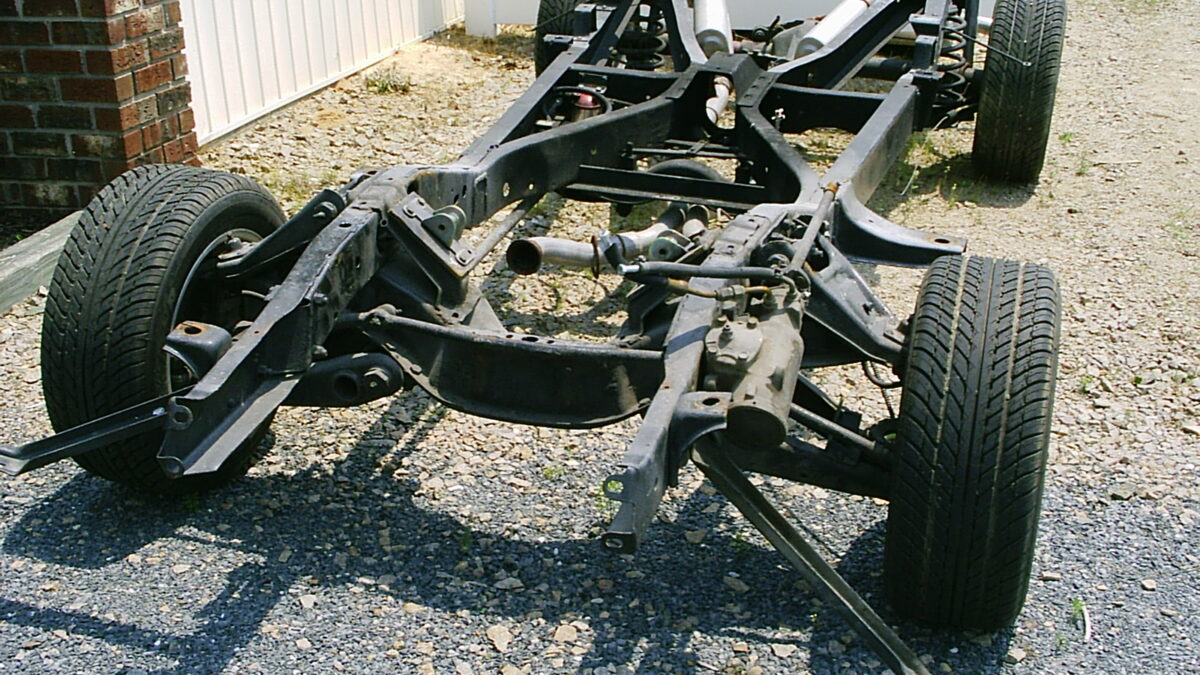
A titanium exhaust is the dream part for a lot of builders. It’s light, it looks unique and it sounds the part. Then you price the tube, read about welding it, and wonder whether bending titanium exhaust tubing in a home garage is even realistic. It can be, but only if you know what titanium demands before you cut your first piece.
This guide explains the difference between grade 2 and grade 9 titanium, why most hobbyists buy pre-bent titanium mandrel bends instead of bending their own, and what it takes if you do bend. Then we cover the part that makes or breaks a titanium exhaust: cleanliness and back purging when you weld.
We’ll keep it honest. Nobody at Benders Hub has bent titanium for this article. Everything here comes from titanium suppliers, a bender maker that has published its own titanium test bends, welding equipment makers and trade publications. Where sources disagree, we say so. Where we couldn’t find a solid number, we don’t make one up.
Most home builders should buy pre-bent titanium mandrel bends and focus their effort on clean cuts and clean welds.
- Grade 2 is commercially pure and the easier grade to form. Grade 9 (Ti-3Al-2.5V) is stronger and springs back more. Many retail exhaust bends are actually listed as grade 1.
- If you bend it yourself: use a mandrel, annealed tube, a lube made for non-ferrous metals and test bends on scrap.
- To weld it: 100% argon shielding plus a full back purge with purge plugs, and keep the gas on until the weld cools.
📋 In this guide
- Why titanium, and why it’s tricky
- Grade 2 vs grade 9 titanium
- Why most hobbyists buy pre-bent
- Bending titanium exhaust tubing: what it takes
- Titanium springback and test bends
- Cutting, fitting and cleaning
- Back purging titanium
- TIG welding: shielding, postflow and color
- Real-life lessons
- Common mistakes and fixes
- Pro tips
- FAQ
- Your titanium checklist
Why titanium, and why it’s tricky
The big reason people choose titanium is weight. Metal supplier Smiths Metal Centres gives grade 9 titanium a density of 4.48 g/cc, which it says is under 60% of steel’s. On a long exhaust, that adds up to a noticeably lighter system. The look is the other draw. Titanium exhausts stand out at any car show.
So why doesn’t everyone use it? Three reasons.
- Cost. Titanium tube and bends are a big investment compared with stainless. Every ruined piece hurts.
- Bending behavior. Titanium springs back more than mild steel and tends to gall, or stick and tear, against dry tooling. Thin wall wrinkles without a mandrel.
- Welding. Hot titanium reacts with oxygen, nitrogen and hydrogen. Miller says that contamination compromises strength and corrosion resistance. So the inside and outside of every weld must be shielded with argon.
None of these are deal-breakers. They just mean titanium rewards preparation more than any other exhaust material. If you’ve already built a stainless exhaust with back-purged welds, you’re most of the way there. If you haven’t, our guide to bending stainless exhaust tubing is a good place to practice the same skills on cheaper material.
Fit-up, TIG control and back purging work the same way on stainless. Learn them on 304 offcuts, then move to titanium when your welds are consistently clean.
With titanium, the bending is the easy part. The real skill is keeping everything clean and shielded from the first cut to the last weld.
Grade 2 vs grade 9 titanium (and the grade 1 surprise)
Titanium comes in numbered grades. For exhaust work, you’ll mostly hear about two of them.
Grade 2: commercially pure
Grade 2 is commercially pure (CP) titanium. It’s not alloyed for strength, so it’s the easier of the two to form. Titanium suppliers such as Bozeman Metal list welded, thin-wall, large-OD titanium tube for exhaust systems and mufflers in grades 1, 2 and 9, made to ASTM B862 and B338.
Grade 9: Ti-3Al-2.5V
Grade 9 is an alloy with about 3% aluminum and 2.5% vanadium. Smiths Metal Centres says it offers 20% to 50% more strength than the CP grades. Aircraft Materials places it between grades 4 and 5 in strength and says it can be used at higher temperatures than grades 1 to 4. Distributors such as Bibus sell grade 9 tube to aerospace specs like AMS 4943 and AMS 4944.
The grade 1 surprise
Here’s something many first-timers miss. When you shop for ready-made titanium exhaust bends and tube, many listings say grade 1, another commercially pure grade. The Ticon and TitanFlow bends we link below are both listed that way. That’s not a problem in itself, but it does mean “titanium exhaust” doesn’t automatically mean grade 2 or grade 9. Read the listing, and ask the seller if it isn’t clear.
| Property | Grade 2 (CP) | Grade 9 (Ti-3Al-2.5V) |
|---|---|---|
| What it is | Commercially pure titanium | Titanium with about 3% aluminum, 2.5% vanadium |
| Strength | Lower | 20–50% higher than CP grades (Smiths) |
| Density | Light (check your supplier’s sheet) | 4.48 g/cc, under 60% of steel (Smiths) |
| Temperature use | Lower than grade 9 | Higher than grades 1–4 (Aircraft Materials) |
| Bending | The easier grade to form | Higher springback; specify annealed |
| Where you’ll see it | Exhaust tube and mufflers | Aerospace tube; some exhaust tube |
Which should you choose? For most hobby exhaust builds, a CP grade is the practical choice. It’s what most retail bends are made from, and it’s the friendlier grade to bend. Grade 9 makes sense when you need its extra strength, such as for thinner walls or hotter sections, and you’re ready for the harder bending.
Why most hobbyists buy pre-bent titanium mandrel bends
Thin-wall titanium needs a mandrel bender, the right tooling and plenty of test tube. Unless you build titanium exhausts regularly, that’s a lot of investment for a few bends. Pre-bent titanium mandrel bends solve that. You buy round, wrinkle-free bends in a fixed radius, then cut, fit and weld them. Our guide on buying mandrel bends vs bending your own covers the trade-off.
Here’s how we chose the examples below. We looked for titanium bends and purge supplies with clear published specs. We haven’t handled them. Picks are based on listing specs, checked in October 2026, and on what owners commonly report. See how we evaluate equipment, and confirm specs before you order.
As an Amazon Associate I earn from qualifying purchases.
Ticon Industries 3″ titanium 90° mandrel bend, 1.5D
Ticon Industries Titanium 90° Mandrel Bend, 3″ (101-07653-0000)
A 3″ thin-wall titanium 90° with a 1.5D radius, ready to cut and weld.
Ticon Industries sells titanium exhaust tube and bends, plus the Tig Aesthetics purge plugs further down. This 90° has a 4.5″ centerline radius, which is 1.5 times the 3″ OD. That’s a common exhaust radius, and a lot easier to weld into a system than an ultra-tight bend.
Who it’s for: builders making a 3″ titanium exhaust who don’t own a mandrel bender.
Why we picked it: the listing gives OD, CLR, wall and part number. One caution: the listing calls it commercially pure grade 1 titanium, but its material field also says “stainless steel.” Confirm with the seller before you order.
- Material
- CP grade 1 titanium (per listing)
- OD
- 3″
- CLR
- 4.5″ (1.5D)
- Wall
- 1 mm / .039″
- Bend
- 90°
- Part number
- 101-07653-0000
Why we like it
- Clear OD, CLR and wall on the listing
- Matching 45° bend available
- Skips the cost of a mandrel bender
Know before you buy
- Listing shows a material conflict; confirm it
- Grade 1, not grade 2 or 9
- Thin wall needs careful TIG and a full purge
Also: matching 3″ titanium 45° bend · TitanFlow 3″ titanium 90°, 1.05D tight radius (listed as grade 1). Affiliate links. See our disclosure.
Tight or loose radius? The TitanFlow elbow above has a 1.05D radius, so about 3.15″ on a 3″ tube. Tight bends save space but leave less straight tube for fit-up. Our 1D vs 1.5D vs 2D guide helps you choose. You can also buy straight titanium tube for the runs between bends, such as this 2.75″ × 1 mm wall, 2-foot length.
Bending titanium exhaust tubing: what it takes
Want to bend your own anyway? Good. Here’s what a bender maker that has published its own titanium test bends says you need. Rogue Fabrication’s titanium bending page describes its tests on Ti-3Al-2.5V tube with a rotary-draw bender and mandrel attachment.
1. A mandrel
Rogue Fab says thin-wall titanium can wrinkle or collapse on the inside of the bend without support. Exhaust tube is very thin. A 3″ × .039″ tube has a wall factor (OD ÷ wall) of about 77, far into mandrel territory. Our mandrel vs crush bending guide explains why a mandrel matters on thin wall.
2. Annealed tube
Rogue Fab says fully annealed stock is far easier to bend than cold-worked or aged material, and suggests specifying annealed when you order. This matters most with grade 9, which is often sold for aerospace uses. Ask your supplier for the condition in writing.
3. The right lubricant
Titanium tends to gall, meaning it doesn’t like dry sliding contact with tooling. Rogue Fab recommends a lubricant made for non-ferrous work. Its tests used Bend All 002 lubricant with bronze mandrels.
4. A careful setup and steady speed
In Rogue Fab’s tests, the mandrel nose sat just ahead of the tangent point, and the bend ran at about 3.5° per second. It reports under 4% deformation on 1.25″ × .049″ and 1.50″ × .070″ tube. For the 1.25″ size, that was on a 3.5″ CLR, which is about 2.8D. Those are a maker’s own results on its own machine, so treat them as an example of what’s possible, not a promise.
Enter your OD, wall and CLR in our bend calculator. It shows wall factor and D of bend, plus the arc and cut lengths you’ll need for fit-up.
Titanium springback and the test-bend method
Titanium springs back more than mild steel. Rogue Fab says so, and says the amount depends on alloy, wall thickness and CLR. Academic research points to the cause. Work on high-strength Ti-3Al-2.5V tube from Northwestern Polytechnical University links its large springback to a high ratio of yield strength to stiffness. That research used stress-relieved tube, not annealed. Another study, from the University of Sheffield, found wall-thickness variation was the biggest factor in how much springback changed.
What we couldn’t find is a reliable “titanium springs back X degrees” number for exhaust tube. So, as with stainless, you measure it yourself.
- Use real test stock. Same grade, condition, OD and wall as your project. A different batch can behave differently.
- Clean and lube. Wipe the tube and tooling, then apply your non-ferrous bending lube.
- Mark a reference line. Draw a line along the tube so you can see rotation.
- Bend to a target. Bend steadily to 90° on the degree ring.
- Release and measure. Let it relax, then measure the real angle with an angle finder.
- Calculate your offset. Target minus measured angle is your springback.
- Confirm. Bend a second piece to 90° plus the offset, and check again.
- Log everything. Grade, condition, OD, wall, die, CLR, batch and offset.
Two titanium-specific tips. First, don’t plan on correcting a bend by pulling it back. Sneak up on your angle from below instead. Second, check the test piece for ovality and wrinkles as well as angle. A bend that hits the angle but flattens is still a reject. Our springback guide covers the method in more depth.
Grade 9’s extra strength means more springback and more force than CP titanium. Never reuse a grade 2 offset for grade 9 tube. Test it separately.
Cutting, fitting and cleaning titanium
Clean welds start long before you strike an arc. With titanium, the prep work is where most of the quality comes from.
Use dedicated tools
The Fabricator’s guide to TIG welding titanium tubing says to remove the oxide layer with a carbide tool kept only for titanium, not steel wool or general abrasives. Apply the same idea to cutting. Keep a saw blade or cut-off wheel, a deburring tool and files that never touch steel.
Cut square and deburr
Thin titanium needs square, tight-fitting joints. Gaps are hard to bridge with clean, well-shielded welds. Deburr inside and out. Miller’s titanium tube guide also suggests filing away smeared metal from cutting before welding.
Clean, then clean again
The Fabricator’s guide recommends wiping with acetone or MEK while wearing nitrile gloves. Then remove the oxide layer, wipe again and let the solvent evaporate fully before welding. Another Fabricator article, “Only the clean survive”, warns against chlorine-based cleaners. Skin oils, forming lubricant and cutting fluid can all cause trouble, so don’t touch cleaned joints with bare hands.
Set up a clean station
Miller recommends a dedicated work area for titanium. In a home garage, that might just be a clean bench covered with fresh paper, away from grinding dust. It’s a small habit that prevents a lot of rejects.
Back purging titanium: the non-negotiable step
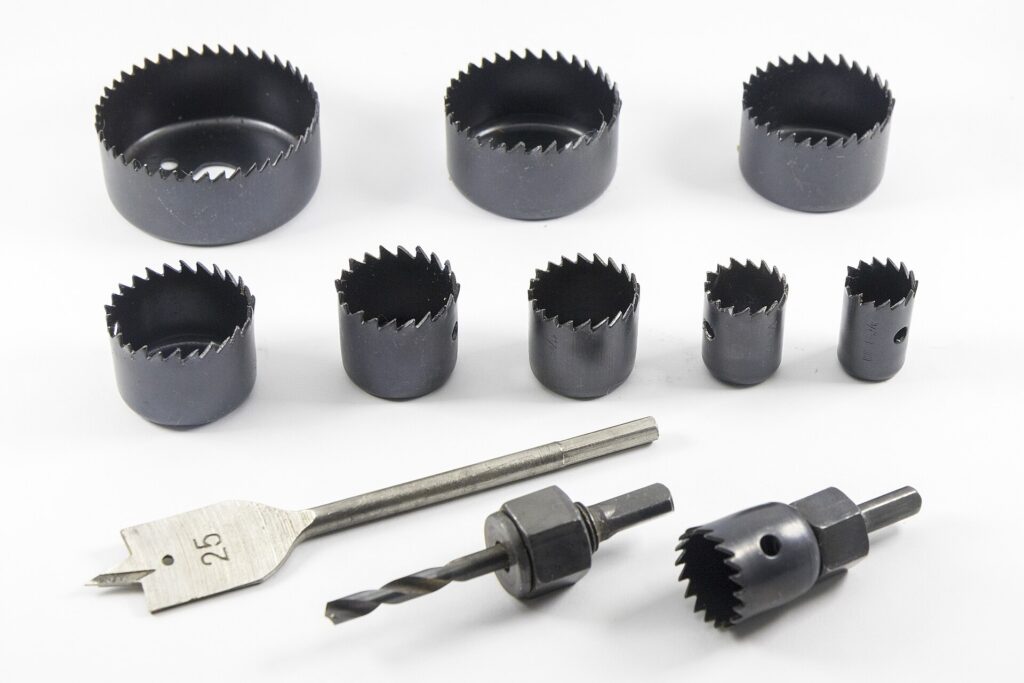
On stainless, a back purge makes welds better. On titanium, it’s essential. Miller calls for 100% argon shielding plus back purging tube and pipe with dams and purge plugs.
How a back purge works
You seal the section you’re welding, feed argon in one end and let air out the other. Once the oxygen is pushed out, the inside of the weld is protected while it’s hot. The Fabricator’s titanium guide says to run argon until it has replaced the air in the tube about 10 times. Its article on purge dams also recommends checking oxygen with an analyzer before welding.
Estimating your purge volume
Here’s simple math to plan it. A 3″ × 1 mm (.039″) tube has an inside diameter of about 2.92″. A 24″ section holds about π × 1.46² × 24 = 161 cubic inches, or about 0.093 cubic feet. Ten volume changes is about 0.93 cubic feet of argon. Divide by your regulator’s flow to estimate purge time, and remember that hoses and fittings add volume too.
Silicone back purge plugs for exhaust tube
Tig Aesthetics by Ticon Industries Silicone Back Purge Plugs, Exhaust Tubing Kit (2.5″ to 4″)
Pairs of high-temperature silicone plugs with diffusers and argon inlet tubes for common exhaust sizes.
These plugs seal the tube ends, and the fittings bring argon in through a mesh diffuser so the flow stays gentle and even. That’s exactly what you want when you’re trying to push air out, not stir it up.
Who it’s for: anyone TIG welding titanium or stainless exhaust tube from 2.5″ to 4″.
Why we picked it: clear contents on the listing, and sizes that match common titanium bends.
- Plug sizes
- 2 each: 2.5″, 3″, 3.5″, 4″
- Diffusers
- 8 stainless mesh
- Gas inlets
- 4 titanium inlet tubes
- Material
- High-temperature silicone
- Heat note
- Brand: withstands a weld seam 1″ away
Why we like it
- Matches common exhaust sizes
- Diffusers for smooth argon flow
- Reusable
Know before you buy
- No plugs under 2.5″ in this kit
- Keep plugs back from the weld zone
- Needs a separate argon regulator and hose
Smaller tube? Strictly Modified 1.5″–2″ back purge plugs (set of 2). Affiliate links. See our disclosure.
Plan the purge for the whole system before you tack anything. Once two bends are joined, getting a plug into the right place gets much harder.
TIG welding titanium exhaust: shielding, postflow and weld color
With clean parts and a good purge, the welding itself is normal TIG work. Two things decide whether the weld is sound: how long you protect it as it cools, and what its color tells you.
Keep the gas on while it cools
Hot titanium keeps reacting with air after the arc stops. Sources disagree on exactly when it’s safe. The Fabricator’s titanium tubing guide says oxygen stops reacting at about 800°F and suggests 20 to 25 seconds of postflow, while noting that some codes require shielding until the metal is below 500°F. Another Fabricator article gives a critical range of 500°F to 800°F. A third, “Titanium: you can weld it”, says to hold the torch and argon in place until the metal is below about 500°F. The conservative choice is to follow your code or procedure, and when in doubt, keep shielding until below 500°F. Some titanium welders also use a trailing shield, a gas cup that drags extra argon over the cooling weld.
Read the weld color
| Weld color | What it usually means | What to do |
|---|---|---|
| Bright silver | Good shielding | Keep doing what you’re doing |
| Light straw | Sources disagree; The Fabricator says even very pure argon can leave a little | Check your code; improve shielding |
| Gold to blue | The Fabricator: any hint of blue suggests argon isn’t pure enough or isn’t applied correctly | Check purge, gas purity, postflow and travel speed |
| Gray or white | Heavy contamination | Treat as a reject; cut it out and redo it |
Color is a quick check, not proof. A patent on titanium weld inspection notes that surface color hasn’t always been a reliable indicator of contamination. If your exhaust is for a sanctioned race car or any critical use, follow the color standard in your governing code, such as AWS D1.9, and your written procedure. And don’t confuse weld color with the heat tint titanium exhausts often pick up from engine heat in use. Read our workshop safety notes before you weld.
Real-life lessons from titanium builders
These are composite stories. The same situations come up again and again in garage-fab forums and build threads. Titanium mistakes are expensive, so it pays to learn from other people’s scrap pile before you add to your own.
A builder finds “titanium tube” at a good price and tries to bend it on a mandrel bender. It springs back far more than expected and cracks on a tight bend. It turns out to be cold-worked grade 9, not annealed CP tube.
Lesson: confirm grade and condition before buying. For bending, ask for annealed tube, or buy pre-bent.
Someone welds a titanium exhaust with good torch coverage but no back purge, and pulls the torch away as soon as each weld ends. The outside looks gold and blue, and the inside is dull gray.
Lesson: back purge every joint and keep shielding until the weld has cooled.
A builder cleans titanium joints with the same wire brush used on steel all week. The welds look poor even with a good purge. A fresh carbide tool and solvent wipe fix it.
Lesson: titanium gets its own tools, every time.
Common mistakes (and how to fix them)
Most titanium regrets come from a short list. Here’s each one with the fix.
❌ Bending thin-wall titanium without a mandrel. It wrinkles or collapses on the inside.
✅ Fix: use mandrel support, or buy pre-bent mandrel bends.
❌ Buying tube without checking grade and condition. Cold-worked tube is much harder to bend.
✅ Fix: specify the grade and ask for annealed tube, as Rogue Fab suggests.
❌ Bending dry. Titanium galls against dry tooling.
✅ Fix: use a bending lube made for non-ferrous metals and safe for your mandrel.
❌ Reusing steel or stainless springback offsets. Titanium springs back more.
✅ Fix: test-bend each grade, wall and batch, and log the offset.
❌ Skipping or rushing the back purge. The inside of the weld is contaminated.
✅ Fix: plug the tube, purge about 10 volumes of argon and keep it flowing while you weld.
❌ Pulling the torch away too soon. The hot weld oxidizes as it cools.
✅ Fix: hold postflow until the metal has cooled, below 500°F if your code calls for it.
❌ Using steel wool, shared abrasives or chlorinated cleaners. They contaminate the joint.
✅ Fix: acetone or MEK, nitrile gloves and a carbide tool kept only for titanium.
Pro tips for titanium exhaust work
These habits come from the same sources as the rest of this guide, plus what builders commonly share. They’re cheap insurance on an expensive material, and most of them take only a few minutes.
- 💡 Buy one spare bend. Use it for cut tests, fit-up practice and dialing in your welder.
- 💡 Label everything. Mark grade and wall on every piece, especially if you keep stainless in the same shop.
- 💡 Check the purge before you weld. An oxygen analyzer is the surest way. Without one, purge generously.
- 💡 Use a gentle flow. Diffusers in your purge plugs keep argon from swirling air back in.
- 💡 Weld a test joint first. Two offcuts welded with your full setup show you the color before it matters.
- 💡 Choose a radius that leaves fit-up room. A 1.5D bend leaves more straight tube to work with than a 1D bend.
- 💡 Learn the language. Our glossary explains CLR, D of bend and wall factor in plain English.
Experienced titanium builders keep a box with their own gloves, carbide tools, files, solvent and wipes, used only for titanium. Nothing in it ever touches steel.
Frequently asked questions
Can you bend titanium exhaust tubing at home?
Yes, with a mandrel bender, annealed tube, non-ferrous lube and test pieces. Most hobbyists buy pre-bent titanium mandrel bends instead, because the tooling is a big investment for a few bends.
Is grade 2 or grade 9 titanium better for exhaust?
For most hobby builds, a commercially pure grade like grade 2 is the practical choice. It’s easier to form. Grade 9 is stronger and rated for higher temperatures, but it springs back more and is harder to bend.
Does titanium spring back more than steel?
Yes. Rogue Fab says titanium springs back more than mild steel, and the amount depends on alloy, wall and CLR. Measure it with a test bend.
Do you have to back purge titanium welds?
Yes. Miller calls for 100% argon shielding plus back purging of titanium tube. Without it, the inside of the weld is contaminated.
What color should a titanium weld be?
Bright silver is the goal. Sources disagree on light straw. The Fabricator says any hint of blue suggests a shielding problem. Follow your code, such as AWS D1.9, for acceptance.
What grade are most titanium exhaust bends?
Many retail listings say commercially pure grade 1, including the Ticon and TitanFlow bends in this guide. Check each listing, and ask the seller if the grade isn’t stated.
Your titanium exhaust checklist
Before you buy tube or strike an arc, run through this list.
- I know the grade and condition of my tube or bends
- I’ve decided: buy pre-bent, or bend with a mandrel
- If bending, I have annealed tube, non-ferrous lube and spare test stock
- I’ve done a test bend and logged the springback offset
- I have a saw blade, carbide tool and files used only for titanium
- I have acetone or MEK, nitrile gloves and lint-free wipes
- I have purge plugs that fit every tube size in my system
- I’ve planned the purge for each joint before tacking
- I’ll keep shielding on until each weld has cooled
- I’ve welded a test joint and checked its color
Titanium is unforgiving, but it isn’t mysterious. Buy the right grade, keep it clean, purge every joint and let each weld cool under argon. Do that, and your titanium exhaust will be as good as it looks. 🔥
Planning a titanium exhaust?
Work out wall factor, D of bend and cut lengths before you touch expensive tube. Or compare bender types if you’re thinking about a mandrel setup.
Keep reading
Bending Aluminum Tube: How to Bend 6061 Without Cracking
Bending aluminum tube without cracks: 6061 tempers (O, T4, T6), safe bend radius, roller pressure dies, annealing trade-offs and a step-by-step method.
Tube Bend Rotation: Plane of Bend, Degree Wheels and Eliminating Twist
Tube bend rotation explained: plane of bend, 0°/90°/180° shapes, degree wheels, the angle-finder trap and simple checks to eliminate twist.
How to Build a Roll Cage: A Step-by-Step Garage Guide
How to build a roll cage step by step: rulebook first, then layout, templates, bending, notching, fit-up and an expert review before…