DOM vs 4130 Chromoly Roll Cage: Which Tube Should You Use?
DOM vs 4130 chromoly roll cage tube compared: strength, weight, bending, welding and what the NHRA, SCCA and FIA rules say before you buy.

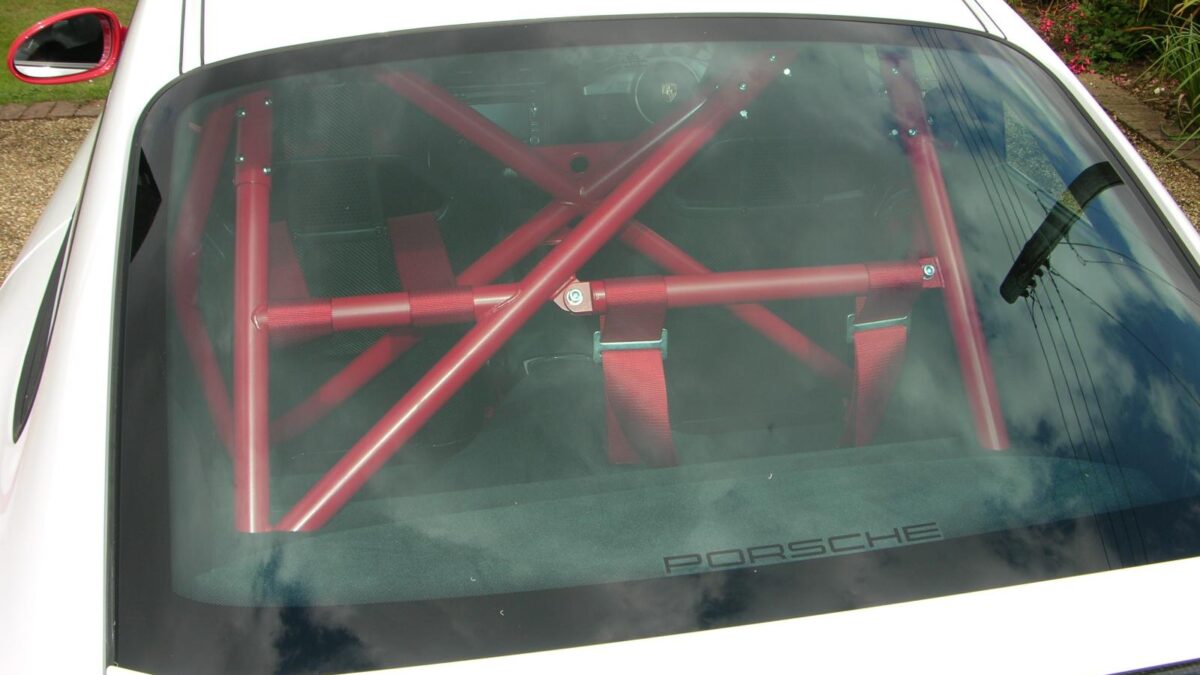
You’ve measured the car, sketched the hoops and maybe even bought a bender. Then the big question lands: DOM vs 4130 chromoly roll cage tube. Which one is stronger? Which one is lighter? And which one will your tech inspector actually accept?
It’s one of the most argued topics in garage fabrication. Forums are full of strong opinions and numbers with no source. This guide cuts through it. You’ll learn what DOM and 4130 really are, how they compare on paper, and how each one behaves in the bender and under the torch. Most of all, you’ll learn why your rulebook makes this choice before you do.
One thing up front. Benders Hub is not a tech inspector or an engineer. A roll cage protects a life, so treat everything here as background reading. Confirm every detail with your current rulebook and your inspector before you buy a single foot of tube.
Both can make a strong, legal cage. Your rulebook, your welding skills and your bender decide which one fits.
- DOM mild steel is the forgiving choice. It springs back less, and it can be MIG or TIG welded where the rules allow. It’s the usual first-cage tube. See how to choose.
- 4130 chromoly saves weight mainly when your rules allow a thinner wall. It springs back about twice as much as mild steel and needs a careful TIG process. NHRA rulebooks have required TIG for 4130.
- Check first: read what the rulebooks say about material, size, wall, bend radius and welding.
📋 In this guide
- What DOM and 4130 actually are
- DOM vs 4130 chromoly roll cage: side by side
- What the rulebooks say
- Strength and weight: is chromoly lighter?
- Bending DOM vs 4130
- Welding DOM and 4130
- Cost, sourcing and mill certs
- Which should you choose?
- Real-life lessons
- Common mistakes and fixes
- Pro tips for chromoly and DOM
- FAQ
- Your tube-buying checklist
What DOM and 4130 chromoly actually are
Let’s start with plain definitions. The names sound technical, but the ideas are simple. Here’s the catch that confuses most people: one name describes how a tube is made. The other describes what the steel is made of.
DOM: a way of making tube
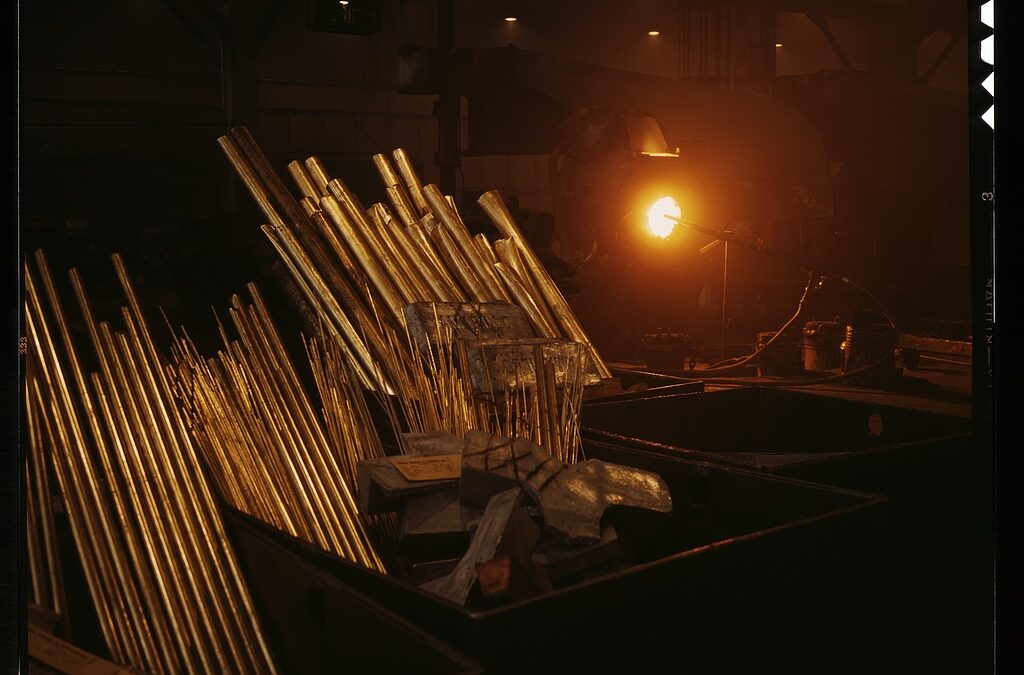
DOM stands for drawn over mandrel. Speedy Metals describes the process like this. Mild steel strip (they use C1020) is formed into a tube and electric-resistance welded. The tube is annealed, then cold drawn through a die and over a mandrel. That drawing step makes the weld line almost invisible and evens out the wall. Speedy Metals says DOM generally conforms to ASTM A513 Type 5 (Speedy Metals).
So DOM starts life as welded tube. The extra drawing step is what sets it apart from plain welded tube. Ryerson lists high strength, a good surface finish and excellent concentricity among DOM’s benefits (Ryerson).
4130 chromoly: a type of steel
4130 is an alloy steel. “Chromoly” is short for chromium-molybdenum, its two key alloying elements. Cage-grade 4130 is commonly sold as seamless tube in the normalized condition, often marked “N”. Aircraft Spruce, for example, says all of its 4130 tubing is condition N (Aircraft Spruce). Normalizing is a heat treatment that evens out the steel’s grain.
CDS and ERW: the other names you’ll see
CDS means cold drawn seamless. It’s made by piercing a solid bar, so there’s no weld seam at all. Industrial Tube and Steel notes that CDS is normally made from SAE 1018 mild steel (Industrial Tube and Steel). ERW is welded tube without the drawing step. Some rulebooks, such as SCCA Time Trials, ban ERW for cages, as you’ll see below. Want more terms explained? Our glossary covers them.
DOM vs 4130 chromoly roll cage: side by side
Here’s the quick comparison. The strength figures come from metal suppliers’ published product pages. They’re typical values from different suppliers, not guaranteed minimums, so treat them as a rough guide. Your mill certificate is the only number that counts for your tube.
| Feature | DOM mild steel | 4130 chromoly |
|---|---|---|
| What it is | Welded mild-steel tube, cold drawn over a mandrel | Chromium-molybdenum alloy steel, usually seamless and normalized |
| Supplier strength figures | About 70,000 psi yield and 80,000 psi tensile for 1020 DOM (Metal Supermarkets, typical) | About 63.1 ksi yield and 97.2 ksi tensile, normalized (Online Metals). Aircraft Spruce lists 90,000 psi tensile |
| Springback | The baseline | About 2× mild steel of the same size and wall (JD2) |
| Bender capacity | The bender’s full mild-steel rating | Often lower than the mild-steel rating |
| Welding | MIG or TIG, where the rules allow | TIG has been required by NHRA; follow a qualified procedure |
| Rule acceptance | Widely listed; plain ERW is banned by some rules | Widely listed; some rules allow a thinner wall |
| Forgiveness | More forgiving for a first cage | Less forgiving of heat and process errors |
Notice something surprising? On these supplier pages, the typical yield figure for DOM is actually higher than the normalized 4130 figure. Yield is the stress where steel starts to bend for good. Tensile strength is where it finally breaks. 4130’s listed edge is in tensile strength, not yield.
Also note the suppliers don’t agree with each other. Online Metals lists 97.2 ksi tensile for normalized 4130. Aircraft Spruce lists 90,000 psi for its seamless 4130 tube. Neither is wrong. Mills, sizes and lots vary. That’s exactly why you ask for the cert.
4130 isn’t magic steel. It’s different steel. Its real advantage in a cage usually comes from the rulebook letting you use a thinner wall.
What the rulebooks say about DOM and 4130
This is the section that matters most. If you race, or ever plan to, the sanctioning body decides your tube. It sets the material, the OD, the wall, the bend radius and often the welding method. Here’s what we could confirm on each body’s own site, and where to read the rest.
Rules change every year, and classes have their own supplements. Benders Hub is not a tech inspector or an engineer. Before you buy tube, read the current rulebook for your class and confirm your plan with your tech inspector.
NHRA
NHRA’s General Regulations (the 2017 and 2019 editions posted on NHRA’s site) say all 4130 chromoly tube welding must be done by an approved TIG (heliarc) process. Mild steel may be welded by approved MIG or TIG. Those editions also call for welds free of slag and porosity. NHRA says the digital 2026 Rulebook includes amendments issued through July 14, 2026, and its 2026–2027 amendments take effect January 1, 2027. Find both under NHRA Racer rules.
SCCA Time Trials
SCCA’s Time Trials full safety rules list seamless or DOM mild steel (SAE 1020 or 1025 recommended), alloy steel (SAE 4130 or T45) or Docol R8. Alloy and mild steel may not be mixed, and ERW is not allowed. Bend radius at the tube centerline must be at least three times the tube diameter. Alloy steel welding must follow accepted industry practice. Tube size scales with vehicle weight.
FIA, NASA and SFI
FIA Appendix J, Article 253, specifies cold-drawn seamless carbon steel with a minimum tensile strength of 350 N/mm² in its cage rules. The 2026 text is dated 10 December 2025 (FIA Article 253). NASA publishes its Club Codes and Regulations on its rules page. SFI publishes drag-racing chassis specs on its chassis page.
| Body | Where to read it | What we confirmed | Check yourself |
|---|---|---|---|
| NHRA | nhraracer.com rules | 2017/2019 editions: TIG for 4130; MIG or TIG for mild steel | Current wording, tube table, chassis cert for your ET |
| SCCA Time Trials | timetrials.scca.com | DOM, seamless, 4130, T45 or Docol R8; no ERW; no mixing; 3× radius | Tube size for your car’s weight |
| FIA | fia.com Appendix J | Cold-drawn seamless carbon steel, 350 N/mm² minimum | Sizes, homologation, your national body |
| NASA | drivenasa.com rules | Rulebook location only | Material, size, wall and welding |
Need more detail on sizes? Our roll cage specifications guide points to each rulebook in more depth.
Strength and weight: is chromoly really lighter?
Here’s the honest answer: only if the wall is thinner. DOM and 4130 are both steel. So a foot of 1.75″ × .120″ 4130 weighs about the same as a foot of 1.75″ × .120″ DOM. The weight saving comes from using less steel, and that means a thinner wall.
The simple math
The steel in a tube’s cross-section is roughly π × (OD − wall) × wall. Let’s compare two sizes. These come from one entry in NHRA’s 2019 General Regulations: 1-3/4″ × .118″ wall for mild steel, or .083″ for 4130. They’re an old example, not your rule.
- 1.75″ × .118″: π × 1.632 × .118 ≈ 0.605 square inches of steel.
- 1.75″ × .083″: π × 1.667 × .083 ≈ 0.435 square inches of steel.
- The difference: about 28% less steel per foot for the thinner wall.
Multiply that across every tube in a full cage and the saving gets real. That’s why drag racers and serious road racers chase chromoly. But if your rulebook sets the same wall for both materials, 4130 saves almost nothing in weight. You’d just pay more and work harder to weld it.
Strength isn’t just one number
A cage has to bend and absorb energy in a crash, not just resist breaking. Wall thickness, tube diameter, the layout, the joints and the weld quality all matter. A thin-wall chromoly cage with poor welds can be weaker than a well-built DOM cage. The rulebook’s table is the sanctioning body’s answer to “how strong is strong enough.” Don’t try to out-engineer it with a supplier’s spec sheet.
Plug your OD, wall and die CLR into our bend calculator. It gives D of bend, wall factor, arc length and cut length. Wall factor (OD ÷ wall) is a quick way to see how much harder a thin-wall bend will be.
Bending 4130 vs DOM: springback, capacity and radius
Chromoly and DOM bend on the same rotary-draw bender with the same dies. But 4130 behaves differently, and it asks more of your machine. Plan for three differences.
1. Springback roughly doubles
JD2’s Model 32 manual says 4130 springs back about twice as much as the same size and wall of mild steel (JD2 manual). For scale, Rogue Fab shows a mild-steel bend that read 86.5° after release from a 90° target. Your chromoly number will be different, and likely bigger. Pro-Tools suggests logging the heat or batch number from the mill cert, because springback varies by batch (Pro-Tools). Our springback guide walks through the test-bend method.
2. Bender capacity drops
Makers publish lower limits for 4130 than for mild steel. Check the chart for your bender before you order tube.
| Bender | Mild steel rating | 4130 rating | Source |
|---|---|---|---|
| Baileigh RDB-050 | Up to 2.5″ OD × .120″ | 2″ OD × .120″ | Baileigh |
| Eastwood High Capacity | 2″ × .120″ | Limited to .090″ wall | Eastwood / Amazon listing |
| Pro-Tools 105HD | Round tube to .134″ wall | 2″ × .134″ with the extension handle | Pro-Tools |
3. Radius rules still apply
SCCA Time Trials sets a minimum centerline radius of three times the tube diameter. Pro-Tools puts the practical non-mandrel minimum around 3 × OD, and Baileigh suggests 4 × OD as a starting point. Baileigh also notes popular off-road dies of 1.5″ and 1.75″ at about 5.5″ and 6.5″ CLR. See our roll cage bend radius guide.
Ram-style “pipe benders” push the tube instead of drawing it around a die. Harbor Freight’s own 12-ton manual says its bender isn’t meant for thin-wall pipe. Never use one for DOM or chromoly cage tube.
As an Amazon Associate I earn from qualifying purchases.
A bender with a published 4130 rating
Baileigh RDB-050 Manual Rotary Draw Bender
Published to 2″ × .120″ 4130 and 2.5″ × .120″ mild steel, with a 3-speed ratchet.
If you plan to bend chromoly by hand, a published 4130 rating is the first thing to look for. The RDB-050 has one. Its ratchet lets you pick 4°, 8° or 12° per pull, and an anti-springback mechanism holds the bend while you reset the handle.
Who it’s for: builders who want one manual bender that covers both DOM and 4130 cage tube.
Why it fits here: it carries a clear 4130 rating from the maker. Expect a bigger investment, and budget for dies.
- Type
- Manual rotary draw, 3-speed ratchet
- Mild steel
- Up to 2.5″ OD × .120″ wall
- 4130 chromoly
- 2″ OD × .120″ wall
- Bend angle
- Baileigh lists both 190° and 200°
- Sold separately
- Dies
Lighter-duty option: Eastwood High Capacity bender (4130 limited to .090″ wall). Affiliate links. See our disclosure.
Comparing more machines? Our best tube bender for chromoly roundup lines up every published 4130 rating we could find.
Welding DOM and 4130: TIG, MIG and the rules
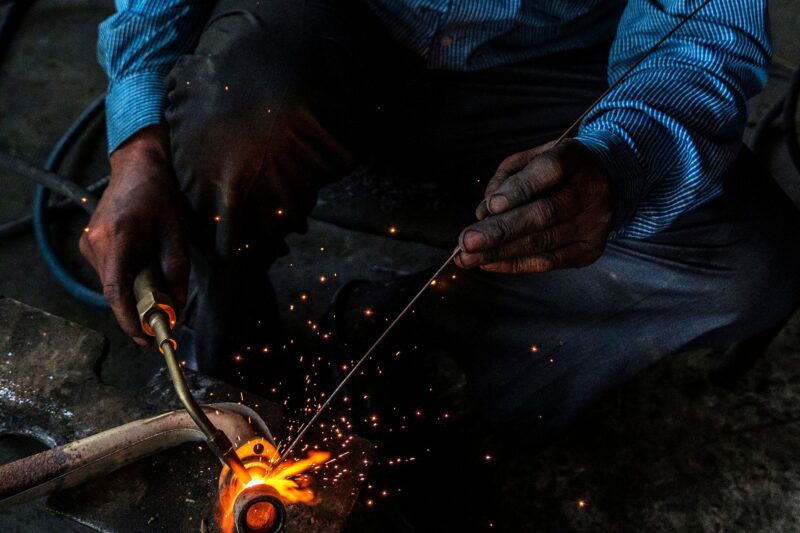
Welding is where the two tubes really part ways. DOM is mild steel, and it’s forgiving. 4130 is an alloy steel, and it rewards a careful, consistent process. Start with the rules, then follow a proper procedure.
What the rules say
As covered above, NHRA’s 2017 and 2019 General Regulations require 4130 to be TIG (heliarc) welded, while mild steel may be MIG or TIG. SCCA Time Trials doesn’t name a process in what we saw. It says alloy steel welding must follow accepted industry practice, and it recommends (but doesn’t require) a certified AWS D1.1 welder. Always check the current edition for your class.
Preheat: the sources disagree
Lincoln Electric says thin-wall tubing under .120″ wall doesn’t typically need the normal 300°F to 400°F preheat to get acceptable results. It still wants the tube at about 70°F or warmer (Lincoln Electric). ESAB’s guide, though, lists 400°F to 500°F for AISI 4130 (ESAB). Those don’t match. Follow a qualified welding procedure for your exact tube and wall, not a forum post.
Filler and stress relief
Lincoln calls ER70S-2 filler an acceptable alternative to ER80S-D2 for thin-wall chromoly. It notes the weld will typically undermatch the 4130’s strength, and good joint design such as gussets can make up for it. Lincoln also says thin-wall tubing normally doesn’t need stress relief. ESAB warns that high heat input in thin sections can cause distortion or burn-through.
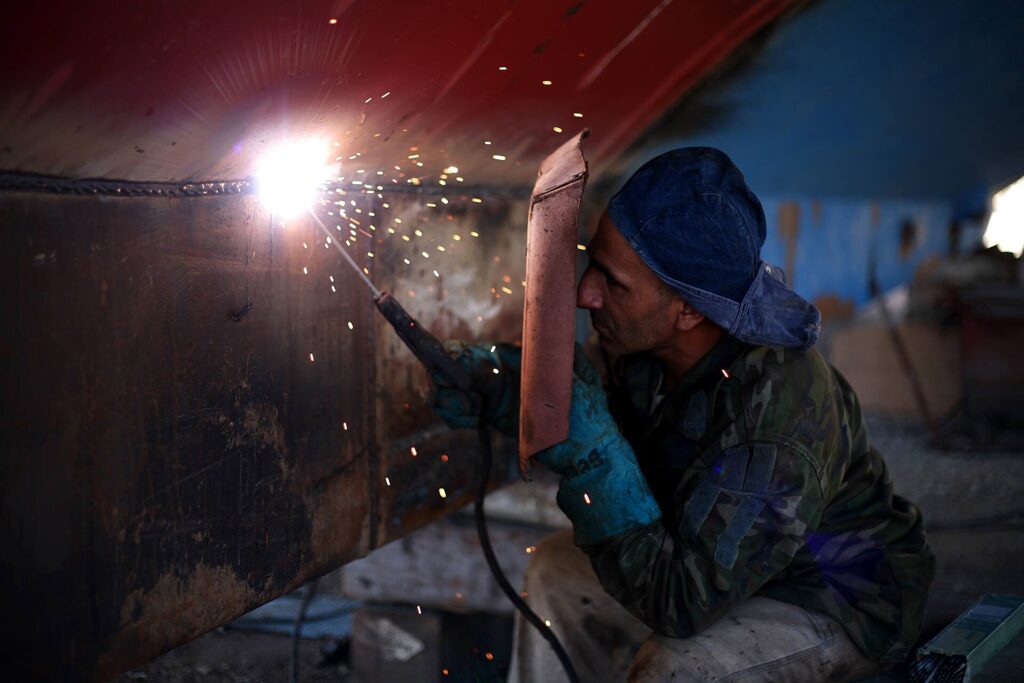
Many builders bend, notch and tack the cage themselves, then hand final welding to a qualified welder. Ask your welder and inspector what they need to see first.
Cost, sourcing and mill certs
Material choice isn’t just about strength. It’s also about what you can buy, what you can afford and how long the build will take. Here’s how the two compare off the bender.
Cost
4130 tube usually costs more per foot than DOM. TIG welding is also slower than MIG. So a chromoly cage tends to cost more in both money and hours. That’s fine if the rules give you a lighter cage in return. It’s wasted if they don’t.
Availability
Before you design around a size, call your supplier. Ask whether they stock your exact OD and wall in the material you need. Tube that’s easy to find in one size can be scarce in another. Don’t assume a forum build’s tube is on your local rack.
Mill certs and labels
A mill test report (often called a mill cert) lists the material, specification and test results for a batch of tube. Ask for one with every order. Inspectors may ask what your cage is made from, and the cert is your proof. It also gives you the heat number, which helps you track springback by batch.
Label every stick as it comes in. Write the material, OD and wall on each end with a paint marker. DOM and 4130 look almost the same once they’re cut. SCCA Time Trials doesn’t allow alloy and mild steel tube to be mixed in the cage. A mixed-up offcut could cause a problem at tech.
- Get a quote for both materials in your exact sizes.
- Ask for mill certs before the tube ships.
- Store chromoly and DOM on separate racks.
- Keep offcuts labelled for test bends and weld coupons.
Which should you choose? A simple decision guide
Now let’s make it practical. Start with the question “what does my rulebook allow?” Then work through your skills, your equipment and your budget. The table below shows where most builders land.
| Your situation | Lean toward | Why |
|---|---|---|
| First cage, MIG welder only | DOM | NHRA has required TIG for 4130; DOM is forgiving to bend and weld |
| Rules set the same wall for both | DOM | 4130 saves little weight at the same wall |
| Rules allow thinner 4130 wall | 4130, if you can weld it properly | Real weight saving across the whole cage |
| FIA-based series | Whatever Article 253 and your national body allow | FIA specifies cold-drawn seamless carbon steel |
| Unsanctioned trail rig | DOM is the common choice | Forgiving, easier to repair and weld |
| Bender with no 4130 rating | DOM, or upgrade the bender | Don’t exceed what the maker publishes |
Four questions to ask yourself
- What does my rulebook allow? List the materials, sizes and walls for your class and weight.
- Can I meet the welding rule? If 4130 needs TIG and you can’t TIG to a high standard, plan a pro welder or choose DOM.
- Can my bender handle it? Find the maker’s 4130 rating. No rating means no promise.
- Is the weight saving real? Compare the walls. Same wall, little gain.
For most first-time builders, DOM is the sensible start. It teaches you bending, notching and fit-up with less to go wrong. Chromoly makes sense when the rules reward it and your skills and tools are ready. Not sure your bender is up to it? Take our Find My Bender quiz.
Real-life lessons from cage builders
These are composite stories. The same situations come up again and again in garage-fab forums and build threads. Each one has a lesson that’s cheaper to learn here than in your garage.
A builder orders 4130 because “it’s stronger.” The bends go fine. Then they read the drag-racing rulebook for their class and see the TIG requirement for 4130. They only own a MIG. The cage sits tacked for months until they find a TIG welder to finish it.
Lesson: read the welding rule before you choose the material, not after.
Someone pays extra for chromoly to save weight in a track car. Later they notice their rulebook table lists the same minimum wall for both materials in their weight class. The cage weighs about what DOM would have.
Lesson: chromoly’s weight saving comes from a thinner wall. If the rules don’t allow one, DOM may be the smarter buy.
A builder dials in springback on DOM scrap, then bends the main hoop in 4130 using the same numbers. Both bends come out short, and the hoop won’t sit on the floor plates. JD2 says 4130 springs back about twice as much as mild steel.
Lesson: test-bend the actual material, and ideally the same batch, before the first real bend.

Common DOM and chromoly mistakes (and how to fix them)
Most material regrets come from a short list of mistakes. Here they are, with the fix for each.
❌ Buying tube before reading the rulebook. The material, size or wall turns out to be wrong for your class.
✅ Fix: read the current edition first, then confirm your plan with your tech inspector. Buy tube last.
❌ Assuming chromoly is always stronger and lighter. At the same wall, it weighs about the same as DOM.
✅ Fix: compare the rulebook’s walls for each material. Only a thinner wall brings a real weight saving.
❌ MIG welding 4130 where the rules call for TIG. NHRA rulebooks have required TIG for 4130.
✅ Fix: check the welding rule for your class. If TIG is required and you can’t do it well, hire a qualified welder.
❌ Mixing DOM and 4130 in one cage. SCCA Time Trials doesn’t allow alloy and mild steel to be mixed.
✅ Fix: pick one material for the cage, label every stick, and store them apart.
❌ Bending 4130 beyond the bender’s rating. Many makers list a lower limit for chromoly.
✅ Fix: find the published 4130 rating for your bender. If there isn’t one, ask the maker before you try.
❌ Reusing mild-steel springback numbers. 4130 springs back about twice as much.
✅ Fix: make a test bend in the actual tube, measure it and log it with the heat number.
❌ Trusting forum numbers as rules. Sizes quoted online are often from old editions or other classes.
✅ Fix: only build to numbers you’ve read in the current official rulebook for your class.
Pro tips for working with chromoly and DOM
These habits come up again and again among builders whose cages pass inspection the first time. None of them costs much. All of them save tube, time and stress.
- 💡 Buy a test stick of the real material. Use it for springback tests and weld coupons. DOM scrap won’t tell you how 4130 behaves.
- 💡 Log the heat number. Write it next to each springback reading. A new batch can behave differently.
- 💡 Talk to your inspector early. Show your sketch, material and sizes before you buy tube. A five-minute chat can save a cage.
- 💡 Notch tight. Good fit-up matters even more with thin-wall chromoly. Gaps make welding harder. Our tube notching guide covers the method.
- 💡 Clean before you weld. Remove mill scale, oil and marker from the joint area. Clean metal makes the welder’s job easier.
- 💡 Practice on coupons. Weld scrap joints in the same tube, then cut them open or have them checked.
- 💡 Plan the whole build first. Our roll cage build guide walks through planning, bending, notching and fit-up.
Experienced builders pick one cage material per car and stick to it, from main hoop to the last gusset. It keeps welding simple, avoids rule problems and makes your springback notes reliable.
One more habit: keep your own safety in mind while you work. Chromoly and DOM both throw sharp burrs when cut, and welding fumes need good ventilation. Read our workshop safety notes before a long cage session.
Frequently asked questions
Is 4130 chromoly stronger than DOM?
Not across the board. Supplier figures show higher tensile strength for normalized 4130, but one supplier’s typical yield figure for 1020 DOM is higher than another’s for normalized 4130. Its real cage advantage is that some rulebooks allow a thinner wall.
Is a chromoly roll cage lighter than DOM?
Only if the wall is thinner. Both are steel, so the same OD and wall weigh about the same. Check whether your rulebook lists a thinner wall for 4130.
Can you MIG weld a 4130 roll cage?
It depends on your rulebook. NHRA’s 2017 and 2019 General Regulations require TIG for 4130 tube. Check the current edition for your class, and follow a qualified welding procedure.
Is DOM legal for roll cages?
Many rulebooks list it. SCCA Time Trials, for example, allows seamless or DOM mild steel, but not ERW. FIA specifies cold-drawn seamless carbon steel. Always check your series.
Does chromoly need a different bender?
Not a different type, but often a bigger one. Makers usually publish a lower limit for 4130 than for mild steel, and 4130 springs back about twice as much.
Your tube-buying checklist
Before you order a single stick, run through this list. If you can tick every box, you’re ready to buy.
- I’ve read the current rulebook for my class, including any supplement
- I know the allowed materials, OD and wall for my car’s weight
- I know the minimum bend radius and my die meets it
- I know which welding process the rules allow for my material
- I can weld that process well, or I’ve booked a qualified welder
- My bender has a published rating for my material, OD and wall
- I’ve confirmed my plan with my tech inspector before buying tube
- I’ve asked the supplier for mill certs with my order
- I’ve planned one material for the whole cage
- I’ve bought extra tube for test bends and weld coupons
DOM or chromoly, the best cage tube is the one your rulebook allows, your bender can handle and your welder can join properly. Get those three right and the rest is careful, patient work. 🔧
Planning a cage?
Work out D of bend, wall factor and cut lengths for your tube in seconds. Or find a bender that matches your material.
Keep reading
Roll Cage Tubing Size and Wall Thickness: Where the Rules Live
Roll cage tubing size and wall thickness depend on your sanctioning body, class and car weight. Where NHRA, SCCA, NASA, FIA and…

Roll Cage Bend Radius Rule: Is Your Die Legal? (3× Check)
The roll cage bend radius rule in SCCA Time Trials and FIA books is 3× tube diameter at the centerline. Here's how…
Best Tube Notcher for Roll Cage Builds (and Tight Fishmouth Joints)
Find the best tube notcher for roll cage work: notcher types, spec-based picks, hole saw sizing and a step-by-step guide to tight…