Roll Cage Tubing Size and Wall Thickness: Where the Rules Live
Roll cage tubing size and wall thickness depend on your sanctioning body, class and car weight. Where NHRA, SCCA, NASA, FIA and SFI publish the rules.

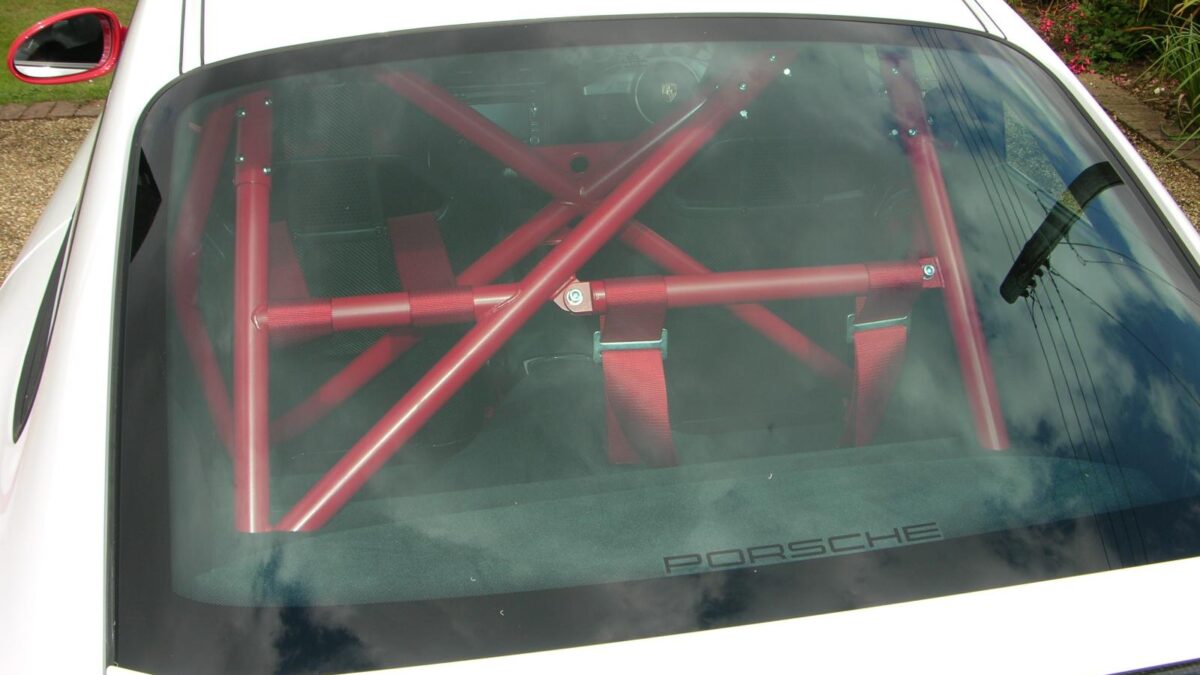
Ask ten racers about roll cage tubing size and wall thickness and you’ll get ten answers. One swears by 1.75″ DOM. Another says chromoly lets you go thinner. A forum thread quotes a table from years ago. So who’s right? The honest answer: your rulebook is right, and nobody else.
Cage tube rules are set by sanctioning bodies such as NHRA, SCCA, NASA, the FIA and the SFI Foundation. Each one writes its own rules. They depend on your class, your car’s weight or speed, and the edition you’re racing under. This guide shows you what each body covers, where its current rules are published, and how to read them. We quote a number only where we could check it on the body’s own site, and we tell you which edition it came from.
Please read this part twice. Benders Hub is not a tech inspector or an engineer. This page helps you find and understand the rules. It doesn’t replace them. Confirm everything with your current rulebook and your inspector before you buy a single stick of tube.
There is no single legal cage tube size. Your sanctioning body, class and car weight or speed decide the OD, wall and material.
- Where to look: NHRA Rulebook, SCCA Time Trials rules or GCR, NASA CCR Rule 15.6, FIA Appendix J Article 253, and SFI chassis specs. See the quick reference.
- Common themes: rules set a minimum OD and wall, often by weight or speed. Many allow a thinner wall in 4130 than mild steel. Some ban ERW tube.
- Before you buy: measure the tube with calipers and check your bender’s capacity chart against the rule.
📋 In this guide
- Why there’s no single answer
- How to read a cage tube spec
- DOM, seamless, ERW and 4130
- NHRA and SFI (drag racing)
- SCCA Time Trials and Club Racing
- NASA and the CCR
- FIA Appendix J, Article 253
- Quick reference: who governs what
- Buying tube that matches the rule
- Common mistakes and fixes
- Pro tips
- FAQ
- Your cage tube checklist
Why there’s no single answer to roll cage tubing size and wall thickness
It would be handy if one number covered every cage. It doesn’t, and for good reason. A light car at a track day and a fast drag car carry very different loads in a crash. So rulebooks scale the tube to the job.
Here are the main things that change the answer:
- Who sanctions your event. NHRA, SCCA, NASA, the FIA and others each write their own rules. Some events also use SFI specs.
- Your class or series. A series can add rules on top of the main rulebook. NASA’s Spec 3 2026 rules, for example, limit cage mounting points beyond the general CCR.
- Your car’s weight or speed. SCCA Time Trials sets minimum tube size by vehicle weight. NHRA ties many cage rules to elapsed time and vehicle type.
- Your material. Many rules allow a thinner wall in 4130 chromoly than in mild steel. Some ban ERW tube.
- The edition. Rules change. SCCA, for example, announced it had removed a small-tube option from its Time Trials safety levels.
That’s why forum answers so often disagree. One person races NHRA. Another runs SCCA. A third quotes a rulebook from years ago. All three can be right for their car and still wrong for yours.
Benders Hub is not a tech inspector or an engineer. We point you to the rules. We don’t certify cages or promise anything will pass tech. Read the current edition for your class, and confirm with your inspector before you buy tube.

How to read a cage tube spec
Cage rules use a compact shorthand. Once you can read it, any rulebook gets much easier.
OD × wall
A spec like 1.75 × .120 means 1.75″ outside diameter (OD) with a .120″ wall. Tube is sold by its real OD. That’s different from pipe, which is sold by a nominal size. A 1-1/2″ pipe, for example, actually measures 1.900″ OD. So never buy pipe to match a tube spec.
Metric rules work the same way. The FIA writes sizes like 45 × 2.5, meaning a 45 mm OD with a 2.5 mm wall. That’s about 1.772″ × .098″. It’s close to common inch sizes, but not the same.
Tiers by weight or speed
Many rules use a table. Each row covers a range of vehicle weights or elapsed times, with a minimum OD and wall for that row. Read the notes under the table carefully. They tell you how the weight is measured, and whether driver, fuel or ballast count.
Material lists
Most rules list which materials are allowed, and some list which are banned. A table might give one wall for mild steel and a thinner wall for 4130. Read every footnote.
Other cage rules
Tube size is only one part. Rulebooks also cover bend radius, welding method, mounting plates, bar placement, padding and more. Our roll cage bend radius rule guide covers the bending part.
A cage spec is a sentence, not a number. OD, wall, material, class and edition all have to match before it means anything.
DOM, seamless, ERW and 4130: the material words
Rulebooks name tube types you won’t see at the hardware store. Here’s what they mean, in plain English, and what the rules we checked say about them.
| Term | What it is | What rules we checked say |
|---|---|---|
| ERW | Electric resistance welded. Flat steel rolled into a tube and welded along a seam. | SCCA Time Trials doesn’t allow it. NASA’s own magazine says it may not be legal at all, depending on class. |
| DOM | Drawn over mandrel. NASA describes it as ERW tube that goes through an extra step to even out imperfections and make it stronger. | Allowed by SCCA Time Trials as a mild steel option. |
| Seamless | Tube made without a welded seam. | SCCA Time Trials allows seamless mild steel. FIA Article 253 (2016–2021 editions) calls for cold-drawn seamless carbon steel for main hoops. |
| 4130 chromoly | An alloy steel tube. | Allowed by SCCA Time Trials. NHRA’s past editions allow a thinner wall in 4130 and require TIG welding for it. |
| Docol R8 | A named steel tube product. | Listed as an option by SCCA Time Trials, and alongside chromoly in NHRA documents. |
| T45 | A named alloy steel tube. | Listed as an alloy steel option by SCCA Time Trials. |
Sources: SCCA Time Trials safety rules, NASA and the FIA and NHRA documents linked below.
Two practical points. First, “mild steel” in a rulebook usually means DOM or seamless, not any tube from the yard. Second, chromoly isn’t automatically better. It’s harder to bend, it springs back about twice as much as mild steel (according to JD2’s bender manual), and it may require TIG welding. Our DOM vs 4130 chromoly guide covers the trade-offs.
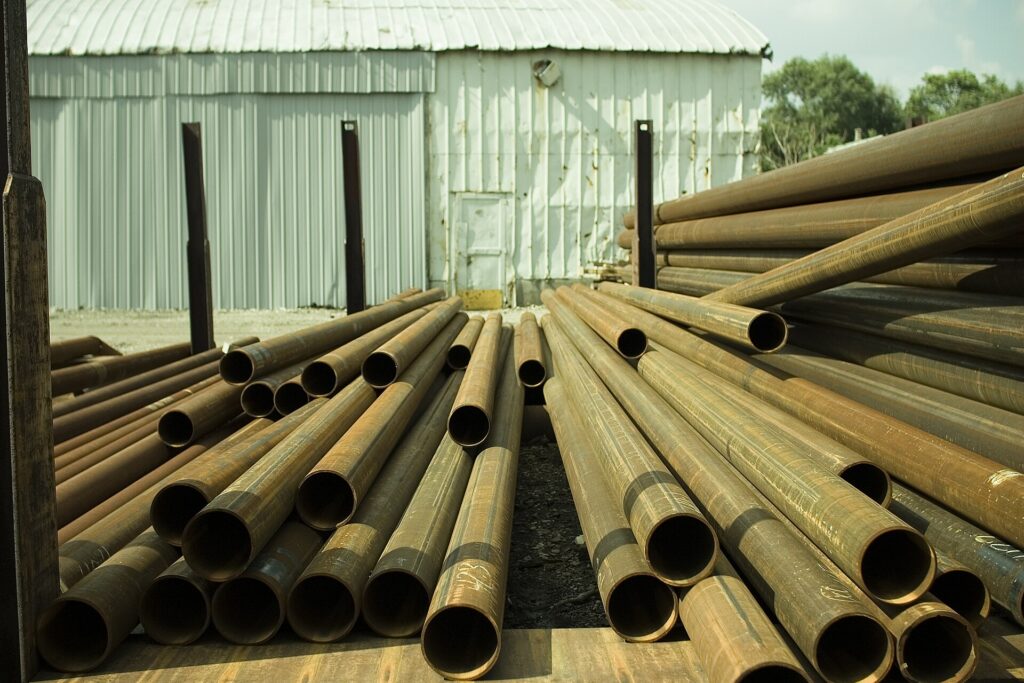
NHRA and SFI: drag racing cages and chassis
NHRA
NHRA publishes a new rulebook each year. The 2026 NHRA Rulebook is sold through NHRA’s member shop. Changes are posted free as amendments on NHRARacer.com, such as the 2026 rule amendments PDF. NHRA has also announced 2026–2027 amendments that take effect on January 1, 2027.
NHRA’s cage rules depend on your elapsed time, vehicle type, and whether you need a roll bar or a full cage. Quicker cars can also need NHRA chassis certification.
What past editions show. NHRA’s 2019 General Regulations and 2017 rulebook are still posted on an NHRA site. In their roll bar and roll cage tube specs, they pair a .118″ mild steel wall with a .083″ 4130 wall. The OD depends on the section and class. Both 1-3/4″ and 1-5/8″ appear. The 2019 edition also says mild steel construction needs a .118″ minimum wall. These are past editions, shown here only to explain the format. Don’t build to them.
Welding. Those same 2017 and 2019 editions say all 4130 chromoly tube welding must be done by an approved TIG (heliarc) process, while mild steel may be MIG or TIG. NHRA’s 2024 Exhibition Vehicle Rulebook Supplement also requires TIG on chromoly. Check the current wording.
SFI Foundation
The SFI Foundation writes specs for safety equipment, including drag racing chassis and roll cages. Its spec list includes the 25.x series for full-bodied car tube chassis. For example, Spec 25.4D covers a “Full Bodied Car Tube Chassis Roll Cage” for 7.50 to 8.49 second ET cars up to 3,600 lb. Revision 25.4D took effect on July 2, 2021. The 2.x series covers dragster chassis. SFI posts revision notices on its site, and chassis specs are ordered from SFI. If your class calls for an SFI chassis spec, get that exact spec and revision.
SCCA: Time Trials and Club Racing
SCCA runs several programs, and cage rules sit in different places for each.
Time Trials and HillClimb
SCCA Time Trials publishes its safety rules online, organized into safety levels. For roll cages, the rules we checked say:
- Tube size by weight. Safety Level 3 sets a minimum OD and wall for each vehicle-weight range.
- Materials. Seamless or DOM mild steel (SAE 1020 or 1025 recommended), alloy steel (SAE 4130 or T45), or Docol R8. ERW tube isn’t allowed.
- Bend radius. All cage bends must have a radius of at least three times the tube diameter, measured at the centerline.
A real example of rules changing. In an announcement on its Time Trials site, SCCA said it removed the 1.00 × 0.060 tube allowance for vehicles up to 1,000 lb. That left a new minimum of 1.25 × 0.090 for vehicles up to 1,500 lb. The change applies to Safety Levels 2 and 3, mainly used by Unlimited classes in Time Trials and HillClimb. Check the current safety rules for the full table before you buy.
Club Racing
SCCA Club Racing uses the General Competition Rules (GCR). Its roll cage section covers tube sizes along with many other cage details. We couldn’t open the current GCR text, so we won’t quote its table. Tables quoted on forums differ between editions. Get the current GCR from SCCA and read the cage section for your class.
A cage built for SCCA Time Trials isn’t automatically legal for SCCA Club Racing, or the other way around. If you plan to run both, compare both rule sets item by item.
NASA: the Club Codes & Regulations
NASA (the National Auto Sport Association) puts its general rules in the Club Codes & Regulations (CCR). Roll cage rules sit in Rule 15.6. You’ll find the CCR and series rules on NASA’s rules page.
NASA’s own magazine says the rulebook is very clear about what tubing is required for different car weights and classes. It also explains the tube types. It describes ERW as mild steel made from a flat sheet, rolled into a tube and welded. It describes DOM as ERW tube that’s had an extra step to even out imperfections and make it stronger. It adds that ERW may need a larger size, or may not be legal at all, depending on the rules.
We couldn’t open the current CCR text, so we won’t quote its tube table. Forum posts quote CCR tables from different years. Read Rule 15.6 in the current CCR yourself.
Series rules can add to the CCR
NASA series often have their own rules on top of the CCR. NASA’s Spec 3 2026 National Rules, for example, follow the CCR but limit the cage to six chassis mounting points, plus two more for foot protection. They also ban one design that the CCR shows as acceptable. So check both the CCR and your series rules.
If you’re building for a NASA series, read the series rules first. Then read CCR 15.6 for everything the series doesn’t change. Then talk to a NASA tech inspector before you order tube. That order saves you from building to the general rule when your series is stricter.
FIA: Appendix J, Article 253
For international racing and many national clubs that follow FIA rules, cages fall under Appendix J, Article 253 (Safety Equipment). The FIA’s regulations page lists a 2026 edition of Article 253 for Groups N, A and RGT, dated June 23, 2026 by the World Motor Sport Council.
We read earlier editions on fia.com. Here’s what they say:
- Main and lateral rollbars: in the 2016 to 2021 editions, 45 × 2.5 mm or 50 × 2.0 mm tube in cold-drawn seamless unalloyed carbon steel, with a minimum tensile strength of 350 N/mm². See the 2021 edition.
- Tube shape: only circular-section tubes are allowed.
- Bending: tube must be bent by a cold working process, with a centreline bend radius of at least three times the tube diameter (2013, 2019 and 2020 editions).
- Bend quality: if a tube ovalises during bending, the ratio of minor to major diameter must be 0.9 or greater. Bends must be smooth, without ripples or cracks.
For an inch-based shop, 45 × 2.5 mm is about 1.772″ × .098″, and 50 × 2.0 mm is about 1.969″ × .079″. Those aren’t standard inch sizes, so source metric tube and matching dies. If you race with a national club that follows FIA rules, ask which edition it uses.
Because a 2026 edition exists, check its text for your group before you buy tube. The FIA also keeps older editions online, which helps when you’re working on a historic car.
Use the true OD of your tube when you choose dies and check bend radius. Our bend calculator works out D of bend and lengths, so you can check a metric tube on your die in seconds.
Quick reference: who governs what
Here’s a one-page summary of where each body’s cage rules live, and what we could confirm on its official site. “Check” means we couldn’t open the current text, so we’re not quoting a number.
| Body | Where the rules live | Tube size basis | What we confirmed |
|---|---|---|---|
| NHRA | Annual NHRA Rulebook (member shop) plus amendments on NHRARacer.com | Elapsed time, vehicle type, roll bar vs cage | Past editions (2017, 2019): .118″ mild steel or .083″ 4130 wall; TIG for 4130. Check the 2026 edition. |
| SFI | SFI spec documents (25.x, 2.x) | Chassis type and ET bracket | 25.4D scope: full-bodied tube chassis, 7.50–8.49 s ET, up to 3,600 lb |
| SCCA Time Trials | Online safety rules | Vehicle weight | DOM/seamless/4130/T45/Docol R8, no ERW; 3× bend radius; 1.25 × 0.090 minimum up to 1,500 lb (Levels 2–3) |
| SCCA Club Racing | General Competition Rules (GCR) | Vehicle weight | Check the current GCR |
| NASA | CCR Rule 15.6 plus series rules | Weight and class | Check the current CCR |
| FIA | Appendix J, Article 253 | Cage member | 2016–2021: 45 × 2.5 or 50 × 2.0 mm main/lateral; 3× bend radius; 0.9 ovality ratio. Check 2026. |
These are composite stories. The same situations come up again and again in garage-fab forums and build threads.
A builder finds a tube table in a forum thread for their class and orders tube to match. Before welding, they buy the current rulebook. The table in the thread came from an older edition, and the weight bands have changed. Their car now falls in a different row.
Lesson: forum tables are clues, not rules. Always read the current edition yourself.
Someone wants to run both a time-trial program and wheel-to-wheel racing. They build to one rulebook, then find the other has different rules for their car. They end up adding bars and reworking mounts.
Lesson: if you’ll race with more than one club, compare every item first and build to the stricter rule.
Buying cage tube that matches the rule
Once you know your spec, buying and checking tube is straightforward. Here’s the routine we’d follow.
- Write the full spec. OD, wall, material, rulebook, class and edition. Keep it with your build notes.
- Order tube, not pipe. Ask for the exact OD, wall and material by name, such as DOM or 4130. Get it on the invoice.
- Ask for paperwork. Ask the supplier for any material certificate they can provide. Keep it with the invoice.
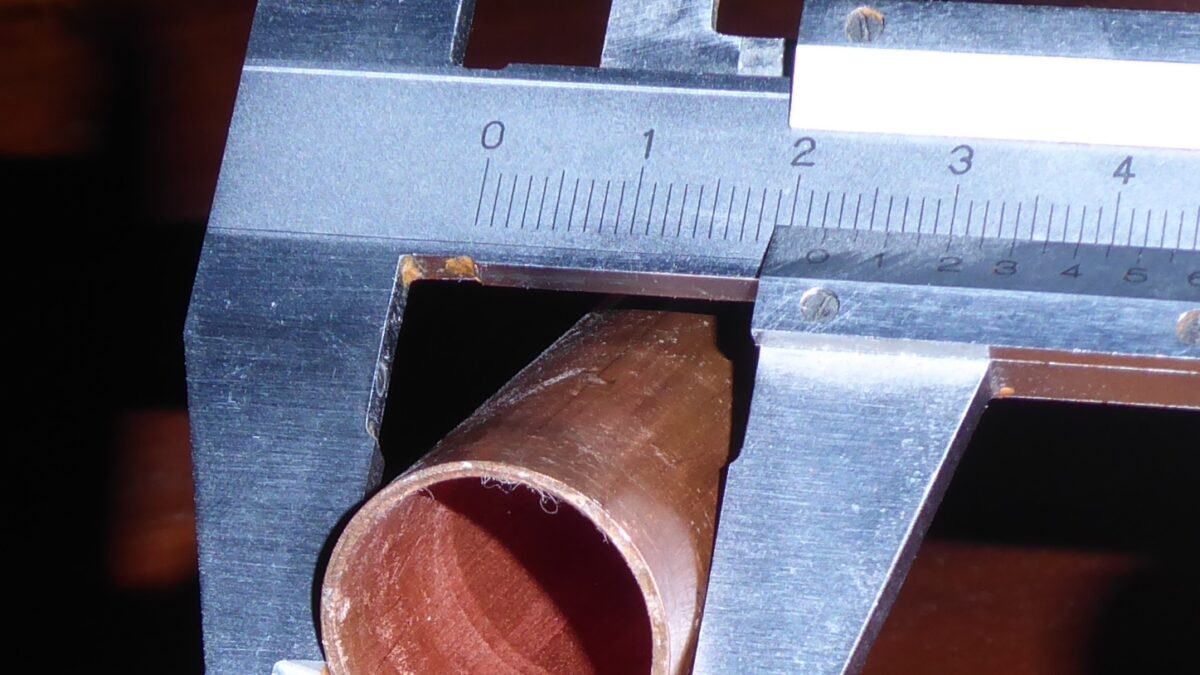
- Measure on arrival. Use calipers on a cut end to check OD and wall. Check more than one stick.
- Check your bender. Make sure its capacity chart covers your OD, wall and material. See the table below.
- Check your die. Divide the die’s CLR by your OD and compare with any bend radius rule.
| Bender | Mild steel rating | 4130 rating | Where to buy |
|---|---|---|---|
| Eastwood High Capacity | 2″ × .120″ | .090″ wall max | Amazon |
| Baileigh RDB-050 | 2.5″ × .120″ | 2″ × .120″ | Amazon |
| Pro-Tools 105HD | To .134″ wall | 2″ × .134″ (extension handle) | Direct from Pro-Tools |
| JD2 Model 32 | Over 2″ × .120″ needs hydraulics; 2″ × .250″ DOM with them | See JD2 charts | Direct from JD2 |
Example: if your rule calls for a .083″ 4130 wall, Eastwood’s .090″ chromoly limit covers it. If it calls for a thicker chromoly wall, look at a bender with a higher 4130 rating. Our best tube bender for roll cage guide compares these in detail, and our capacity chart guide explains how to read maker charts. One firm rule: never bend cage tube in a bottle-jack pipe bender. See pipe bender vs tube bender for why.
As an Amazon Associate I earn from qualifying purchases.
Check OD and wall: a digital caliper
NEIKO 01407A Electronic Digital Caliper, 0–6″
For checking the OD and wall of cage tube before you bend it.
Your tube has to match the rule, so measure it. A digital caliper reads OD across the tube and wall thickness at a clean cut end. This one switches between inches, fractions and millimetres, which helps with metric FIA sizes.
Who it’s for: anyone buying cage tube. Check the pack quantity on the listing before you order.
- Range
- 0–6″ (0–150 mm)
- Resolution
- 0.0005″ / 0.01 mm
- Modes
- Inch, fraction, mm
- Body
- Stainless steel
Need a bender rated for your tube? See the Eastwood High Capacity or Baileigh RDB-050. Affiliate links. See our disclosure.
Common cage tube mistakes (and how to fix them)
These mistakes come up again and again. Each one can cost you tube, time or a failed inspection.
❌ Treating forum numbers as rules. Threads quote old editions, other classes and other clubs.
✅ Fix: read the current official rulebook for your class. Note the edition.
❌ Buying pipe instead of tube. Pipe is sold by nominal size, and it may be ERW.
✅ Fix: order tube by OD, wall and material by name. Get it on the invoice.
❌ Ignoring the weight or speed tier. Add weight or go quicker, and your car may move into a row that needs bigger tube.
✅ Fix: check which row your car fits now and where it may land after upgrades. Build for the likely future row.
❌ Choosing chromoly without checking welding rules. Some rules require TIG for 4130.
✅ Fix: confirm the welding method in your rulebook before you buy chromoly.
❌ Buying tube your bender can’t bend. Makers often rate 4130 lower than mild steel.
✅ Fix: check the bender’s capacity chart for your OD, wall and material before you order.
❌ Building to one club’s rules for two clubs. Rules differ between bodies and programs.
✅ Fix: compare both rule sets and build to the stricter one for each item.
Pro tips for getting cage tube right
These habits make tech day calmer and your build easier to defend. They cost almost nothing.
- 💡 Keep a rules folder. Save the rulebook PDF or receipt, the edition date, and any amendments with your build notes.
- 💡 Talk to an inspector before you buy. Bring your spec and a sketch. It’s the cheapest advice you’ll get.
- 💡 Buy all your tube at once. One order means one material and one batch. Bends will be more consistent.
- 💡 Mark your sticks. Write the OD, wall and material on each stick with a paint marker. Offcuts stay identifiable.
- 💡 Keep the paperwork with the car. Invoices and certificates help answer “what is this tube?” at tech.
- 💡 Check the glossary. Rulebook terms can be confusing. Our glossary explains the common ones.
- 💡 Read the whole cage section. Tube size is one rule among many. Mounting plates, padding and bar placement matter too.
Experienced builders often check where their car may end up after future upgrades. Building to that row now can save cutting out and replacing bars later. Confirm the plan with your inspector.
Ready to build? Our guide on how to build a roll cage covers layout, bending, notching and fit-up. And read our workshop safety notes before you start cutting.
Frequently asked questions
What size tubing is required for a roll cage?
It depends on your sanctioning body, class and car weight or speed. Each rulebook sets a minimum OD, wall and allowed materials. Read the current edition for your class and confirm with your inspector.
Is 1.75 × .120 DOM legal for a roll cage?
It’s a popular size in build threads. Whether it meets your rule depends on your rulebook, class and car weight. Check the current table for your class. Don’t rely on what other builders used.
Can I use ERW tube for a roll cage?
Often not. SCCA Time Trials doesn’t allow ERW. NASA’s magazine notes it may not be legal at all, depending on class. Check your own rulebook.
Can a chromoly cage use thinner wall than mild steel?
Many rulebooks allow it. NHRA’s past editions, for example, paired .118″ mild steel with .083″ 4130. But chromoly may need TIG welding and a bender rated for 4130. Check the current rules.
Where do I find the current NHRA rulebook?
NHRA sells the yearly rulebook through its member shop. Amendments are posted free on NHRARacer.com. Check both, since amendments change the book during the year.
Can Benders Hub tell me if my cage is legal?
No. Benders Hub is not a tech inspector or an engineer. We explain where the rules are and how to read them. Your rulebook and your inspector decide.
Your cage tube checklist
Tick off each item before you order tube. It takes a few minutes and keeps your build on the right side of the rules.
- I know which sanctioning body and class my car will run
- I have the current rulebook, plus any series rules and amendments
- I’ve noted the edition and date of every rule I’m using
- I’ve found the right row for my car’s weight or speed
- I’ve written down the required OD, wall and allowed materials
- I’ve checked the welding method for my material
- I’ve shown my spec and sketch to a tech inspector
- I’m ordering tube, not pipe, by OD, wall and material name
- My bender and die are rated for this OD, wall and material
- I’ll measure OD and wall with calipers when the tube arrives
Roll cage tubing size and wall thickness aren’t a mystery once you know where to look. Find your rulebook, read the current edition, and match your tube, bender and welding to it. Then let your inspector confirm it. That’s how a cage gets built right the first time. 🏁
Check your tube and die together
Enter your tube’s OD, wall and die CLR to see D of bend and wall factor in seconds. Or find a bender that can handle your rulebook’s tube.
Keep reading

Roll Cage Bend Radius Rule: Is Your Die Legal? (3× Check)
The roll cage bend radius rule in SCCA Time Trials and FIA books is 3× tube diameter at the centerline. Here's how…
Aluminized vs Stainless Exhaust Tubing: 409, 304, 321 & Titanium
Aluminized vs stainless exhaust tubing explained: 409, 304, 321 and titanium compared on bending, welding, heat and corrosion, with sourced data.
Best Tube Bender for Chromoly: Picks by Published 4130 Rating
The best tube bender for chromoly has a published 4130 rating. Compare Baileigh, Eastwood and Pro-Tools 4130 capacities, springback tips and more.