Tube Bender Capacity Chart: Published Limits for 9 Benders
A tube bender capacity chart built only from maker-published specs: OD, wall and 4130 limits for 9 benders, one source per row, with conflicts flagged.

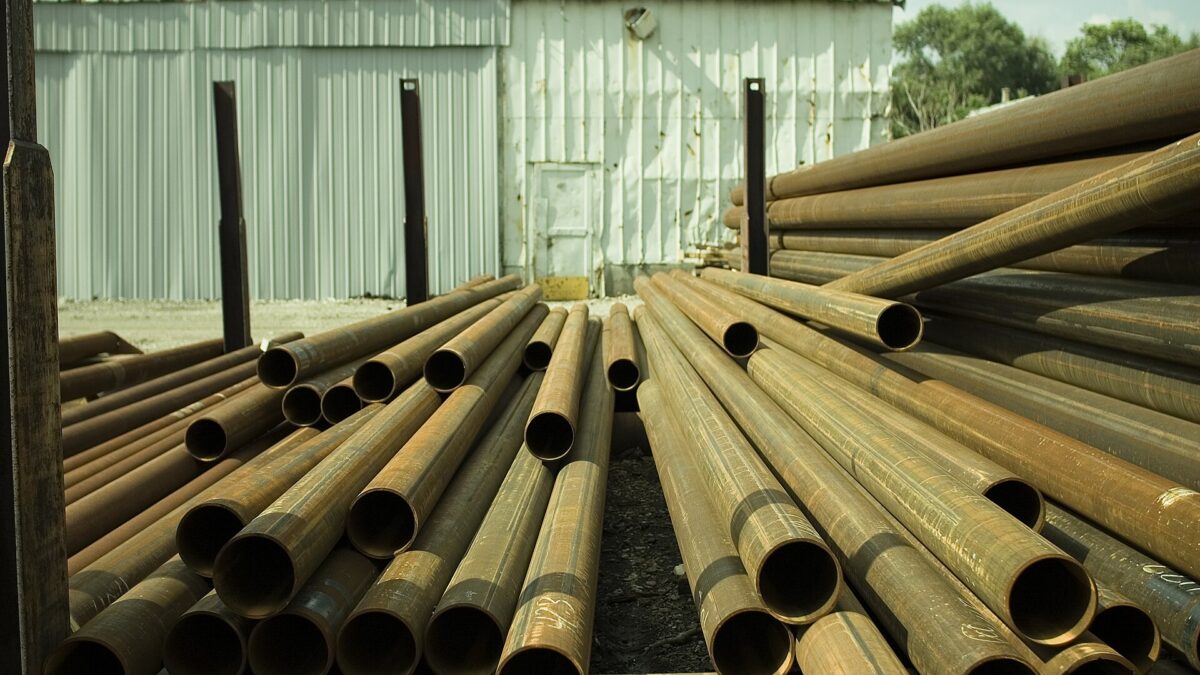
“Will my bender bend this tube?” It’s the most common question in garage fabrication, and the answer lives in one place: the maker’s capacity chart. The trouble is that every maker writes it differently. This tube bender capacity chart puts the published limits of nine popular benders on one page, with a source link for every row.
We built it only from numbers the makers themselves publish, on product pages, FAQs, manuals and their own retail listings. We didn’t fill gaps with forum claims. Where a number isn’t published, the cell says so. Where two official sources disagree, we show both and flag it with ⚠️.
You’ll also learn how to read a capacity chart: what “max wall” really means, why chromoly is rated lower, why a die can have its own limits, and how pipe sizes sneak in. By the end, you’ll be able to look at any maker’s chart and answer the big question for your own tube in a couple of minutes.
A capacity chart lists the outside diameter (OD), the wall thickness and the material a bender can handle. Read all three together.
- Heaviest published wall: 2″ × .250″ DOM, for the JD2 Model 32 with hydraulics and the Rogue Fab M625.
- Chromoly is rated lower: Eastwood caps 4130 at .090″ wall; Baileigh rates the RDB-050 to 2″ × .120″ 4130.
- Dies have limits too: Rogue Fab’s chart lists a minimum wall for each die, not just a maximum.
- Pipe isn’t tube: a pipe bender rated for “2 inch” pipe is talking nominal pipe size, not OD.
📋 In this guide
- What a capacity chart tells you
- The cross-brand capacity chart
- How to read a capacity chart
- Die limits: minimum and maximum wall
- Mild steel, DOM, 4130 and other materials
- Pipe sizes on a capacity chart
- Where the makers’ numbers conflict
- Worked examples
- Real-life capacity lessons
- Common mistakes
- Pro tips
- FAQ
- Capacity checklist
What a capacity chart tells you (and what it doesn’t)
A capacity chart is the maker’s promise about what its bender can do. At minimum, it should give you three numbers for each tube: the outside diameter, the maximum wall thickness, and the material the rating applies to. Good charts add more, such as solid bar limits, square tube sizes, minimum wall by die, and notes on when you need hydraulics.
Why does it matter so much? Because force rises fast with wall thickness and with harder material. A bender that pulls 1.75″ × .095″ mild steel with ease may stall on the same OD in thick wall. The same bender may be rated lower again for 4130 chromoly. The chart is how the maker tells you where those lines are.
What a chart can’t tell you
- How a bend will look. A rating says the machine can pull the tube, not that the result will be wrinkle-free on every die.
- Springback. That changes with material, batch and die. You measure it with a test bend.
- Whether your project is legal. For roll cages and roll bars, your rulebook sets tube size, wall and bend radius.
- Cross-brand die fit. That’s a separate question, covered in our tube bender die compatibility guide.
Think of a capacity chart like the load rating on a trailer. Staying inside it is the starting point, not a guarantee of a perfect trip. Staying well inside it, with some headroom, is where good results live.
The cross-brand tube bender capacity chart
Here’s the main chart. Every row comes from the maker’s own published material, checked in October 2026, with one source link per row. “Not published” means we couldn’t find that number from the maker. It doesn’t mean the machine can’t do it. Nobody at Benders Hub has bent tube on these machines for this page. These are the makers’ numbers, not ours. Read more about how we research.
As an Amazon Associate I earn from qualifying purchases.
| Bender | Round tube OD | Max wall, mild steel / DOM | 4130 chromoly | Other published limits | Source |
|---|---|---|---|---|---|
| JD2 Model 32 (manual) | 1/2″–2-1/2″ | Round tube over 2″ × .120″ needs hydraulics | No separate max published | Square over 1-1/2″ and solid over 1″ need hydraulics | JD2 |
| JD2 Model 32 (hydraulic) | 1/2″–2-1/2″ | 2″ × .250″ DOM | No separate max published | Solid round to 1-1/2″; square to 2″ | JD2 |
| Rogue Fab M601 | Up to 1.75″ | 1.75″ × .156″ | Grouped with carbon steel | Shares dies with the M605 and M625 | Rogue Fab |
| Rogue Fab M605 | Up to 2.00″ | ⚠️ 2.00″ × .188″ (catalogue) vs .250″ DOM (FAQ) | Grouped with carbon steel | 1-1/2″ solid bar | Rogue Fab FAQ |
| Rogue Fab M625 | Up to 2.00″ | 2.00″ × .250″ DOM | Grouped with carbon steel | 1-3/4″ solid bar | Rogue Fab |
| Baileigh RDB-050 | 3/4″–2.5″ | 2.5″ × .120″ | 2″ × .120″ | Max CLR 7″ | Baileigh |
| Pro-Tools 105HD | 1/2″–2″ | .134″ | 2″ × .134″ with the 36″ extension handle | NPS 1/4–1-1/2 pipe; square 1/2″–1-1/2″; min wall depends on die | Pro-Tools |
| Woodward Fab WFB2 | Up to 2″ | Not published for the frame. Die listings show .134″ | Not published | Round, square and Sch 40 pipe dies | Woodward Fab |
| Eastwood High Capacity | ⚠️ 1″–2″ (Eastwood) vs 3/4″–2″ (one Amazon bullet) | 2″ × .120″ | .090″ wall | Round tube dies only | Eastwood instructions |
| Harbor Freight 12-ton (ram) | Not rated for tube | 1/2″–2″ Sch 40/80 pipe only | Not rated | Not for thin-wall pipe such as conduit or exhaust | HF manual |
Three of these machines are sold on Amazon: the Baileigh RDB-050, the Eastwood High Capacity and the Woodward Fab WFB2. JD2, Rogue Fab and Pro-Tools sell direct, and Harbor Freight sells in its stores. For drive types, bend angles and where to buy, see our full tube bender comparison.
Rogue Fab’s die chart puts 4130 in the same carbon steel column as 1020 DOM, HREW and ERW. That’s Rogue’s die-level chart. It isn’t a separate machine rating for chromoly, so ask Rogue about your exact 4130 tube.
How to read a tube bender capacity chart, step by step
Capacity charts look intimidating, but you read them the same way every time. Grab your tube’s real size, then work through these steps. If you get stuck at any step, that’s your question for the maker.
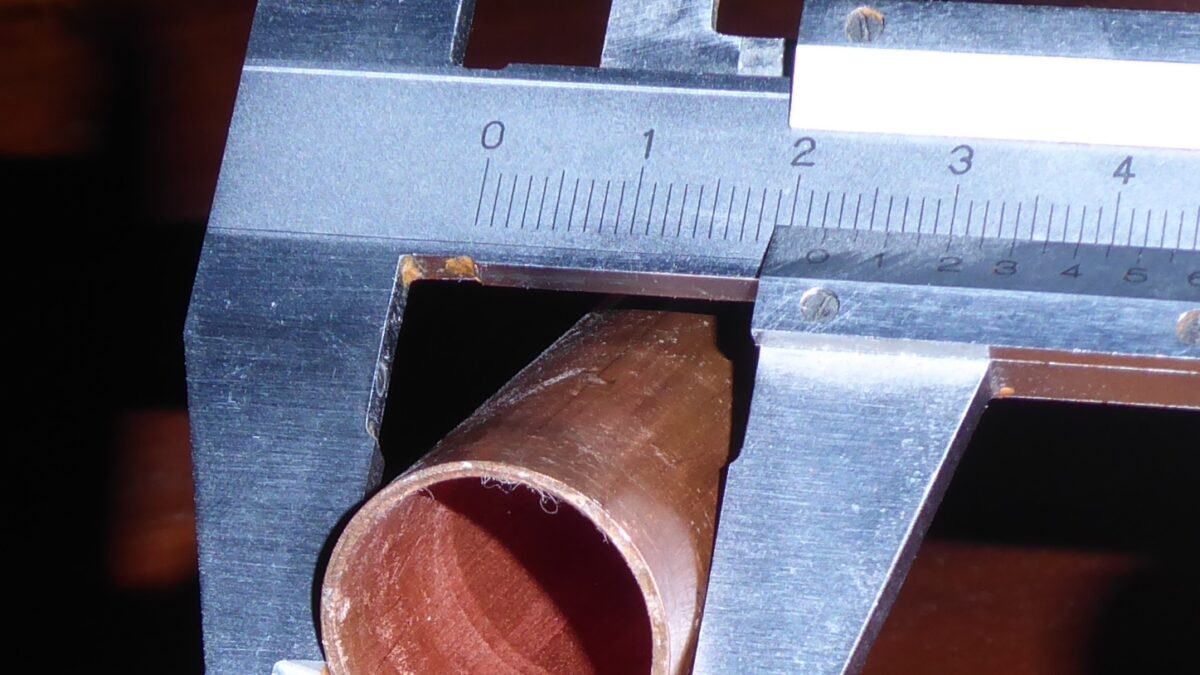
- Measure your tube. Use calipers to check the real OD and wall. Mill tolerances and mixed-up stock are common, and a few thousandths can matter on thick wall.
- Name the material. Mild steel ERW, DOM, 4130 chromoly, stainless and aluminium all bend differently. Find the column or note that matches yours.
- Find your OD row. Check that the bender’s range covers your OD. Then check that the maker sells a die in that OD.
- Check the max wall. Is your wall at or under the published figure for your material? If the chart splits manual and hydraulic limits, use the one that matches your setup.
- Check the min wall. Some charts list a minimum wall for each die. Thinner tube than that can wrinkle or flatten.
- Read the footnotes. Look for notes like “two pressure dies required” or “hydraulics required”. They’re part of the rating.
- Check the die’s own listing. A die can have a wall basis or limit of its own that’s tighter than the machine’s headline.
- Leave headroom. Don’t plan a whole project at the very top of the chart. Ratings are limits, not targets.
Words you’ll see on capacity charts
| Term | What it means | Why it matters |
|---|---|---|
| OD | Outside diameter of the tube | Sets which die you need |
| Wall | Thickness of the tube wall, often in thousandths (.120″) | The biggest driver of bending force |
| DOM | Drawn over mandrel steel tube | A common structural tube; many charts quote DOM |
| 4130 / chromoly | A chromium-molybdenum alloy steel | Often rated at a lower wall than mild steel |
| NPS / Schedule | Nominal pipe size and wall class | Pipe sizes don’t match the real OD |
| CLR | Centerline radius of the bend, set by the die | Tighter CLR makes a bend harder |
| Solid | Solid bar, no hole | On some charts, the top of a die’s wall range |
Two more numbers help you judge how hard a bend is. D of bend is CLR ÷ OD, and wall factor is OD ÷ wall (Pro-Tools). Our bend calculator works both out for you, and our guide to wall factor and D of bend explains them in depth.
Die limits: minimum and maximum wall by CLR
Here’s something many first-time buyers miss. The bender’s headline rating is only half the story. Each die has its own limits, and some makers publish them. The most detailed public example we found is Rogue Fab’s tube capacity chart for its M6xx series dies. It lists a minimum and a maximum wall for each die, by material.
| Rogue Fab round die (OD × CLR) | Carbon steel min wall | Carbon steel max | Aluminium min wall | Stainless min wall | Source |
|---|---|---|---|---|---|
| 1.00″ × 3.5″ | .063″ | Solid | .125″ | .075″ | Rogue Fab |
| 1.25″ × 4.5″ | .075″ | Check with maker | .125″ | .083″ | Rogue Fab |
| 1.50″ × 6.0″ | .078″ | Solid (two pressure dies) | Check with maker | Check with maker | Rogue Fab |
| 1.75″ × 6.0″ | .095″ | .250″ (two pressure dies) | Check with maker | Check with maker | Rogue Fab |
| 2.00″ × 6.0″ | .120″ | .250″ | .125″ | .156″ | Rogue Fab |
What the Rogue Fab chart teaches
- Minimum wall is real. Go thinner than the die’s minimum and you risk wrinkles and flattening. Rogue says bending at the absolute minimum gives the most deformation.
- Footnotes change the setup. Rogue says you need two pressure dies at .156″ wall or thicker.
- Thin wall has rules too. At .120″ or .134″ wall and thinner, Rogue asks you not to use the back pressure die location.
- A mandrel lowers the floor. Rogue’s mandrel attachment extends minimum wall well below the standard chart. Its 2025 catalogue lists .065″ for the 1.75″ × 6.0″ die with the mandrel, versus .095″ without.
- Bigger CLR is kinder. Rogue suggests bending thicker than the minimum and on the largest CLR you can.
Other makers’ die notes
Baileigh’s RDB-050 tooling page notes the wall that each set’s CLR is based on: .095″ for 1-3/4″ × 6″, .109″ for 2″ × 6″, and .120″ for 2-1/2″ × 7″. That’s a CLR basis, not a stated limit. Still, if your wall differs from it, ask Baileigh how the die will behave. Woodward Fab lists a .134″ max wall on its 1-3/4″ × 6″ CLR 180° round die and on the 2″ × 6″ CLR die sold on Amazon. Pro-Tools says minimum wall depends on the die and points you to its die charts.
Mild steel, DOM, 4130 and other materials
The same OD and wall can be easy in one material and over the limit in another. That’s why good capacity charts name the material. When a chart doesn’t, assume the rating is for mild steel and ask about anything harder.
Mild steel and DOM
Most headline ratings are for mild steel, and many quote DOM specifically. Common chart values you’ll see are .120″, .188″ and .250″ wall. Among the machines in our chart, JD2 (with hydraulics) and the Rogue Fab M625 publish 2″ × .250″ DOM. The Baileigh RDB-050 and Eastwood High Capacity top out at .120″. The Pro-Tools 105HD lists .134″.
4130 chromoly
Chromoly takes more force and springs back more. JD2 says 4130 springs back about twice as much as mild steel of the same size and wall. JD2’s Model 32 manual also gives example hydraulic pressures: about 900 psi for 1-3/4″ × .095″ mild steel, 1,400 psi for 1-5/8″ × .083″ 4130, and 3,100 psi for 1-1/2″ solid bar. Notice that the chromoly example is a smaller, thinner tube, yet it needs more pressure.
Published 4130 ratings in our chart are Baileigh RDB-050 at 2″ × .120″, Pro-Tools 105HD at 2″ × .134″ with its extension handle, and Eastwood at .090″ wall. More in our best tube bender for chromoly guide.
Stainless and aluminium
Rogue Fab’s chart shows stainless needing a thicker minimum wall than carbon steel on the same die. For example, it lists .156″ for stainless on the 2.00″ × 6.0″ die, versus .120″ for carbon steel. For 6061-T6 aluminium, Rogue recommends about 3.5–4D and calls 3D marginal. Rogue also says its aluminium ratings are based on its own testing. See bending aluminum tube for more.
If you need a published chromoly rating on Amazon
Baileigh RDB-050 Manual Rotary Draw Bender
Rated by Baileigh for 2.5″ mild steel and 2″ × .120″ chromoly.
Of the three Amazon machines in our chart, the RDB-050 has the highest published chromoly figure. It’s a manual bender with a 3-speed ratchet (4°, 8° or 12° per pull) and an anti-springback mechanism.
Who it’s for: builders who bend 4130 by hand and want a maker-published rating to plan around.
What to check: RDB-050 dies are model-specific, and each set notes the wall its CLR is based on.
- Mild steel
- 3/4″ to 2.5″ OD, .120″ wall
- 4130 chromoly
- 2″ OD × .120″ wall
- Bend angle
- Baileigh lists both 190° and 200°
- Max CLR
- 7″
- Sold separately
- Dies
Strengths on paper
- Clear mild steel and 4130 ratings
- Ratchet speeds for big tube by hand
Know before you buy
- Tops out at .120″ wall
- A bigger investment than entry-level frames
Affiliate link. See our disclosure.
Pipe sizes on a capacity chart
Some capacity charts are written in pipe sizes, and that trips up a lot of people. Tube is sold by its real outside diameter. Pipe is sold by a nominal pipe size (NPS) plus a schedule that sets the wall. The nominal size doesn’t match the outside. For example, 1-1/2″ NPS pipe measures 1.900″ OD, and 1-1/4″ NPS measures 1.660″.
So when a chart says “1/2″ to 2″ pipe”, it isn’t saying “2-inch tube”. The Harbor Freight 12-ton bender is rated for 1/2″ to 2″ Schedule 40 and 80 pipe. Its manual says it isn’t intended for thin-wall pipe such as conduit or exhaust. That rating tells you nothing about structural tube.
Rotary-draw benders can bend pipe too, with pipe dies. The Pro-Tools 105HD lists NPS 1/4 to 1-1/2 and says its benders are rated on mild steel Schedule 40 pipe. Woodward Fab sells Schedule 40 pipe dies for the WFB2, such as 1-1/2″ pipe at 6″ CLR.
| What the chart says | What it means | Real OD |
|---|---|---|
| 1-1/2″ tube | Tube with a 1.500″ outside diameter | 1.500″ |
| 1-1/2″ NPS pipe | Nominal pipe size 1-1/2 | 1.900″ |
| 1-1/4″ NPS pipe | Nominal pipe size 1-1/4 | 1.660″ |
| Schedule 40 / 80 | Pipe wall class; 80 is thicker than 40 | Same OD, different wall |
The fix is simple. Measure with calipers, and buy dies for the real OD you’ll bend. Our guide to pipe bender vs tube bender covers the differences in full.
Where the makers’ capacity numbers conflict
Even official sources disagree sometimes. A maker updates a frame, and one page changes while another doesn’t. Or a retail listing is copied from an older description. We don’t pick a winner silently. Here are the conflicts that touch capacity.
- ⚠️ Rogue Fab M605 wall: Rogue’s catalogue and comparison table say 2.00″ × .188″. Its FAQ says up to .250″ DOM. Rogue rates its heavier M625 frame to 2.00″ × .250″ DOM.
- ⚠️ Eastwood High Capacity OD range: Eastwood’s own page says 1″ to 2″. The Amazon listing gives 3/4″ in one bullet and 1″ in another.
- ⚠️ JD2 Model 32 manual limit: JD2 says round tube over 2″ × .120″ needs hydraulics. One retailer’s copy reads as if .250″ wall is possible by hand.
- ⚠️ Woodward Fab WFB2: there’s no single frame wall rating. Limits sit on each die listing, so read the one for your size.
What should you do with a conflict? Plan around the lower figure. Then email the maker with your exact tube and ask them to confirm the higher one. Keep their reply. If it’s a yes, great. If it’s a no, you’ve saved a stick of tube and maybe a die.
A capacity chart is a limit, not a target. Plan your project in the middle of the chart, and save the top line for the day you truly need it.
Also check the date on any chart you rely on. Makers revise ratings as frames and dies change, and old pages can linger. If a number matters to a big project, ask whether it’s still current.
Worked examples: can my bender bend this tube?
Let’s run four common tubes through the chart. These use only the published numbers above. “Yes on paper” means the tube sits inside the maker’s rating. It’s still worth a confirming email for anything near the limit.
Example 1: 1.75″ × .120″ DOM mild steel
This is a classic bumper and slider size. On a 6″ CLR die it works out to about 3.4D (6 ÷ 1.75) with a wall factor of about 14.6 (1.75 ÷ .120). It’s inside the published mild steel ratings of every rotary-draw machine in our chart. For the WFB2, that rating comes from the die listing. On Rogue’s 1.75″ × 6.0″ die, .120″ sits between the .095″ minimum and the .250″ maximum, and it’s under the .156″ two-pressure-die line. On Baileigh’s 1-3/4″ × 6″ RDB-050 set, the CLR is based on .095″ wall, so ask Baileigh how .120″ behaves in that die.
Example 2: 1.75″ × .120″ 4130 chromoly
Now the list shrinks. Eastwood caps 4130 at .090″ wall, so the High Capacity is out. Baileigh (2″ × .120″) and Pro-Tools (2″ × .134″ with its extension handle) cover it on paper. JD2 doesn’t publish a separate 4130 maximum, so ask. Rogue groups 4130 with carbon steel on its die chart, so check with Rogue too.
Example 3: 2″ × .250″ DOM
Only a few published ratings reach this. JD2 rates the Model 32 to 2″ × .250″ DOM with hydraulics, and Rogue rates the M625 to 2.00″ × .250″ DOM. The M605 depends on which Rogue page you read. Baileigh, Pro-Tools and Eastwood all top out below .250″ wall.
Example 4: 1-1/2″ Schedule 40 pipe handrail
Remember, that’s 1.900″ OD. The Harbor Freight 12-ton covers it by its pipe rating. The Pro-Tools 105HD lists NPS up to 1-1/2. Woodward Fab sells a 1-1/2″ Schedule 40 pipe die for the WFB2. For the others, ask the maker about pipe dies.
Enter your OD, wall and die CLR in our bend calculator. It gives D of bend and wall factor instantly, so you can spot a tough combination before you order tube.
Real-life capacity lessons
These are composite stories. The same situations come up again and again in garage-fab forums and build threads. Each one is a capacity chart lesson in disguise.
A builder bends a mild steel bumper with no trouble. For the next project, they order 4130 in the same OD and wall. Then they read the chart again and see their bender’s 4130 limit is thinner than the tube they bought. The tube goes to a friend with a bigger machine.
Lesson: check the material line before you order, not after.
Someone moves up to thick-wall DOM on a vertical bender. The bends look rough, and the setup feels wrong. A second look at the maker’s chart shows a footnote: two pressure dies from a certain wall up. Once they add it, the bends come out the way the chart promised.
Lesson: footnotes are part of the rating. Read every one.
A builder buys a “2-inch” pipe bender for a 2″ tube project. The tube rattles in the shoes, and the first bend flattens. The bender’s rating was for 2″ nominal pipe, not 2″ OD tube.
Lesson: pipe charts and tube charts use different size systems.
Notice the pattern. None of these builders had a bad bender. Each one read a chart too quickly, or not at all. A few minutes with the chart, a pair of calipers and an email to the maker would have saved each of them a weekend.
Common capacity chart mistakes (and fixes)
These are the mistakes that send good tube to the scrap pile. Each has a simple fix.
❌ Reading OD only. “2-inch capacity” says nothing about wall or material.
✅ Fix: match OD, wall and material together on the maker’s chart.
❌ Assuming the mild steel rating covers 4130. Makers often rate chromoly lower.
✅ Fix: look for a separate 4130 figure, or ask the maker.
❌ Ignoring minimum wall. Thin tube on a tight die can wrinkle or flatten.
✅ Fix: check the die’s minimum wall, and pick a larger CLR if you’re close.
❌ Skipping the footnotes. “Hydraulics required” or “two pressure dies” are part of the rating.
✅ Fix: read every note and asterisk before you plan the job.
❌ Mixing pipe and tube sizes. 1-1/2″ NPS pipe is 1.900″ OD.
✅ Fix: measure with calipers and use the real OD.
❌ Trusting a retailer’s copy over the maker. Listings can be out of date.
✅ Fix: go to the maker’s page or manual, and confirm conflicts in writing.
❌ Planning at the very top of the chart. Limits leave no room for a hard batch of tube.
✅ Fix: leave headroom, and test-bend a scrap piece first.
Pro tips for using capacity charts
Experienced fabricators treat the capacity chart like a map. They check it before every new tube, not just when they buy the bender. None of these habits cost much, and all of them save tube.
- 💡 Print the chart and hang it by the bender. You’ll check it far more often if it’s on the wall.
- 💡 Write your own limits on it. Add notes like “my 1.75 × .120 DOM: fine” or “4130 over .090: no”. Your chart becomes a log.
- 💡 Measure every new batch. Check OD and wall with calipers when tube arrives. Mixed-up stock happens.
- 💡 Bend thicker than the minimum. Rogue Fab suggests going thicker than a die’s absolute minimum wall and using the largest CLR you can.
- 💡 Keep a test stick. Bend a scrap piece of each new material, measure the springback, and write it down. Next time, you’ll know exactly how far to over-bend.
- 💡 Ask before you buy tube. One email to the maker with OD, wall, material and die beats any guess.
Pick a house tube size that sits comfortably inside your bender’s chart, not at its edge. Your bends will be more consistent, and your machine will thank you.
Frequently asked questions
What wall thickness can a manual tube bender bend?
It depends on the machine. JD2 says the Model 32 needs hydraulics for round tube over 2″ × .120″. Eastwood and Baileigh rate their manual benders to .120″ mild steel, and Pro-Tools lists .134″ for the 105HD.
Which benders are rated for 2″ × .250″ DOM?
JD2 rates the Model 32 to 2″ × .250″ DOM with hydraulics, and Rogue Fab rates the M625 to 2.00″ × .250″ DOM. Rogue’s FAQ also says .250″ for the M605, but its catalogue says .188″, so confirm with Rogue.
Why is 4130 chromoly rated lower than mild steel?
It takes more force and springs back more. JD2’s manual shows a smaller 4130 tube needing more hydraulic pressure than a larger mild steel one, and JD2 says 4130 springs back about twice as much.
What does “Solid” mean on a capacity chart?
On Rogue Fab’s die chart, a maximum of “Solid” means the chart lists solid bar as the top of that die’s range for that material. Check the machine’s own solid bar limit as well.
What is minimum wall on a capacity chart?
It’s the thinnest wall the maker recommends for that die. Thinner tube can wrinkle or flatten. Rogue Fab lists minimum walls by die and material, and its mandrel attachment lowers them.
Is a pipe bender’s capacity the same as a tube bender’s?
No. Pipe benders are usually rated in nominal pipe size and schedule. A “2-inch” pipe rating isn’t a 2″ OD tube rating.
Your capacity checklist
Before you buy tube, a die or a bender, run through this list with the chart open.
- I’ve measured my tube’s real OD and wall with calipers
- I know my exact material: mild steel, DOM, 4130, stainless or aluminium
- My OD is inside the bender’s published range
- My wall is at or under the max for my material, with headroom
- My wall is above the die’s minimum, if the maker lists one
- I’ve read every footnote, such as hydraulics or extra pressure dies
- I’ve checked the die listing’s own wall and CLR notes
- I’ve used the real OD for pipe, not the nominal size
- I’ve checked any ⚠️ conflicts with the maker in writing
- I’ve planned a test bend on scrap before the real part
That’s the whole method. Measure, match OD, wall and material, read the footnotes, and leave some room at the top. Do that every time and your bender will rarely surprise you. ✅
Not sure your bender fits your tube?
Check the geometry in seconds, or answer nine quick questions to find the right type of bender.
Keep reading
Best Hydraulic Tube Bender (2026): Rotary Draw vs Bottle-Jack
The best hydraulic tube bender is a rotary-draw machine, not a bottle-jack ram. Research-based picks, power needs and upgrade kits, with sources.
Harbor Freight 12 Ton Pipe Bender: What It’s For (and What It Isn’t)
An honest guide to the Harbor Freight 12 ton pipe bender: what it bends well, why it kinks tube, and better rotary-draw…
Manual vs Hydraulic Tube Bender: Drives, Upgrade Kits and Pumps
Manual vs hydraulic tube bender: how ratchet, air-over and electric-over-hydraulic drives compare, when to upgrade, and how to choose.