Harbor Freight 12 Ton Pipe Bender: What It’s For (and What It Isn’t)
An honest guide to the Harbor Freight 12 ton pipe bender: what it bends well, why it kinks tube, and better rotary-draw picks for tube work.

It’s one of the most common bending tools in American garages. The Harbor Freight 12 ton pipe bender is easy to find, simple to use and easy on the budget. So it’s natural to wonder if it can build your bumper, your exhaust or your roll bar. The honest answer is that it’s a good tool for one kind of job, and the wrong tool for most of the others people buy it for.
This guide explains what the bender is, what its maker says it’s built for, and what it isn’t. You’ll see why it struggles with tube, and how to get the best bends from it on the pipe it was made for. If your project needs tube, we’ll point you to rotary-draw benders that suit the work.
We haven’t put this bender through a hands-on test. Everything here comes from Harbor Freight’s own published material, the specs of the alternatives, and what owners commonly report in public forums. You can read how we research equipment.
The Harbor Freight 12-ton bender (Central Machinery item 32888) is a bottle-jack ram bender for heavy pipe. It’s rated for 1/2″ to 2″ Schedule 40 or 80 pipe, up to 90°.
- ✅ Good for: gates, rails, farm and yard jobs in heavy pipe.
- ⚠️ Not for: thin-wall pipe such as conduit or exhaust, per its own manual. Expect thinner tube to flatten or kink.
- 🛑 Never for: roll cage or roll bar tube.
- Need to bend tube? See our rotary-draw alternatives.
📋 In this guide
- What the Harbor Freight 12 ton pipe bender is
- What it’s good at
- What it’s not for: tube, exhaust and conduit
- Can it bend roll cage tube?
- Pipe sizes: what actually fits
- How to get good bends on pipe
- Better tools for tube
- Compared with rotary-draw benders
- Real-life lessons
- Common mistakes and fixes
- Pro tips
- FAQ
- Before-you-buy checklist
What the Harbor Freight 12 ton pipe bender is
Harbor Freight sells this bender under its Central Machinery brand as item 32888. It’s a ram-style bender, sometimes called a press or bottle-jack bender. A hydraulic bottle jack pushes a curved shoe into the middle of the pipe. Two pivot supports hold the ends. The pipe bends around the shoe.
It’s a simple design with few moving parts. That’s why it’s affordable, and why so many people own one. But “simple” also means there’s nothing holding the pipe round while it bends. Keep that in mind. It explains almost everything else in this guide.
The published specs
| Spec | What Harbor Freight publishes |
|---|---|
| Type | Hydraulic bottle-jack ram (press) bender |
| Force | 12 tons (24,000 lb) |
| Pipe it’s made for | 1/2″ to 2″ Schedule 40 or 80 pipe |
| Material named in the manual | Heavy-gauge black or galvanized steel pipe |
| Max bend | Up to 90° |
| Dies | Six cast dies (shoes) |
| Ram stroke | 9-1/2″ |
| Support positions | Bars set at 8-1/2″, 11-1/4″, 12″, 16-3/4″, 19-1/2″ or 22-1/4″ |
| Not intended for | Thin-wall pipe such as conduit or exhaust |
Sources: the Harbor Freight product page and the owner’s manual (sold direct, not on Amazon). The support positions come from Harbor Freight’s own promotion page. Listings change, so check the current page before you buy.
Tonnage tells you how hard the ram can push. It doesn’t tell you what the bender can bend well. That depends on the bending method and the dies. For tube, the method matters far more than the tons.
What it’s good at
Used for its intended job, this bender earns its spot in a lot of shops. The manual is clear about that job: heavy-gauge Schedule 40 and 80 black or galvanized steel pipe. Thick-wall pipe can take the ram’s push without folding up, especially on gentle bends.
Jobs it handles
- ✅ Farm and ranch work. Gate frames, livestock rails, feeder frames and simple hoops in heavy pipe.
- ✅ Yard and garden projects. Arbors, post tops and bent supports where a slight flat on the inside doesn’t matter.
- ✅ Plain handrails and guards in Schedule 40 pipe, with gentle bends.
- ✅ Shop fixtures and brackets where strength matters more than looks.
Why it works on pipe
The key is wall thickness compared with diameter. Fabricators call it wall factor: OD divided by wall. Lower numbers mean a thicker wall for the size. Schedule 40 pipe has a low wall factor. For example, 1″ Schedule 40 pipe is 1.315″ OD with a 0.133″ wall, a wall factor of about 9.9 (ArchToolbox). Walls that thick resist collapse even without support.
Ram bending also has a practical radius. The Fabricator says ram-type bending can generally reach a centerline radius of about three to four times the OD. That’s fine for gates and rails.
The Harbor Freight 12-ton isn’t a bad bender. It’s a pipe bender. Most disappointment comes from asking it to be a tube bender.
What it’s not for: tube, exhaust and conduit
This is where most buyers get caught out. Harbor Freight’s own manual says the bender is not intended for thin-wall pipe such as conduit or exhaust. That one line rules out a lot of the projects people buy it for.
Structural tube (bumpers, sliders, racks)
Baileigh says the most popular off-road die sizes are 1.5″ and 1.75″ OD. Take a 1.75″ × .120″ tube as an example. Its wall factor is about 14.6. That’s a thinner wall for its size than Schedule 40 pipe from 1/2″ to 1-1/2″. In a ram bender, the inside of the bend has no support. The tube tends to go oval first, then fold into a kink. Owners in forums commonly report exactly that.
There’s a sizing problem too. The dies are made for pipe ODs. A 1.75″ tube in the shoe for 1-1/2″ pipe, which is 1.900″ OD, sits loose. A loose fit means even less support. For the full explanation, read pipe bender vs tube bender.
Exhaust
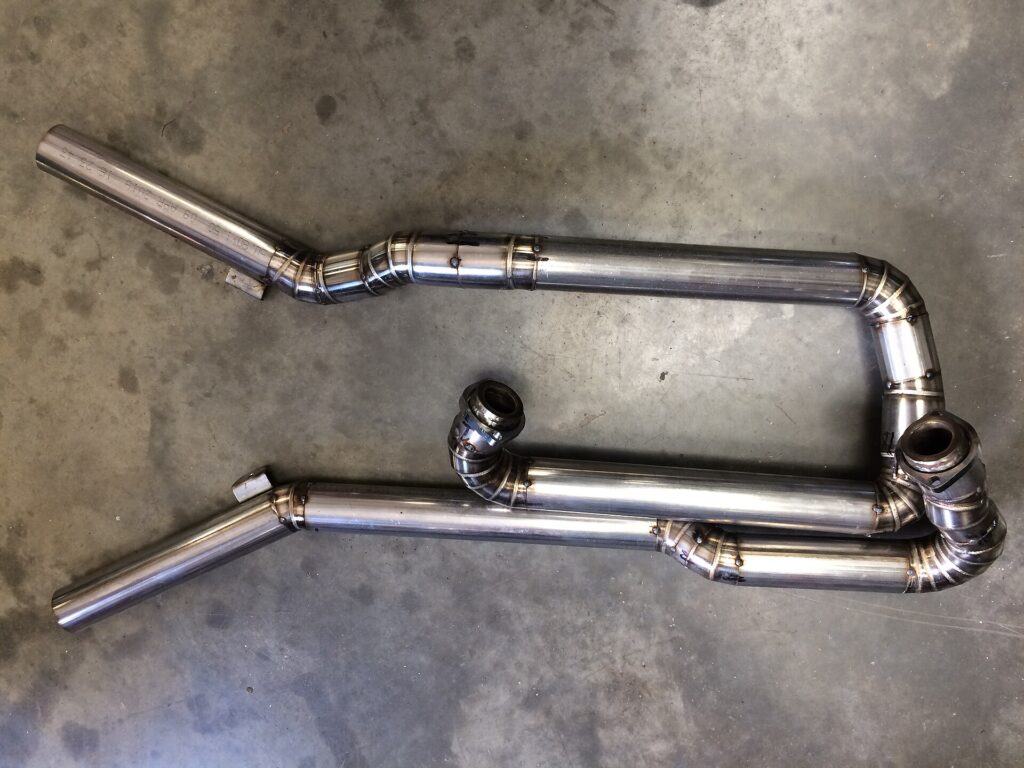
Exhaust is thin-wall tubing, and the manual rules it out by name. Tight, smooth exhaust bends need internal support from a mandrel. Most garage builders buy pre-bent mandrel U-bends and J-bends, then cut and weld them. Our exhaust pipe bender guide covers the options.
Electrical conduit
Conduit is also named in the manual. Electricians use dedicated conduit benders sized for the conduit they’re bending. See our conduit bending guide.
The bender’s dies are round pipe shoes. Harbor Freight’s specs talk about Schedule 40 and 80 pipe, not square tube. If you need square-tube bends, look for a bender that sells square dies.
Can the Harbor Freight 12 ton pipe bender bend roll cage tube?
No. This is the one question where the answer isn’t “it depends.” Don’t use a ram or bottle-jack pipe bender for roll cage or roll bar tube. Ever.
Why it matters
A cage protects a person in a crash. Its tube size, wall, material and bend radius are set by the rulebook of your sanctioning body. Rulebooks describe cage material as tube, by OD and wall. Many also name the type of tube. A ram bender can’t bend that tube cleanly. It tends to flatten and kink it. Even a “pretty good” ram bend is a weak spot you’ve built into a safety structure.
What the rules look like
Here’s one example. The SCCA Time Trials Safety Level 3 rules list seamless or DOM mild steel, 4130 or T45 alloy, or Docol R8 for cage structures. They say ERW tubing is not allowed. They also call for a bend radius of at least three times the tube diameter, measured at the centerline. NHRA, NASA and the FIA each publish their own rules, and they differ.
Benders Hub is not a tech inspector or an engineer. Read the current edition of your rulebook, and confirm your tube, die radius and welding plan with your inspector before you buy anything.
For cage-specific advice, see our best tube bender for a roll cage guide. Our roll cage specifications page points to each body’s official rules.

Pipe sizes: what actually fits
The bender is rated for 1/2″ to 2″ pipe. But pipe sizes are nominal. The number is a name, not a measurement. That trips up a lot of first-time buyers who show up with tube.
Here’s what those six pipe sizes really measure, with their Schedule 40 walls:
| Pipe size (NPS) | Real OD | Schedule 40 wall | Wall factor | Nearby tube sizes (not interchangeable) |
|---|---|---|---|---|
| 1/2″ | 0.840″ | 0.109″ | 7.7 | 3/4″ or 7/8″ tube |
| 3/4″ | 1.050″ | 0.113″ | 9.3 | 1″ tube |
| 1″ | 1.315″ | 0.133″ | 9.9 | 1-1/4″ or 1-3/8″ tube |
| 1-1/4″ | 1.660″ | 0.140″ | 11.9 | 1-5/8″ or 1-3/4″ tube |
| 1-1/2″ | 1.900″ | 0.145″ | 13.1 | 1-7/8″ or 2″ tube |
| 2″ | 2.375″ | 0.154″ | 15.4 | 2-1/4″ or 2-1/2″ tube |
Pipe OD and wall figures are from ArchToolbox and match the ASME B36.10 values on Engineering ToolBox. Schedule 80 has thicker walls at the same OD.
How to check what you have
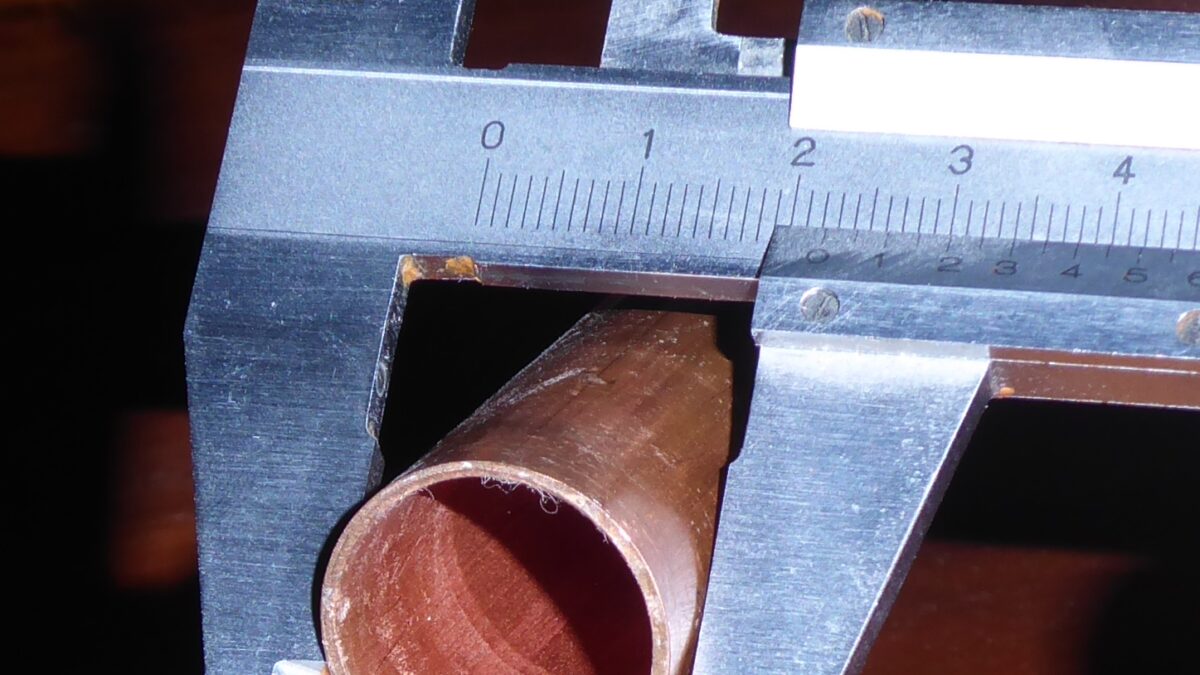
- Measure the OD with calipers. If it matches a number in the “Real OD” column, it’s probably pipe.
- Measure the wall at a cut end.
- Divide OD by wall. A low number means heavy wall, which suits this bender. A high number means thin wall, which doesn’t.
- Pick the matching shoe. Use the die made for that pipe size, never “the closest one.”
How to get good bends from it on pipe
If your job is heavy pipe, you can get tidy, useful bends from this bender. Here’s a simple routine. Always follow the manual for your exact model first. It has the setup chart and the safety rules.
- Anchor it. The manual says to attach the bender securely to a solid, flat and level surface that can carry the bender and the pipe.
- Gear up. Wear eye protection. The manual calls for it, and a slipping pipe can move fast.
- Mark the bend. Put a soapstone or paint mark where the center of the bend should land.
- Fit the right shoe. Use the die that matches the pipe size exactly.
- Set the supports. Place the pivot supports as the manual directs for that pipe size.
- Center the pipe. Line up your mark with the center of the shoe.
- Pump slowly. Stop every few strokes. Check that the pipe hasn’t shifted.
- Check the angle. Release pressure and measure with an angle finder. Pipe springs back a little, so you may need a touch more.
Keep your hands clear of the shoe and supports while you pump. The manual also warns against heating the pipe. Don’t use a torch to “help” a bend.
Bend a short piece of the same pipe first. Note how far you pumped and what angle you got after release. That one test tells you how your pipe, your shoe and your support spacing behave together.
Planning a part with several bends? Our bend calculator helps you work out lengths, and our workshop safety notes cover the basics.
Better tools for tube: rotary-draw alternatives
If your project uses tube, you want a rotary-draw bender. It clamps the tube to a round die and draws it around, with a block supporting the outside. The tube stays round, the radius is fixed, and bends repeat.
How we picked: we looked for rotary-draw benders sold on Amazon with published capacities, dies in common sizes, and a sensible path for growth. These picks are based on manufacturer and retail specs plus what owners commonly report. We have not tested them hands-on. Our home-garage tube bender roundup goes deeper.
As an Amazon Associate I earn from qualifying purchases.
Woodward Fab WFB2
A manual rotary-draw frame for round and square tube up to 2″.
Buy from AmazonEastwood High Capacity
Start manual, add air- or electric-hydraulic power later.
Buy from AmazonWoodward Fab WFB2: the simplest step up
Woodward Fab WFB2 Manual Tube & Pipe Bender
A no-frills rotary-draw frame for round and square tube up to 2″ with the right die.
The WFB2 is a lever-operated rotary-draw bender with a degree ring. It’s a common first “real” tube bender for people who outgrow a ram bender.
Who it’s for: builders making bumpers, sliders, racks and kart frames in mild steel, a few projects a year.
How to check it fits: buy the die for your tube’s real OD. Check the die listing for its wall limit and maximum angle.
- Type
- Manual rotary draw
- Tube size
- Round and square, up to 2″ with the matching die
- Max wall
- Retail listing for the 2″ die: .134″ mild steel
- Bend angle
- Die listings show about 110°–120°
- Sold separately
- Dies and stand
Why it beats a ram bender for tube
- Tube is clamped and supported, so it stays round
- Dies sized to true tube OD
- Degree ring for repeatable bends
Know before you buy
- Manual only, so thick wall takes muscle
- Not a 180° bender
- Dies and stand add to the cost
Add-ons: 1-3/4″ OD × 6″ CLR die · 1-1/2″ OD × 5″ CLR die · WFB2 stand. Affiliate links. See our disclosure.
Eastwood High Capacity: room to grow
Eastwood High Capacity Tube Bender (#21115)
Bend by hand today. Add air- or electric-hydraulic power when your projects grow.
This is a manual rotary-draw bender that accepts Eastwood’s air-over-hydraulic or electric-hydraulic conversion kits. It also reaches 180° with 240° dies, which matters for hoops.
Who it’s for: someone who expects to do more than a bumper or two, and likes the idea of adding hydraulic power later instead of pumping a bottle jack.
How to check it fits: Eastwood lists mild steel to 2″ × .120″ and 4130 limited to .090″ wall. Compare those with your tube.
- Type
- Manual rotary draw, hydraulic-ready
- Tube size
- 3/4″ to 2″ OD
- Mild steel
- Up to 2″ × .120″ wall
- 4130 chromoly
- Limited to .090″ wall
- Bend angle
- Up to 180° with 240° dies
- Sold separately
- Dies, handle and stand (check the listing)
Why it fits
- Clear published capacities
- Air- and electric-hydraulic kits available
- 180° bends with 240° dies
Know before you buy
- Several parts sold separately
- Air kit needs about 90 psi of shop air
- Lower chromoly wall limit than heavier benders
Add-ons: 1.75″ × 6″ CLR 240° die · air-hydraulic kit · electric-hydraulic kit. Affiliate links. See our disclosure.
Baileigh RDB-050: for bigger tube and chromoly
Baileigh RDB-050 Manual Rotary Draw Bender
A stout manual bender with a 3-speed ratchet, rated for 2.5″ mild steel and 2″ 4130.
The RDB-050 suits builders who know they’ll bend bigger tube or chromoly. A three-speed ratchet lets you choose 4°, 8° or 12° per pull. An anti-springback mechanism holds the bend while you reset the handle.
Who it’s for: serious hobbyists and small shops. It’s a bigger investment than the other two picks.
How to check it fits: Baileigh rates it to 2.5″ OD × .120″ mild steel and 2″ × .120″ 4130. Baileigh’s copy lists both 190° and 200° for max bend.
- Type
- Manual rotary draw, 3-speed ratchet
- Mild steel
- Up to 2.5″ OD × .120″ wall
- 4130 chromoly
- 2″ OD × .120″ wall
- Bend angle
- Baileigh lists both 190° and 200°
- Sold separately
- Dies
Why it fits
- Highest published capacity of these three
- Ratchet speeds make big tube manageable by hand
- Bends past 180°
Know before you buy
- Costs well beyond entry-level benders
- Heavy, so plan your floor anchoring
- Dies add a lot to the total
Check die availability for your tube size before ordering. Affiliate link. See our disclosure.
Sold direct, not on Amazon
Two more rotary-draw benders come up often in garage-fab forums. The JD2 Model 32 takes 1/2″ to 2-1/2″ round tube. JD2 says anything over 2″ × .120″ needs its hydraulic add-on (JD2, sold direct). The Pro-Tools 105HD handles 1/2″ to 2″ round tube to .134″ wall, plus NPS 1/4 to 1-1/2 pipe with pipe dies (Pro-Tools, sold direct).
Harbor Freight 12-ton vs rotary-draw benders compared
Here’s how the ram bender stacks up against rotary-draw options on the things that decide a project. Specs come from each maker or the retail listing.
| Bender | Bending method | Made for | Max bend | Good for cages? | Where to buy |
|---|---|---|---|---|---|
| Harbor Freight 12-ton (#32888) | Ram (bottle jack) | 1/2″–2″ Sch 40/80 pipe | Up to 90° | ❌ No | Sold direct by Harbor Freight |
| Woodward Fab WFB2 | Manual rotary draw | Round and square tube to 2″ | About 110°–120° (die listings) | Check your rulebook and die | Amazon |
| Eastwood High Capacity | Manual rotary draw, hydraulic-ready | 3/4″–2″ OD tube | 180° (240° dies) | Check your rulebook and die | Amazon |
| Baileigh RDB-050 | Manual rotary draw, ratchet | Up to 2.5″ OD tube | 190°/200° (both listed) | Check your rulebook and die | Amazon |
| JD2 Model 32 | Manual rotary draw, hydraulic option | 1/2″–2-1/2″ OD tube | 180° die sets sold | Check your rulebook and die | Sold direct by JD2 |
How to read this: the “bending method” column matters most. Only the rotary-draw benders support tube through the bend. Then check “made for” against your material. If you need 180° hoops, look at the angle column. And for any cage, the rulebook and your inspector decide, not this table.
Want a recommendation built around your projects? Try our Find My Bender quiz or the bender type comparison.
Real-life lessons from Harbor Freight owners
These are composite stories. The same situations come up again and again in garage-fab forums and build threads. They show where this bender shines and where it lets people down.
Someone needs curved top rails for a set of pasture gates. They use Schedule 40 pipe, the matching shoe and gentle bends. The bender does the job in an afternoon. A slight flat on the inside of each bend doesn’t matter on a gate.
Lesson: on heavy pipe with simple bends, this bender is a practical, budget-friendly tool.
A builder buys the 12-ton bender for a tube front bumper. The first stick of 1.75″ tube flattens, then kinks. Slower pumping doesn’t help. They end up buying a rotary-draw bender and a 1.75″ die, and keep the ram bender for yard jobs.
Lesson: tube needs rotary draw. Buy the right tool once.
Someone tries to bend a replacement tailpipe at home. The thin tubing crumples on the first push. They switch to a pre-bent mandrel J-bend, cut it to length and weld it in.
Lesson: the manual says no to exhaust for a reason. Pre-bent mandrel sections are the garage-friendly fix.
Common mistakes (and how to fix them)
Most bad experiences with this bender come from a few predictable mistakes. Here’s how to avoid each one.
❌ Buying it for structural tube. Bumper and slider tube flattens and kinks.
✅ Fix: keep it for heavy pipe. Buy a rotary-draw bender for tube.
❌ Bending exhaust or conduit. The manual says it’s not intended for thin-wall pipe like these.
✅ Fix: use pre-bent mandrel sections for exhaust and a conduit bender for conduit.
❌ Using it for cage or roll bar tube. A flattened bend is a weak spot in a safety part.
✅ Fix: use a rotary-draw bender, rulebook-compliant tube and a die that meets the minimum radius.
❌ Using “the closest” shoe. A loose die gives the pipe even less support.
✅ Fix: measure the OD and use the shoe made for that exact pipe size.
❌ Heating the pipe to help it bend. The manual warns against it.
✅ Fix: bend cold, go slowly, and choose heavier pipe or a gentler bend if it’s struggling.
❌ Bending on an unanchored frame. The bender can shift or tip under load.
✅ Fix: secure it to a solid, flat, level surface, as the manual says, before the first bend.
Pro tips for living with a ram pipe bender
If you own one already, these habits help you get the most from it, and know when to reach for something else.
- 💡 Label it “pipe only.” A strip of tape on the frame saves a future you, or a borrower, from wasting tube.
- 💡 Order pipe by NPS and schedule. Say “1-1/4 Schedule 40,” not “1-1/4 inch steel.” It makes sure the shoe fits.
- 💡 Favour gentle bends. Ram bending works best on modest angles. The bender’s own limit is 90°.
- 💡 Mark the center, not the start. On a ram bender, the shoe pushes the middle of the bend. Mark where you want the middle.
- 💡 Check often. Release pressure every few pumps and measure with an angle finder.
- 💡 Keep a log. Note pipe size, schedule, support position and springback. Your next part gets easier.
- 💡 Know when to upgrade. The day your plans include tube, start pricing a rotary-draw bender and dies.
Plenty of shops own both: a ram bender for heavy pipe and farm jobs, and a rotary-draw bender for tube. If you already have the ram bender, it doesn’t have to go. It just needs the right work.
Thinking about hydraulics for a rotary-draw bender later? Look for a frame whose maker sells an upgrade kit. Then you can start manual and add power when your projects need it.
Frequently asked questions
What can the Harbor Freight 12 ton pipe bender bend?
Harbor Freight rates it for 1/2″ to 2″ Schedule 40 or 80 pipe, up to 90°. The manual names heavy-gauge black or galvanized steel pipe. It’s best for gates, rails and farm or yard work.
Can the Harbor Freight pipe bender bend exhaust tubing?
Not well, and the manual says it isn’t intended for thin-wall pipe such as exhaust. For exhaust, most garage builders buy pre-bent mandrel U-bends and J-bends, then cut and weld them.
Can I bend roll cage tube with a Harbor Freight 12-ton bender?
No. Never use a ram or bottle-jack pipe bender for cage or roll bar tube. Use a rotary-draw bender with rulebook-compliant tube and die radius, and confirm with your inspector.
Why does my Harbor Freight bender kink tube?
A ram bender pushes the middle of the work with nothing supporting the inside of the bend. Thinner tube flattens, then folds. The dies are also sized for pipe, so tube sits loose. A rotary-draw bender fixes both problems.
Is the Harbor Freight 12-ton bender on Amazon?
No. Harbor Freight sells it direct, so check its website or your local store for availability. If you need a tube bender from Amazon, look at rotary-draw models like the Woodward Fab WFB2 or Eastwood High Capacity.
Who makes the Harbor Freight 12-ton pipe bender?
Harbor Freight sells it under its Central Machinery brand, as item 32888.
Before-you-buy checklist
Run through this list before you buy the 12-ton bender, or before you load your next piece of metal into the one you own.
- My material is heavy-wall Schedule 40 or 80 pipe, not tube
- My pipe is between 1/2″ and 2″ NPS
- My bends are 90° or less
- A slight flat on the inside of the bend won’t matter on this part
- I’m not bending exhaust, conduit or other thin-wall pipe
- This is not a roll cage, roll bar or other safety part
- I’ve measured the OD and picked the exact matching shoe
- I’ll anchor the bender to a solid, flat, level surface
- I have eye protection and an angle finder ready
- If any box above is unticked, I’m looking at a rotary-draw bender instead
The Harbor Freight 12-ton is a fair tool for heavy pipe and a poor one for tube. Use it for what it was built for, and pick a rotary-draw bender when the job calls for tube. Your projects, and your scrap pile, will thank you. 🔧
Not sure which bender your project needs?
Answer a few quick questions and get a recommendation with the reasons behind it. Or compare bender types side by side.
Keep reading
Manual vs Hydraulic Tube Bender: Drives, Upgrade Kits and Pumps
Manual vs hydraulic tube bender: how ratchet, air-over and electric-over-hydraulic drives compare, when to upgrade, and how to choose.
Tube Bender Comparison Chart: 7 Benders by Published Specs
Our tube bender comparison lines up JD2, Rogue Fab, Baileigh, Pro-Tools, Woodward Fab, Eastwood and Harbor Freight, with a source for every…

Best Tube Bender (2026): Top Picks for Every Job
The best tube bender depends on the job. Research-based picks for home garages, roll cages, chromoly, exhaust and production, with sourced specs.