Best Tube Bender for Chromoly: Picks by Published 4130 Rating
The best tube bender for chromoly has a published 4130 rating. Compare Baileigh, Eastwood and Pro-Tools 4130 capacities, springback tips and more.


Chromoly is the tube that separates “I own a bender” from “I own the right bender.” 4130 is tougher on your machine, springs back further and leaves less room for error. So what’s the best tube bender for chromoly? And how do you avoid buying one that’s only rated for mild steel?
Here’s the short version. Most bender listings brag about mild-steel capacity. Far fewer publish a 4130 rating, and those that do usually list a smaller wall for chromoly. This guide only ranks benders whose makers publish a 4130 figure. No guesses, no forum numbers. You’ll also learn why chromoly behaves differently, what to look for, and how to dial in your first bends.
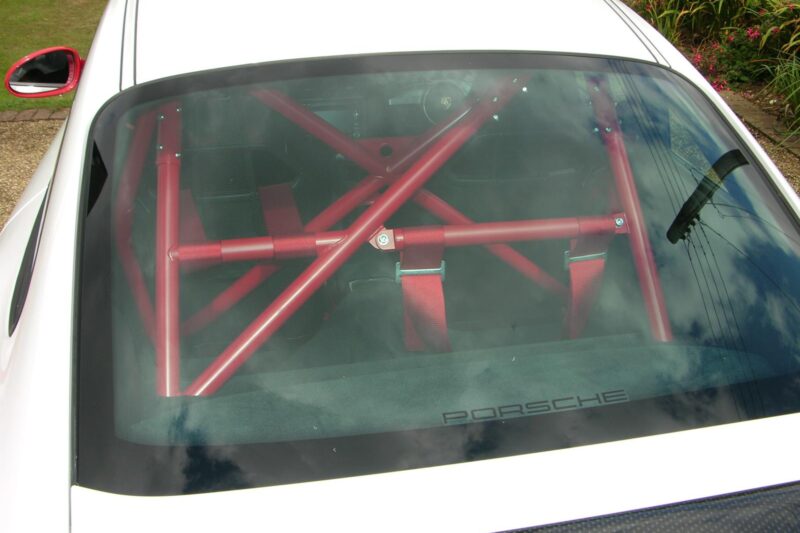
Building a cage? Your rulebook decides the tube, wall, bend radius and welding method, not your bender. Benders Hub is not a tech inspector. Check the current rulebook and talk to your inspector before you buy tube.
Buy a rotary-draw bender with a published 4130 rating that covers your OD and wall, with room to spare.
- Best on Amazon for chromoly: Baileigh RDB-050. Rated to 2″ × .120″ 4130, with a 3-speed ratchet.
- Best for thin-wall 4130 and an upgrade path: Eastwood High Capacity. 4130 limited to .090″ wall, with air- or electric-hydraulic kits.
- Highest published manual 4130 rating: Pro-Tools 105HD. 2″ × .134″ 4130 with its extension handle. Sold direct.
📋 In this guide
- Why chromoly is harder to bend
- What to look for in a chromoly bender
- The best tube bender for chromoly: our picks
- Published 4130 capacities, side by side
- Benders without a published 4130 rating
- Manual or hydraulic for 4130?
- How to bend 4130 step by step
- Real-life lessons
- Common mistakes and fixes
- Pro tips for bending chromoly
- FAQ
- Your chromoly bender checklist
Why chromoly is harder to bend than mild steel
4130 chromoly is a chromium-molybdenum alloy steel. It’s popular for roll cages, race chassis and aircraft tube. Builders like it because some rulebooks allow a thinner wall in 4130 than in mild steel, which saves weight. But in the bender, chromoly asks more of both you and your machine. Here’s why.
It springs back about twice as much
Springback is how far a tube relaxes after you let go of the handle. JD2’s Model 32 manual says 4130 springs back about twice as much as mild steel of the same size and wall (JD2 manual). For scale, Rogue Fab shows a mild-steel bend that read 86.5° after release from a 90° target (Rogue Fab). With chromoly, expect to over-bend further, and measure to find out how far.
Makers rate it lower
Look at any bender that publishes both numbers. The 4130 limit is almost always smaller than the mild-steel limit. Eastwood rates its High Capacity bender to 2″ × .120″ mild steel, but limits 4130 to .090″ wall. Baileigh rates its RDB-050 to 2.5″ × .120″ mild steel, but 2″ × .120″ for 4130. If a bender only lists mild steel, you don’t know what it can do with chromoly.
Mistakes cost more
Chromoly tube usually costs more than mild steel. A kinked or short bend on a main hoop hurts. That’s why a published rating, a steady bending action and a good angle readout matter even more here. For the full material story, read our guide to DOM vs 4130 chromoly roll cage tube.
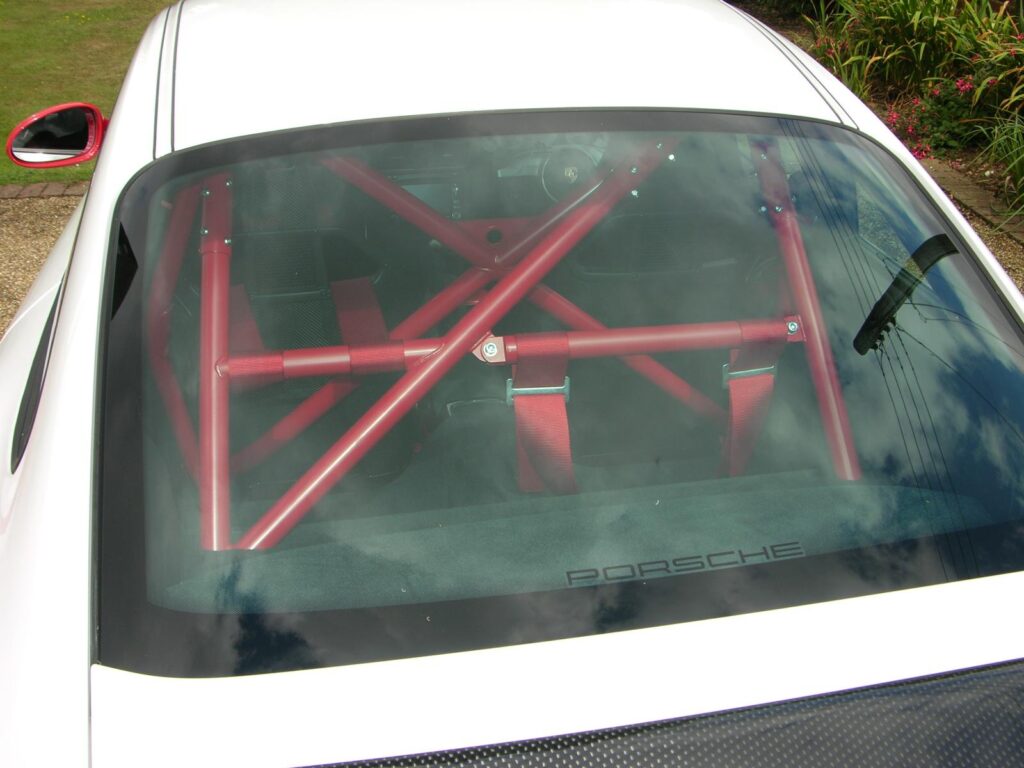
What to look for in a tube bender for chromoly
Every bender listing throws numbers at you. For chromoly, six things matter most. Check them in this order.
1. A published 4130 rating
This is the filter that matters. The maker should state an OD and wall for 4130, not just “chromoly capable.” Then make sure your tube sits comfortably inside that rating. If you plan to bend right at the limit, you’ll work the machine and yourself hard on every bend.
2. Rotary-draw design
A rotary-draw bender clamps the tube to a round die and draws it around. That makes smooth, round, repeatable bends. Ram-style bottle-jack “pipe benders” push the tube instead, and they tend to flatten or kink thin wall. Harbor Freight’s own 12-ton manual says its bender isn’t meant for thin-wall pipe. Never use a ram bender for chromoly cage tube.
3. Leverage: ratchet or hydraulics
A ratchet handle or hydraulic cylinder makes thick 4130 manageable. Several manual benders accept a hydraulic kit later. That’s a smart path if you’re not sure how much chromoly you’ll bend.
4. Dies that meet your rules
Your die sets the centerline radius (CLR). SCCA Time Trials, for example, requires a cage bend radius of at least three times the tube diameter at the centerline (SCCA Time Trials). Check your own rulebook, then confirm the maker sells that die.
5. An accurate angle readout
With twice the springback, you need to see exactly where you are. A degree ring or stop helps you repeat over-bends.
6. Enough bend angle
Some benders and dies stop well short of 180°. Hoops and U-bends may need more. Check both the bender’s limit and the die’s.
| Feature | Why it matters for 4130 | How to check |
|---|---|---|
| 4130 rating | Chromoly limits are usually lower than mild steel | Maker’s capacity chart or product page |
| Rotary draw | Ram benders flatten thin wall | Look for a die that rotates with a clamp block |
| Ratchet or hydraulics | Less strain, steadier bends | Listing, plus available upgrade kits |
| Die CLR | Rulebooks may set a minimum radius | Die listing vs your rulebook |
| Angle readout | Springback is about 2× mild steel | Degree ring, stop or digital readout |
| Max bend | Hoops may need large angles | Bender and die limits |
The best tube bender for chromoly: our picks by published 4130 rating
Here’s how we picked. We only included benders whose makers publish a 4130 capacity. We have not run these benders through a hands-on test. Our picks are based on manufacturer and retailer specs, checked in October 2026, plus what owners commonly report in public forums. You can read how we evaluate equipment. Specs change, so confirm them on the product page before you order.
As an Amazon Associate I earn from qualifying purchases.
Baileigh RDB-050
Published to 2″ × .120″ 4130, with a 3-speed ratchet.
Buy from AmazonEastwood High Capacity
Thin-wall 4130 to .090″, with hydraulic kits for later.
Buy from AmazonPro-Tools 105HD
2″ × .134″ 4130 with the extension handle. Sold direct.
See it at Pro-ToolsBaileigh RDB-050: best chromoly bender on Amazon
Baileigh RDB-050 Manual Rotary Draw Bender
A stout manual bender with a clear 4130 rating and a 3-speed ratchet.
The RDB-050 publishes a 2″ × .120″ 4130 rating, which covers a lot of common cage and chassis tube. Its three-speed ratchet lets you pick 4°, 8° or 12° per pull. An anti-springback mechanism holds the bend while you reset the handle, which helps when chromoly fights back.
Who it’s for: serious hobbyists and small shops bending both mild steel and chromoly by hand.
Why we picked it: it has the highest published 4130 rating of the benders we found on Amazon. Expect a bigger investment, and plan for dies.
- Type
- Manual rotary draw, 3-speed ratchet
- 4130 chromoly
- 2″ OD × .120″ wall
- Mild steel
- Up to 2.5″ OD × .120″ wall
- Bend angle
- Baileigh lists both 190° and 200°
- Speeds
- 4°, 8° or 12° per pull
- Sold separately
- Dies
Why we like it
- Clear published 4130 rating
- Ratchet speeds make thick tube manageable
- Anti-springback holds the bend between pulls
- Bends past 180°
Know before you buy
- A bigger investment than entry-level benders
- Heavy, so plan your floor anchoring
- Manual only, so long sessions are hard work
Check die availability for your OD and CLR before ordering. Affiliate link. See our disclosure.
Eastwood High Capacity: best for thin-wall 4130 and an upgrade path
Eastwood High Capacity Tube Bender (#21115)
Bend by hand now, add air- or electric-hydraulic power later.
Eastwood is upfront about chromoly: it limits 4130 to .090″ wall, compared with 2″ × .120″ for mild steel. That’s a fair fit for thin-wall chromoly projects. The big draw is the upgrade path. Eastwood sells an air-hydraulic kit that runs at about 90 psi and an electric-hydraulic kit (0.75 HP, 110 V).
Who it’s for: builders bending thin-wall 4130 who want to start manual and add power later.
Why we picked it: clear published limits, 240° dies for 180° bends, and both hydraulic kits on Amazon. One note: the Amazon listing gives a 3/4″ to 2″ OD range, while Eastwood’s instruction sheet lists 1″ to 2″. Check the die you need.
- Type
- Manual rotary draw, hydraulic-ready
- 4130 chromoly
- Limited to .090″ wall
- Mild steel
- Up to 2″ × .120″ wall
- Bend angle
- Up to 180° with 240° dies
- Upgrades
- Air-hydraulic (about 90 psi) or electric-hydraulic (0.75 HP, 110 V)
- Sold separately
- Dies, handle and stand (check the listing)
Why we like it
- Honest, published chromoly limit
- Air- and electric-hydraulic upgrade kits
- 180° bends with 240° dies
- Good documentation from Eastwood
Know before you buy
- Lowest 4130 wall rating of our picks
- Several parts sold separately
- Air kit needs steady shop air
Add-ons: air-hydraulic kit · electric-hydraulic kit · 1.75″ × 6″ CLR 240° die. Affiliate links. See our disclosure.
Pro-Tools 105HD: highest published manual 4130 rating (sold direct)
Pro-Tools 105HD Manual Tube & Pipe Bender
Rated to 2″ × .134″ 4130 with its extension handle. Sold direct, not on Amazon.
Pro-Tools publishes the strongest manual chromoly figure we found: 2″ × .134″ 4130 using the extension handle. It bends to 180° and takes round tube from 1/2″ to 2″ OD, plus pipe from NPS 1/4 to 1-1/2. A hydraulic package is also available.
Who it’s for: builders bending thicker-wall 4130 who are happy to buy direct from the maker.
Why we picked it: its published chromoly rating is higher than both Amazon picks. Compare it with JD2 in our Pro-Tools 105HD vs JD2 Model 32 guide.
- Type
- Manual ratchet, hydraulic package available
- 4130 chromoly
- 2″ × .134″ with the extension handle
- Round tube
- 1/2″ to 2″ OD, to .134″ wall
- Pipe
- NPS 1/4 to 1-1/2
- Bend angle
- 180°
- Where to buy
- Sold direct by Pro-Tools
Not an affiliate link. Sold direct by the maker.
Pair it with a good notcher
Thin-wall chromoly joints need tight fit-up. A hole-saw notcher gives you clean, repeatable fishmouth cuts. The Eastwood tube and pipe notcher handles round tube up to 2″ at 0° to 60°. The Woodward Fab 2″ hole-saw notcher is another option with 60° of adjustment. Affiliate links.
Published 4130 capacities, side by side
Here’s the data that drove our picks. Every 4130 figure comes from the maker or the retail listing. Where sources disagree, we say so.
| Bender | Drive | Published 4130 rating | Mild steel rating | Max bend | Where to buy |
|---|---|---|---|---|---|
| Pro-Tools 105HD | Manual ratchet; hydraulic package | 2″ × .134″ (extension handle) | Round tube to .134″ wall | 180° | Direct from Pro-Tools |
| Baileigh RDB-050 | Manual, 3-speed ratchet | 2″ × .120″ | 2.5″ × .120″ | 190°/200° (both listed) | Amazon |
| Eastwood High Capacity | Manual, hydraulic-ready | .090″ wall | 2″ × .120″ | 180° (240° dies) | Amazon |
How to read this table: find your tube’s OD and wall. Then find the benders whose 4130 column covers it with a little headroom. If your tube is 2″ × .120″, the Baileigh is right at its 4130 limit, the Pro-Tools has a little headroom, and the Eastwood falls short. If your wall is .090″ or less, the Eastwood is in play and brings the cheapest path to hydraulics.
Notice how the gap between mild steel and 4130 changes from bender to bender. That gap is why you can’t guess a chromoly rating from a mild-steel number. For a wider view, see our tube bender capacity chart.
A bender working at its published limit on every bend is hard on the machine and on you. If most of your tube sits right at a bender’s 4130 limit, look at the next size up or plan for hydraulics.
Benders without a published 4130 rating
Some well-known benders didn’t make our ranking. That’s not because they’re bad. It’s because we couldn’t find a published 4130 figure from the maker to quote. For chromoly, that’s the line we drew.
JD2 Model 32 (sold direct)
The JD2 Model 32 takes 1/2″ to 2-1/2″ round tube. JD2 says manual bending over 2″ × .120″ needs its hydraulic add-on. With hydraulics it’s rated to 2″ × .250″ DOM, and JD2 recommends a 10-ton cylinder (JD2). JD2 is also the source of the “4130 springs back about twice as much” guidance. In the JD2 pages we checked, we didn’t find a 4130 capacity to quote. Ask JD2 before you buy it for chromoly.
Rogue Fab M605 and M625 (sold direct)
Rogue Fab’s vertical benders are rated in DOM. The M625 is listed to 2.00″ × .250″ DOM. The M605 has a conflict: the catalogue says .188″ wall, while the FAQ says .250″ DOM (Rogue Fab). We didn’t find a separate 4130 figure in the sources we checked. Ask Rogue Fab directly.
Woodward Fab WFB2
The WFB2 is a popular value bender. Its retail listing for the 2″ die gives a .134″ max wall, but we didn’t find a 4130 rating. It’s a good mild-steel bender, not our pick for regular chromoly work.
Ram-style pipe benders
Bottle-jack pipe benders, like Harbor Freight’s 12-ton (#32888), are rated for 1/2″ to 2″ Schedule 40/80 pipe. Their manual says they aren’t meant for thin-wall pipe. They are the wrong tool for chromoly tube, full stop.
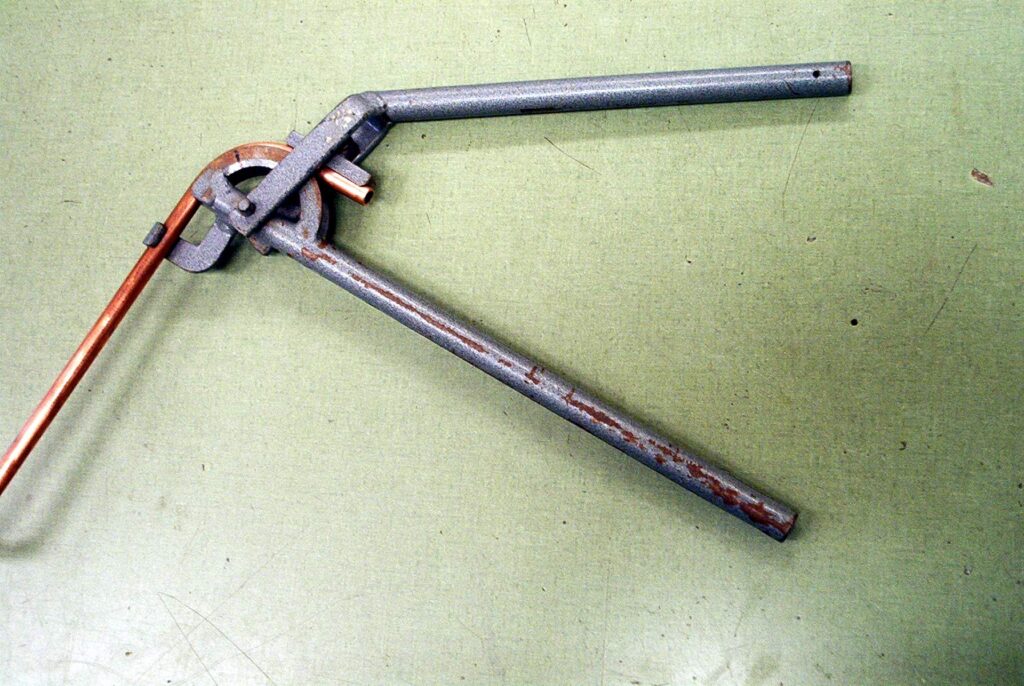
Manual or hydraulic for 4130?
Every rotary-draw bender needs force to draw tube around the die. With chromoly, you need more of it for the same size and wall. So where should that force come from?
Go manual if…
- You bend thin-wall 4130 now and then, well inside your bender’s rating.
- You build a few projects a year and want to keep costs down.
- You like the feel of the tube in your hands while you learn its springback.
Go hydraulic (or plan for it) if…
- Your 4130 tube sits near your bender’s limit.
- You’re bending a full cage with dozens of bends.
- Your shoulders or back would rather not pull a long handle all day.
JD2 shows where the line can sit: it says the Model 32 needs hydraulics for round tube over 2″ × .120″. Hydraulics also give a smooth, steady pull, which helps consistency. That matters with chromoly, because you’ll be chasing exact over-bends.
The middle path
Buy a manual bender that accepts a hydraulic kit later. The Eastwood High Capacity, Pro-Tools 105HD and JD2 Model 32 all offer one. You spend less now and upgrade only if your chromoly work grows. Want the full breakdown? Read manual vs hydraulic tube benders.
A hydraulic rotary-draw bender still draws tube around a die. A hydraulic ram bender still pushes like a press. Don’t let the word “hydraulic” in a listing steer you to a ram bender for chromoly.
Still not sure which drive fits your work? Our bender type comparison lays out the options side by side.
How to bend 4130 step by step
Your first chromoly bend should be on a test piece cut from the same tube, not your project. Here’s a simple routine that works on any rotary-draw bender.
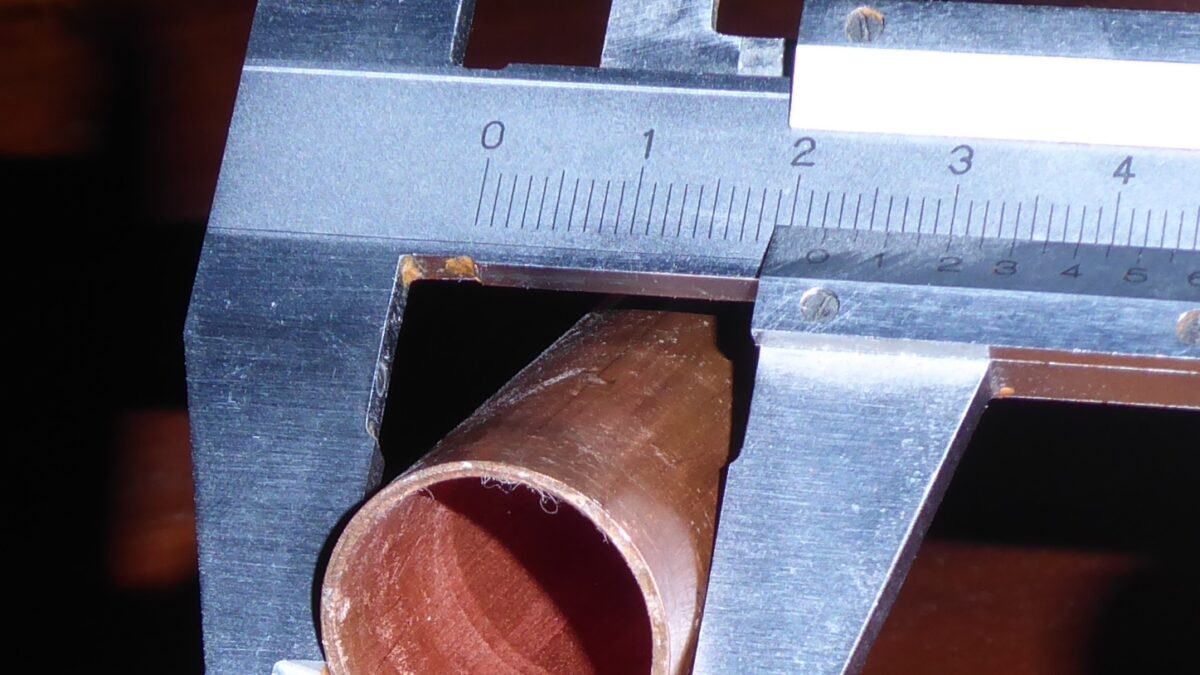
- Check the tube. Measure OD and wall with calipers. Confirm the die matches and your bender’s 4130 rating covers it.
- Note the heat number. Copy it from the mill cert or tube marking into your bend log.
- Draw a reference line. Run a straight line along the tube. It shows any rotation in the die.
- Mark the bend start. Use our bend calculator for tangent and arc lengths.
- Clamp firmly. Follow your bender’s manual for loading and clamping.
- Bend to your target. Pull smoothly and watch the degree ring.
- Release and measure. Let the tube relax, then read the true angle with a digital angle finder.
- Record the offset. The difference is your springback for this tube, die and batch.
Calibrate like the manuals do
Baileigh’s RDB-175 manual shows one way. Bend until the tube reads a true 90° after release, then note the machine’s reading. Its example reads 105°, which is a 15° offset that includes machine deflection. You then add that offset to future bends (Baileigh RDB-175 manual). Your number will be different. That’s the point of the test.
Pro-Tools recommends logging the heat or batch number from the mill cert, because springback can vary between batches (Pro-Tools). More in our springback guide.
With chromoly, the test bend isn’t optional. It’s the cheapest stick of tube you’ll ever bend.
Real-life lessons from chromoly builders
These are composite stories. The same situations come up again and again in garage-fab forums and build threads. They show how chromoly catches people out, and how to avoid it.
A builder buys a bender that lists 2″ × .120″ capacity and orders 2″ × .120″ 4130. The first bend is a fight, and the handle flexes. They check again: the rating was for mild steel. The listing never mentioned chromoly.
Lesson: look for a published 4130 rating, not a mild-steel number.
Someone switches from mild steel to 4130 for a cage. They use their old springback numbers, and every bend lands short. One test bend in the new tube shows the real offset is much bigger.
Lesson: run a test bend for every new material and batch, and log it.
A builder buys a tight-radius die because it “looks better” on a cage. Then they read their rulebook’s minimum bend radius. The die is too tight for their tube size, so they buy a second die.
Lesson: check the rulebook’s radius rule before you buy dies. Our roll cage bender guide covers this.
Common chromoly bending mistakes (and how to fix them)
Most chromoly regrets come from a short list. Nearly all of them trace back to one habit: treating 4130 like mild steel. Here they are, with the fix for each.
❌ Trusting a mild-steel rating for 4130. Makers usually rate chromoly lower.
✅ Fix: buy a bender with a published 4130 rating that covers your OD and wall.
❌ Using a ram “pipe bender.” It pushes the tube and can flatten or kink thin wall.
✅ Fix: use a rotary-draw bender for chromoly. Keep ram benders for thick pipe.
❌ Reusing mild-steel springback. 4130 springs back about twice as much.
✅ Fix: make a test bend in the actual tube and log the offset with the heat number.
❌ Bending right at the limit. Every bend becomes a struggle, and accuracy suffers.
✅ Fix: leave headroom, or add a hydraulic kit.
❌ Buying dies before reading the rulebook. A die that’s too tight can break a radius rule.
✅ Fix: check the current rulebook’s minimum radius, then buy the die.
❌ Forgetting the welding rule. A perfectly bent 4130 cage still has to be welded the way your rulebook says.
✅ Fix: read the welding section before you buy chromoly. If TIG is required and you can’t do it well, line up a qualified welder.
❌ Mixing up chromoly and mild-steel offcuts. They look almost the same once cut.
✅ Fix: label every stick with material, OD and wall, and store them apart.
Pro tips for bending chromoly
These habits make chromoly bending calmer and more predictable. None of them costs much. All of them save tube.
- 💡 Buy one extra stick per project. Use it for test bends and setup. It pays for itself the first time it saves a hoop.
- 💡 Keep a chromoly bend log. Record tube, wall, die, heat number, target angle and true angle.
- 💡 Over-bend in small steps. You can always add a few degrees. You can’t take them back.
- 💡 Use the anti-springback or stop. If your bender has one, use it to repeat bends exactly.
- 💡 Anchor properly. A rotary-draw bender twists hard on its base. Follow the maker’s anchoring instructions.
- 💡 Respect the rules. For cages, the rulebook sets tube, wall, radius and welding. NHRA’s 2017 and 2019 General Regulations, for example, require TIG welding for 4130 (NHRA rules). Check the current edition.
Experienced builders often stick to one die size for most chromoly work. One die means one springback record to learn, and parts that match.
Not sure which bender fits your mix of tube? Our Find My Bender quiz asks a few quick questions and explains its pick.
Frequently asked questions
What is the best tube bender for chromoly?
One with a published 4130 rating that covers your tube. On Amazon, the Baileigh RDB-050 is rated to 2″ × .120″ 4130. The Eastwood High Capacity suits thin wall to .090″. The Pro-Tools 105HD, sold direct, is rated to 2″ × .134″ with its extension handle.
Can I bend 4130 on a mild-steel bender?
Only within the maker’s 4130 rating. Many makers list a smaller wall for chromoly. If there’s no 4130 rating, ask the maker before you try.
How much does 4130 spring back?
JD2 says about twice as much as mild steel of the same size and wall. The exact number depends on the tube, batch and die, so measure it with a test bend.
Do I need a hydraulic bender for chromoly?
Not always. A manual bender with a good 4130 rating handles many jobs. Hydraulics help when your tube is near the limit or you’re bending a full cage.
Can a bottle-jack pipe bender bend chromoly?
No. Ram-style pipe benders are made for thick-wall pipe and tend to flatten or kink thin-wall tube. Use a rotary-draw bender.
Your chromoly bender checklist
Run through this list before you buy. If you can tick every box, you’re ready.
- I know my tube’s OD, wall and material for every project
- The bender has a published 4130 rating that covers my tube
- I’ve left some headroom below that rating
- It’s a rotary-draw bender, not a ram pipe bender
- Dies are available in my OD and a CLR my rulebook allows
- The bender and die reach the largest angle I need
- I’ve decided on manual now, with a hydraulic path if needed
- I have a solid, anchored spot with room for the tube to swing
- I’ve budgeted for a notcher, hole saws and an angle finder
- I’ve bought extra tube for test bends
Chromoly rewards patience. Choose a bender with an honest 4130 rating, test every batch and log what you learn. Do that, and your chromoly parts will come out right the first time. 🔧
Planning your first chromoly part?
Work out D of bend, wall factor and cut length in seconds. Or let the quiz match a bender to your tube.
Keep reading
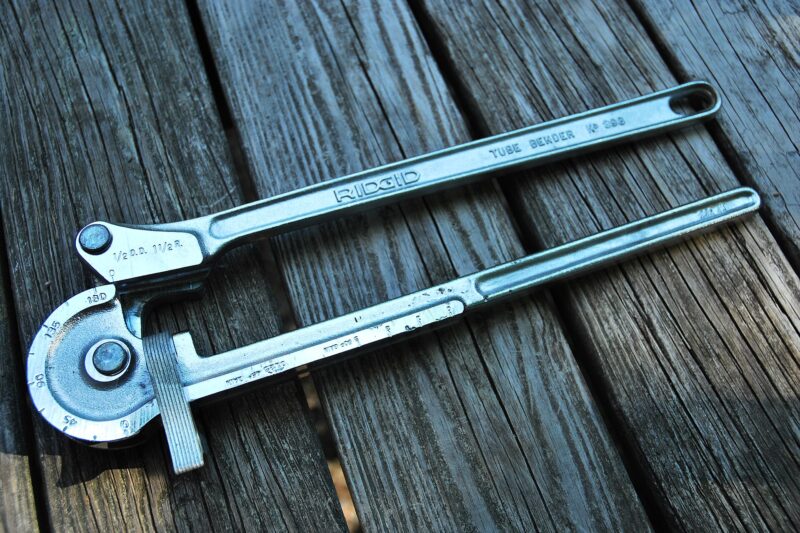
Pro-Tools 105HD vs JD2 Model 32: Manual Bender Specs Compared
Pro-Tools 105HD vs JD2 Model 32, compared from published specs: tube and pipe capacity, 4130 by hand, dies, CLR and hydraulic upgrades.
Best Tube Bender for Roll Cage Builds (2026): Picks by Rule Needs
The best tube bender for roll cage work bends 180° hoops, takes dies that meet your rulebook's radius rule and is rated…
JD2 Model 32 vs Rogue Fab M605: Specs Compared Side by Side
JD2 Model 32 vs Rogue Fab M605, compared from published specs: capacity, power, dies, floor space and the M605 wall-rating conflict.