Aluminized vs Stainless Exhaust Tubing: 409, 304, 321 & Titanium
Aluminized vs stainless exhaust tubing explained: 409, 304, 321 and titanium compared on bending, welding, heat and corrosion, with sourced data.

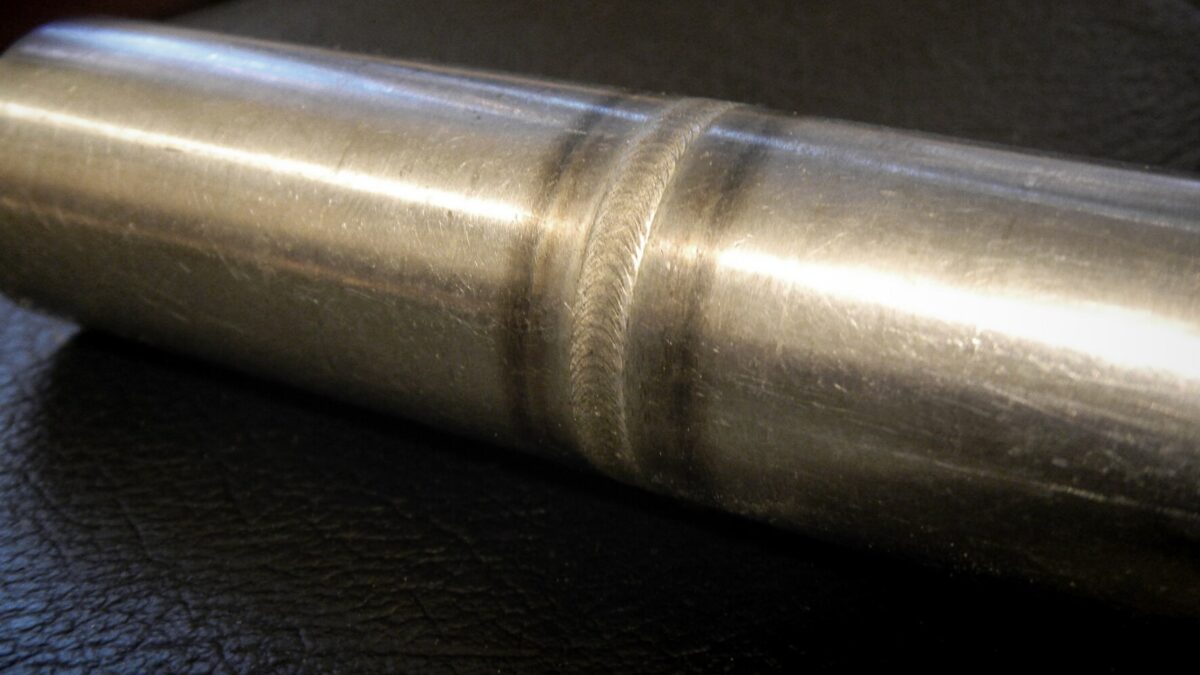
Your old exhaust has rusted through, or you’re planning a new one from scratch. Either way, you hit the same question fast: aluminized vs stainless exhaust tubing, and which stainless? 409, 304 or 321? And is titanium worth it? On a parts website the tubes look almost the same. In the bender, under the torch and on the road, they behave very differently.
This guide is the friendly version of a materials chart. We’ll walk through the five materials you’ll actually see for sale: aluminized mild steel, 409 stainless, 304 stainless, 321 stainless and titanium. For each one you’ll learn what it is, how it bends, how it welds and how it copes with heat and corrosion. The material facts come from mill datasheets, metal suppliers and tubing makers, and we link them as we go.
One promise up front: we won’t tell you “stainless lasts X years.” We couldn’t find a trustworthy source for numbers like that. Life depends on your climate, your driving, your welds and your engine. Instead, you’ll learn why each material fails. Then you can pick the right one for your build with your eyes open.
There’s no single best exhaust tubing material. Match it to your budget, your climate and how hot your exhaust runs.
- Tight budget or a car you won’t keep long: aluminized mild steel. Cheapest and easiest to bend and weld, but cut ends and welds expose bare steel.
- Long-lasting street exhaust: 409, a stainless grade developed for automotive exhaust, or 304 stainless for better corrosion resistance and a polished look.
- Turbo manifolds and very hot headers: 321, the titanium-stabilized grade that tubing suppliers recommend for high heat.
- Race or show builds chasing weight: titanium. Most hobbyists buy it pre-bent, and it needs a full argon back purge to weld.
📋 In this guide
- Why exhaust tubing material matters
- The 5 materials, explained simply
- Aluminized vs stainless exhaust tubing: head to head
- Corrosion and heat: how each one fails
- Bendability in the bender
- Welding notes for each material
- Which material should you choose?
- Pre-bent mandrel bends worth a look
- Real-life lessons
- Common mistakes and fixes
- Pro tips
- FAQ
- Your material checklist
Why exhaust tubing material matters
An exhaust has a rough life. Hot gas blasts through the inside. Water, road salt and grit hit the outside. Every drive heats it up, and every stop lets it cool again. On short trips, water vapor in the exhaust can condense inside the pipes and mufflers before the system gets hot enough to dry out.
That’s why exhaust makers care so much about material. A patent from the steelmaker Nisshin on aluminized exhaust sheet, for example, spends pages on one problem: exhaust condensate that can be acidic or alkaline, and how it attacks the coating and the steel underneath. Your tube faces the same enemy.
The material you pick decides four things:
- Cost. Aluminized steel is the budget choice. Stainless costs more, and titanium is a bigger investment again.
- How easy it is to build. Some materials bend and weld like butter. Others spring back hard, gall on tooling or need a full argon purge.
- How it fails. Rust from the outside, corrosion from the inside, cracking from heat, or a weld that was weak from day one.
- How it looks. Polished stainless and heat-colored titanium are part of the appeal for show builds.
Before you shop, answer three questions. How hot will this part of the exhaust run? How wet or salty are your roads? And will you bend tube yourself, or weld together pre-bent mandrel sections? Keep your answers handy. Every section below comes back to them.
Headers and turbo manifolds see far more heat than a tailpipe. Many builders mix materials: a heat-resistant grade up front and a cheaper grade further back. Just plan the joint between them, because welding two different metals needs the right filler.
Don’t ask which exhaust material is best. Ask which one is best for this car, on these roads, at this exhaust temperature.
The 5 exhaust tubing materials, explained simply
Here’s what each material actually is. We’ll keep the chemistry light and focus on what matters in the garage.
1. Aluminized mild steel
This is ordinary mild steel tube with a hot-dipped coating. The common exhaust version is Type 1, where the coating is an aluminum-silicon alloy. Steel distributor Block Steel describes Type 1 as aluminum with 5% to 11% silicon, and lists mufflers among its uses. Cleveland-Cliffs’ Aluminized Type 1 data bulletin says the coating is effective for heat resistance up to 1250°F. The catch: the protection is only skin deep. Every cut, grind and weld exposes bare steel. Plain, uncoated mild steel tube is also sold. It bends and welds the same, but has no coating at all.
2. 409 stainless
409 is a ferritic stainless steel with about 11% chromium, stabilized with titanium. Supplier datasheets from NKS and Alro describe it as a grade built for automotive exhaust. It resists corrosion better than carbon steel, but not as well as stainless grades with more chromium. Because it’s ferritic, it’s magnetic.
3. 304 stainless
304 is the classic “18-8” austenitic stainless: nominally 18% chromium and 8% nickel, per supplier datasheets such as Smiths Metal Centres. It has better general corrosion resistance than 409 and polishes to a bright finish. It also work-hardens quickly, which matters when you bend it. Many aftermarket stainless mandrel bends, such as Vibrant’s, are sold in T304.
4. 321 stainless
321 is an austenitic stainless with titanium added. Datasheets from suppliers such as United Performance Metals say this stabilization gives excellent resistance to intergranular corrosion after exposure between 800°F and 1500°F. An AMS 5510 data sheet lists exhaust stacks and manifolds among its common uses.
5. Titanium (grade 2 and grade 9)
Grade 2 is commercially pure titanium. Grade 9 is the Ti-3Al-2.5V alloy. Smiths Metal Centres gives grade 9 a density of 4.48 g/cc, which it says is under 60% of steel’s. That’s the whole appeal: a much lighter exhaust. Many retail titanium exhaust bends are actually listed as commercially pure grade 1, so read the listing.
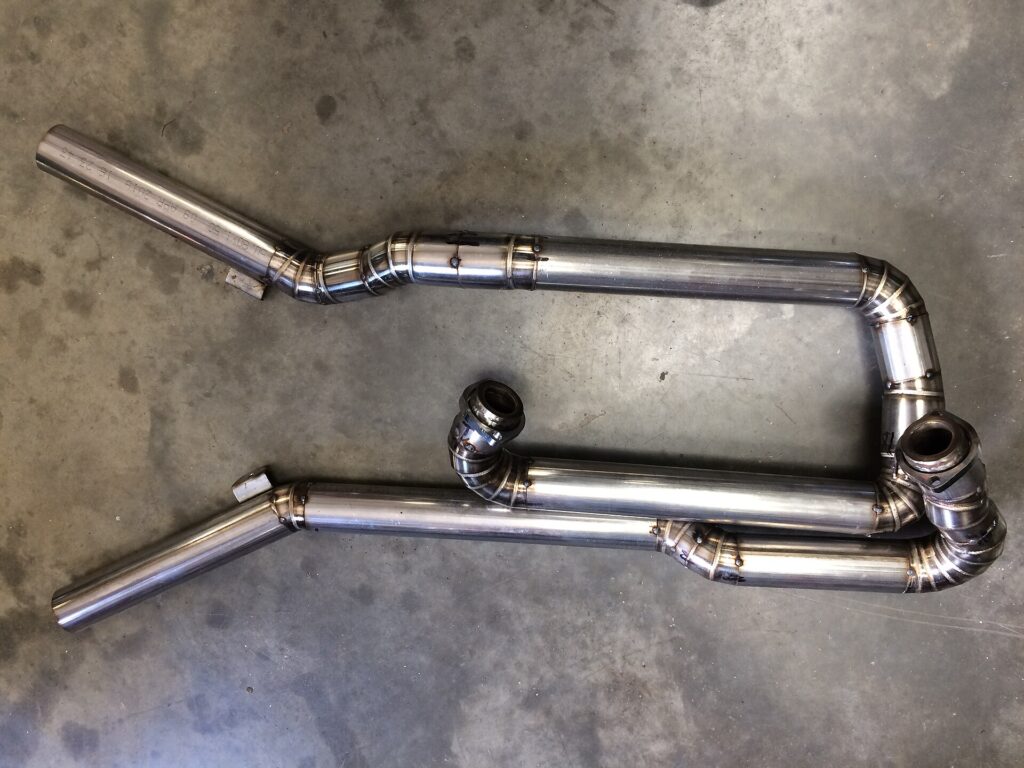
Aluminized vs stainless exhaust tubing: head to head
This is the comparison most people search for, so let’s put the five side by side. The table sticks to what suppliers publish and to how each material is described. Where we couldn’t find a solid number, we describe it in plain words instead.
| Material | What it is | Corrosion resistance | Heat notes from suppliers | Magnetic? | Relative cost |
|---|---|---|---|---|---|
| Aluminized mild steel | Mild steel with an Al-Si hot-dip coating (Type 1) | Coating protects; cut edges and welds are bare steel | Cliffs: heat resistance effective to 1250°F | Yes | Budget |
| 409 stainless | Ferritic, about 11% chromium, titanium-stabilized | Better than carbon steel, below higher-chromium stainless | ATI points hotter parts toward 18% chromium grades | Yes | Mid |
| 304 stainless | Austenitic 18-8 | Good general corrosion resistance | Burns: fine for most street headers; can suffer carbide precipitation when very hot | Essentially no when annealed; bent areas may be slightly magnetic | Mid to high |
| 321 stainless | Austenitic, titanium-stabilized | Resists intergranular corrosion after 800–1500°F exposure | Burns: suggested for turbo and high-EGT systems | Essentially no | High |
| Titanium | Grade 2 (pure) or grade 9 (Ti-3Al-2.5V) | Very good; weight is the main draw | Grade 9 rated for higher temperatures than grades 1–4 | No | Highest |
How to read it: start with the corrosion column if you live where roads are salted. Look at the heat column if you’re building headers or a turbo manifold. Then check cost. For most street builds, the real fight is between aluminized and 409 or 304.
So, aluminized vs stainless in one sentence? Aluminized is cheaper and easier to work. Stainless costs more but resists corrosion through the whole wall, not just at the surface. That last point is the big one. Scratch aluminized tube and you reach plain steel. Scratch stainless and you reach more stainless.
The magnet column is handy at a swap meet. Ferritic 409 is magnetic. Austenitic 304 is essentially non-magnetic when annealed, though supplier notes say cold work such as bending can make it slightly magnetic. A magnet won’t tell you everything, but it quickly separates 409 from 304.
Corrosion and heat: how each material fails
Knowing how a material fails helps you design around it. Here’s what the supplier literature says about each one.
Aluminized: the coating is the armor
Aluminized steel only resists rust while the coating is intact. Cleveland-Cliffs says its Type 1 grade outperforms zinc-coated steel in atmospheric and salt-spray corrosion. But the inside of a muffler is a harsher place. The Nisshin patent notes that silicon-bearing Type 1 coatings can be weak against alkaline condensate, while the steel base is weak against acidic condensate. Add bare steel at every weld and cut, and you can see why budget systems tend to rot from the joints and the inside out.
409: good, not great
409 is stainless all the way through, so a scratch doesn’t expose plain steel. Its lower chromium content means it resists corrosion less well than 304, so don’t expect it to stay as bright. There’s also a heat caveat. Many ferritic stainless grades can become brittle after long exposure around 700–1100°F, an effect metallurgists call 885°F embrittlement. ATI’s 409 datasheet also notes that hot-end exhaust parts may need an 18% chromium grade instead.
304: great corrosion resistance, one hot-end weakness
304 handles water and salt well. Its weak spot is very high heat. Burns Stainless explains that ordinary austenitic grades like 304 can suffer carbide precipitation at high temperature. Chromium gets tied up at the grain boundaries, and the resulting intergranular corrosion can lead to header tube failures.
321: built for the heat
321 fixes that weakness with titanium, which grabs the carbon first so the chromium stays put. Burns recommends 321 for most turbo applications and, in its blog articles, for systems running above about 1,400°F. Treat that as a supplier rule of thumb, not a hard line. One caveat from the NKS datasheet: long exposure between 900°F and 1500°F may lower 321’s general corrosion resistance, even though its intergranular resistance stays better than unstabilized grades.
For the hottest turbo systems, Burns Stainless points builders toward Inconel instead of any stainless. If your manifold glows, talk to your tubing supplier before you buy.
Bendability: how each material behaves in the bender
Most exhaust tubing is thin. Common stainless and aluminized mandrel bends are 16 gauge, which listings give as .065″ wall. Thin wall plus a tight radius is a recipe for wrinkles and flat spots unless the tube is supported from inside. That’s why most exhaust bends are mandrel bends, made on a bender that puts a support rod inside the tube.
Rogue Fabrication’s exhaust bender guide suggests a mandrel for 304 stainless exhaust whenever the wall factor (OD ÷ wall) is above 20, or the D of bend (CLR ÷ OD) is below 3.0. A 2.5″ × .065″ tube has a wall factor of about 38. So by that guidance, nearly every exhaust size needs a mandrel. Our mandrel vs crush bending guide explains the difference in detail.
| Material | How it bends | Springback | What to watch for |
|---|---|---|---|
| Aluminized mild steel | Most forgiving of the five | Less than stainless or titanium | Thin wall still wrinkles without a mandrel |
| 409 stainless | Suppliers list it as formable by roll forming and stretch bending | No published tube figure found; test-bend it | Treat it like stainless, not mild steel |
| 304 stainless | Work-hardens quickly as it bends | More than mild steel (Rogue Fab) | Inside wall buckling on thin wall and tight radius |
| 321 stainless | Austenitic like 304 | No published tube figure found; test-bend it | Buy pre-bent when you can |
| Titanium | Annealed stock bends far more easily than cold-worked | More than mild steel (Rogue Fab) | Galling on dry tooling; needs a mandrel and the right lube |
A key point: nobody publishes a reliable springback table for exhaust tube. Rogue Fab’s stainless bending page says stainless springs back more than mild steel, and it recommends a test bend for every material and die combination. Its titanium page says the same about titanium. Measure yours on scrap. Our springback guide shows how.
Enter your OD, wall and CLR in our bend calculator. It shows wall factor and D of bend, so you can see right away whether your bend is mandrel territory.
Welding notes for each material
The material you pick also decides your welding process, filler and prep. Here’s the short version for each one. Always check the filler maker’s data sheet for your exact materials.
Aluminized mild steel
It MIG or TIG welds much like mild steel. Many welders report cleaner results when they grind the coating off the joint area first, because coating that burns into the puddle can cause spatter. Work with good ventilation and a respirator, as you would with any coated metal. After welding, the joint is bare steel, so it’s the first place rust will start.
409 stainless
Supplier datasheets rate 409’s weldability as fair. Research on welded 409, such as this heat-affected-zone study, finds that grain growth near the weld rises with heat input. The practical takeaway: keep heat input low, with short welds and a quick travel speed.
304 and 321 stainless
Both TIG weld well. Burns Stainless pairs 304 with 308 filler, and recommends 347 filler for 321 because 321 filler rod isn’t commonly made. On thin tube the inside of the weld can “sugar,” a crusty oxidation on the back side. Miller says sugaring weakens the joint and hurts corrosion resistance, and its fix is to back purge with argon or reduce amperage. Our guide to bending stainless exhaust tubing covers purging in more detail.
Titanium
Titanium is the strictest. Miller’s titanium tube guide says oxygen, nitrogen and hydrogen compromise strength and corrosion resistance. It calls for 100% argon shielding and a back purge using dams and purge plugs, plus strict cleanliness. See our titanium exhaust guide for the full routine.
Joining two different metals
Welding stainless to mild or aluminized steel is common at the hot-end-to-cold-end joint. ESAB describes its 309L filler as suited to joining austenitic stainless to unalloyed steel. Many builders skip welding here entirely and use a slip joint or clamp instead.
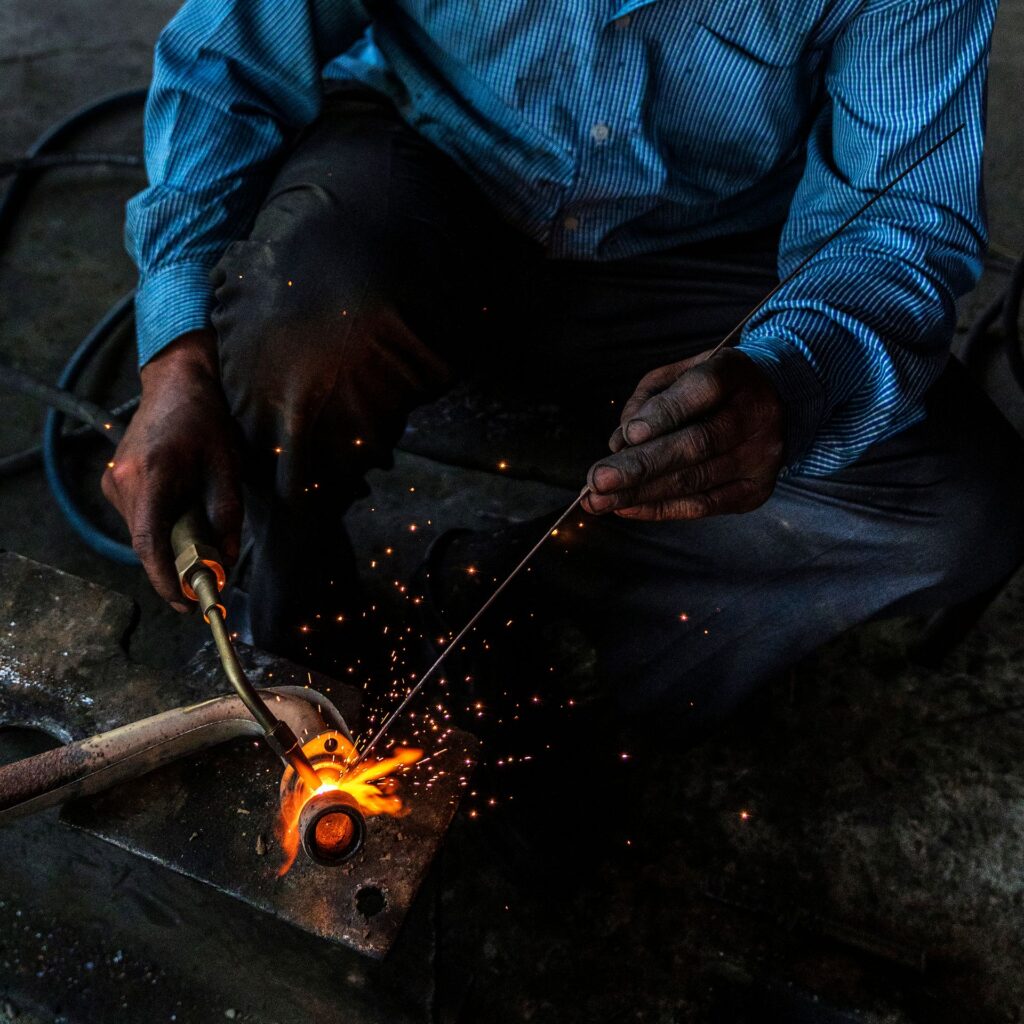
Which exhaust tubing material should you choose?
Let’s turn all of that into a decision. Find the build that sounds most like yours.
The daily driver on a budget
Pick: aluminized mild steel. Why: it’s the cheapest, it bends and welds easily, and Type 1 coating is made for heat. Who it’s for: anyone fixing a car they don’t plan to keep for many winters, or a first-time exhaust builder who wants cheap practice. How to check it: ask whether the tube is aluminized or plain mild steel, and plan to paint or coat your welds.
The long-term street car
Pick: 409 or 304. Why: both are stainless through the whole wall. 409 is the grade built for exhaust and costs less. 304 resists corrosion better and polishes up nicely. Who it’s for: anyone who drives on salted roads or wants to build it once. How to check it: confirm the grade on the listing. “Stainless” alone isn’t enough.
Headers and turbo manifolds
Pick: 304 for most naturally aspirated headers, 321 for turbo manifolds and very hot systems. Why: Burns Stainless suggests 321 for most turbo builds and once exhaust temperatures get very high. Who it’s for: turbo builders, endurance racers and anyone whose headers run hot for long periods. How to check it: ask your tubing supplier what they recommend for your temperatures.
The race or show car chasing weight
Pick: titanium. Why: it’s far lighter than steel and looks unique. Who it’s for: builders who can TIG weld well and are ready for the purge setup. How to check it: confirm the grade, since many retail bends are grade 1, and read our titanium guide before you order.
Still deciding between a full custom build and a pre-bent kit? Our guide on buying mandrel bends vs bending your own exhaust walks through it.
Pre-bent mandrel bends worth a look
Most home builders don’t bend their own exhaust tube. They buy pre-bent mandrel U-bends, J-bends and elbows, then cut and weld them. Here’s how we chose the examples below. We looked for listings that clearly state the material, OD and wall. We have not handled these parts. Picks are based on the published listing specs, checked in October 2026, and on what owners commonly report. Read how we evaluate equipment. Listings change, so confirm specs before you order.
As an Amazon Associate I earn from qualifying purchases.
Khaos Motorsports 2.5″ aluminized 180° U-bends: budget pick
Khaos Motorsports 2.5″ 180° Aluminized Mandrel U-Bend (2-pack)
Two 16-gauge aluminized mild steel U-bends for budget exhaust builds and practice.
A 180° U-bend is the most flexible piece you can buy. Cut it anywhere and you get two bends of almost any angle. This listing gives you two of them in 2.5″ OD aluminized mild steel.
Who it’s for: budget builds, repairs and first-time fabricators who want cheap material to learn cutting, fit-up and welding.
Why we picked it: the listing clearly states the size, gauge and material, and says the bends are mandrel-formed to avoid wrinkles.
- Material
- Aluminized mild steel (per listing)
- OD
- 2.5″
- Wall
- 16 gauge
- Bend
- 180° U-bend
- Quantity
- 2 per pack
- Made in
- Grand Rapids, Michigan (per listing)
Why we like it
- Budget-friendly way to build or practice
- U-bends can be cut into many angles
- Clear size and gauge on the listing
Know before you buy
- Cut ends and welds are bare steel
- Check the CLR before you plan cut lengths
- Not the pick for salted roads long term
Prefer stainless? Khaos also lists 2.5″ 304 stainless 90° bends (2-pack). Affiliate links. See our disclosure.
Vibrant 13040 T304 90° mandrel bend: stainless pick
Vibrant Performance 13040 90° T304 Stainless Steel Mandrel Bend
A 2.5″ OD, .065″ wall 304 stainless 90° with long legs for fit-up room.
Vibrant’s T304 bends are a common choice for stainless exhaust builds. This one is a 2.5″ 90° with a 3.5″ centerline radius. That works out to a D of bend of 1.4, which is tight and only practical with a mandrel.
Who it’s for: street builds where you want stainless through the whole wall and a clean, consistent bend.
Why we picked it: the listing gives OD, CLR, both leg lengths and wall thickness, so you can plan cut lengths before it arrives.
- Material
- T304 stainless
- OD
- 2.5″
- CLR
- 3.5″
- Legs
- 5″ and 11″
- Wall
- .065″ (1.65 mm)
- Bend
- 90°
Why we like it
- Full specs on the listing
- Long leg gives room to trim
- 304 resists corrosion through the wall
Know before you buy
- Costs more than aluminized
- Needs TIG and a back purge for best welds
- 304 isn’t the pick for very hot turbo parts
Going lighter? Ticon lists a 3″ titanium 90° mandrel bend (listed as CP grade 1). Affiliate links. See our disclosure.
Real-life lessons from exhaust builders
These are composite stories. The same situations come up again and again in garage-fab forums and build threads. Each one teaches something about material choice.
A builder makes a cat-back from aluminized tube for a daily driver in a snowy state. It sounds great and costs little. A few winters later it rusts through, right at the welds and the cut ends, while the straight sections still look fine.
Lesson: aluminized protection stops at the coating. Paint or coat the welds, or choose stainless for salted roads.
Someone builds a turbo manifold from 304 because it was on the shelf. It looks beautiful. Over time, hairline cracks appear near the collector, the hottest part of the system.
Lesson: for turbo parts, ask your supplier about 321, as Burns Stainless recommends for most turbo builds.
A builder buys “stainless exhaust tubing” at a swap meet, expecting 304. It sticks firmly to a magnet. It’s 409, which is fine for an exhaust, just not what they paid a 304 price for.
Lesson: always ask for the grade, and carry a magnet when you buy used tube.
Common mistakes (and how to fix them)
Most material regrets come from the same short list. Here’s each one, with the fix.
❌ Treating “stainless” as one material. 409, 304 and 321 behave differently.
✅ Fix: buy by grade. Ask the seller, read the listing, and keep a magnet handy for 409.
❌ Welding straight through the aluminized coating. Burning coating causes spatter and messy welds.
✅ Fix: grind the coating back from the joint, ventilate well and wear a respirator.
❌ Using 304 for a very hot turbo manifold. High heat can cause carbide precipitation in 304.
✅ Fix: use 321 for turbo and high-temperature parts, as tubing suppliers suggest.
❌ Skipping the back purge on stainless. The inside of the weld sugars and loses corrosion resistance.
✅ Fix: back purge with argon, as Miller advises. Silicone purge plugs make it easy on exhaust tube.
❌ Crush-bending thin-wall exhaust in a ram pipe bender. The tube flattens and kinks.
✅ Fix: buy pre-bent mandrel sections. Harbor Freight’s own 12-ton bender manual says it isn’t meant for thin-wall pipe like exhaust.
❌ Using one springback number for every material. Stainless and titanium spring back more than mild steel.
✅ Fix: test-bend every new material and batch, and write the result down.
❌ Cleaning titanium with shared steel wool or abrasives. Contamination ruins titanium welds.
✅ Fix: use a solvent wipe and a carbide tool kept only for titanium, as The Fabricator recommends.
Pro tips for choosing and using exhaust tubing
These small habits save money and frustration. None of them cost much, and all of them pay off over the life of the exhaust.
- 💡 Mix materials on purpose. Put the expensive, heat-resistant grade where it’s hot, and a cheaper grade further back. Use a clamp or the right filler at the joint.
- 💡 Match your filler. Burns Stainless pairs 308 with 304 and 347 with 321. ESAB describes 309L for joining stainless to plain steel.
- 💡 Keep heat input low on 409. Studies of welded 409 link more heat to more grain growth near the weld.
- 💡 Read the grade on titanium listings. Many retail titanium bends are grade 1, not grade 2 or 9.
- 💡 Buy one spare bend. Use it for test cuts, fit-up practice and dialing in your welder settings.
- 💡 Protect aluminized welds. High-temperature paint or coating over bare welds helps where the coating is gone.
- 💡 Look up words you don’t know. Our glossary explains CLR, D of bend, wall factor and more.
Experienced builders mark every leftover piece with its grade and wall in paint marker. Months later, you’ll know which scrap is 409 and which is 304, without a magnet or a guess.
Frequently asked questions
Is aluminized or stainless exhaust tubing better?
Stainless resists corrosion better, because it’s stainless through the whole wall. Aluminized is cheaper and easier to work, but its protection is a surface coating, so cut ends and welds are bare steel.
Is 409 stainless better than aluminized?
For corrosion, generally yes. 409 is a stainless grade built for automotive exhaust, and suppliers say it resists corrosion better than carbon steel. It costs more than aluminized and is harder to bend and weld.
Should I use 304 or 409 for my exhaust?
Choose 304 if you want better corrosion resistance and a polished look. Choose 409 for a lower-cost stainless system. Both are stainless through the wall.
When do I need 321 stainless?
For turbo manifolds and very hot headers. 321 is titanium-stabilized to resist intergranular corrosion after high-temperature exposure, and Burns Stainless recommends it for most turbo applications.
Is titanium exhaust tubing worth it?
For weight-focused race and show builds, often yes. Grade 9 titanium has under 60% of steel’s density, per Smiths Metal Centres. It’s a big investment and needs careful TIG welding with a full argon back purge.
Can I weld stainless to aluminized exhaust?
Yes. Grind the coating off the joint and use a filler made for dissimilar steels. ESAB describes 309L for joining austenitic stainless to unalloyed steel. A clamp or slip joint also works.
Your exhaust material checklist
Run through this list before you order tube or bends. If you can tick every box, you’ve chosen well.
- I know how hot each part of my exhaust will run (header, turbo or cold end)
- I know whether my roads are salted in winter
- I’ve chosen a grade, not just “stainless”
- I’m using 321 (or asking my supplier) for turbo and very hot parts
- I’ve confirmed OD, wall and CLR on every listing
- I’m buying mandrel bends for thin-wall, tight-radius bends
- I’ve matched my filler metal to each material and joint
- I have argon and purge plugs for stainless or titanium welds
- I’ll grind the coating back before welding aluminized tube
- I’ve bought a spare bend for test cuts and practice welds
Pick the material that fits your heat, your roads and your budget. Buy by grade, plan your welds and test on scrap first. Do that, and your exhaust will look good and last as long as the material allows. 🔥
Planning your exhaust bends?
Check wall factor, D of bend and cut lengths before you cut expensive tube. Or compare bender types if you’re thinking of bending your own.
Keep reading

Best Tube Bender for Chromoly: Picks by Published 4130 Rating
The best tube bender for chromoly has a published 4130 rating. Compare Baileigh, Eastwood and Pro-Tools 4130 capacities, springback tips and more.
Pro-Tools 105HD vs JD2 Model 32: Manual Bender Specs Compared
Pro-Tools 105HD vs JD2 Model 32, compared from published specs: tube and pipe capacity, 4130 by hand, dies, CLR and hydraulic upgrades.
Best Tube Bender for Roll Cage Builds (2026): Picks by Rule Needs
The best tube bender for roll cage work bends 180° hoops, takes dies that meet your rulebook's radius rule and is rated…