Mandrel Tube Bender for Home Shop Use: What It Can and Can’t Do
Thinking about a mandrel tube bender for home shop use? What a home mandrel setup can and can't do, its limits, and smarter alternatives like pre-bent bends.

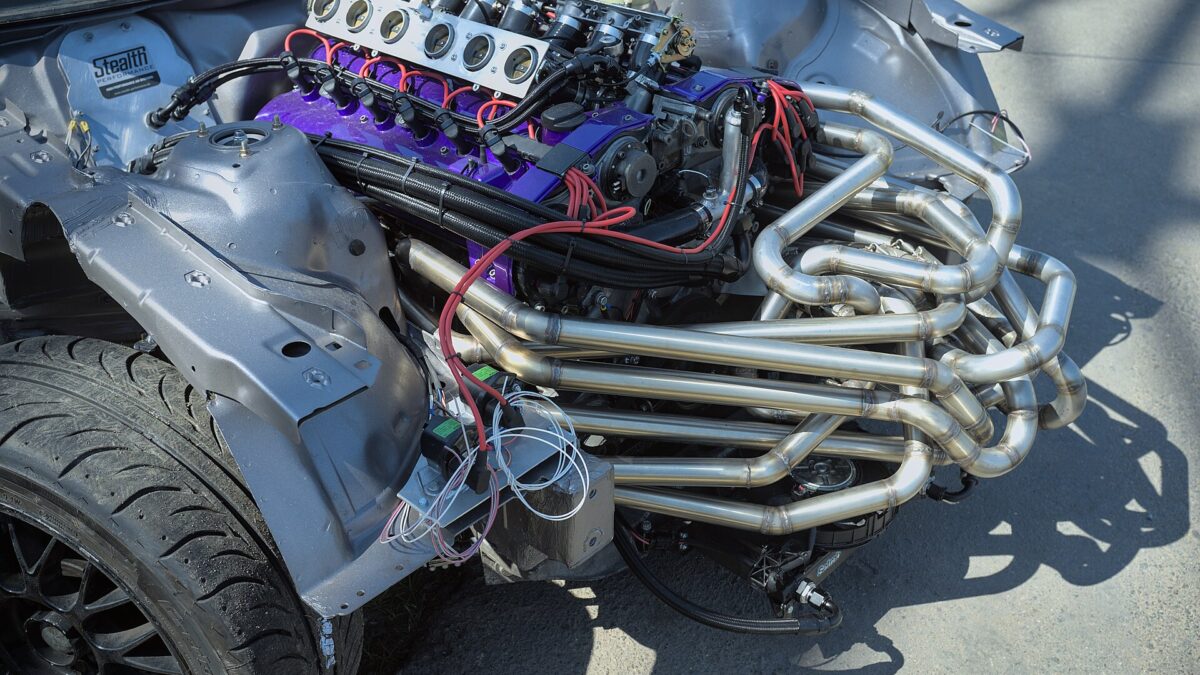
You’ve seen those headers and exhaust systems with tight, glassy-smooth bends and not a ripple in sight. Then you try a thin-wall bend on your own rotary-draw bender and it wrinkles like a paper bag. That’s usually the moment people start looking for a mandrel tube bender for home shop use. It sounds like the answer. Sometimes it is. Often, it isn’t.
A mandrel bender supports the tube from the inside while it bends. That lets thin wall go around tighter corners without collapsing. But mandrel bending also brings more parts, more setup and more cost per tube size. And the garage-scale options have real limits on size and radius.
This guide gives you the honest picture. You’ll learn what a mandrel actually does, when you really need one, what home-shop mandrel setups exist, and what they can and can’t do. Then we’ll cover the alternatives, especially pre-bent mandrel sections, which are the smarter buy for a lot of builders. We’ll lean on what makers publish, mainly Rogue Fabrication, and we’ll flag where sources disagree.
A home mandrel bender makes sense if you do a lot of thin-wall bending in sizes your machine supports. For occasional exhaust work, buy pre-bent sections instead.
- What it does: a mandrel supports the inside of the tube so thin wall can bend tighter without wrinkling. See how it works.
- The garage option: Rogue Fab sells a mandrel attachment for its M600-series benders, with a 2″ maximum bending diameter. See home-shop options.
- The limits: no big exhaust sizes past that 2″ limit, a mandrel for every OD and wall, and setup time. See what it can’t do.
- The alternative: pre-bent mandrel U-bends and J-bends. See pre-bent sections.
📋 In this guide
What a mandrel bender actually does
When you bend a tube, the inside wall gets squeezed and the outside wall stretches. Thin wall can’t take much squeezing. It buckles into wrinkles, or the tube flattens or kinks. A mandrel is a close-fitting support that sits inside the tube, right at the point where the bend forms. It holds the wall in shape while the die draws the tube around.
Rogue Fabrication’s mandrel bending guide describes it as a support placed inside the tube at the bend point that keeps the wall from collapsing or wrinkling on thin-wall tube. After the bend, the mandrel comes back out. On Rogue Fab’s M6xx attachment, that happens automatically as the ram retracts.
The parts of a mandrel setup
- Bend die: the round die that sets the centerline radius (CLR), same as on any rotary-draw bender.
- Mandrel: the inside support, sized to the tube’s inside diameter.
- Pressure die: holds the tube against the bend die. Rogue Fab requires a roller pressure die for every die used with its mandrel attachment.
- Wiper die: on tighter work, a die that sits against the inside of the bend, with its tip close to the tangent point. The Fabricator explains that you need one once the mandrel alone can’t control the inside radius (The Fabricator).
- Lubricant: the mandrel slides inside the tube, so lube matters. Rogue Fab doesn’t include mandrels or lube with its attachment.
Bullet vs ball mandrels
A bullet (or plug) mandrel is one solid insert that sits at the tangent point. A ball mandrel adds a chain of linked balls that reach further into the bend. Rogue Fab says ball mandrels handle tighter ratios but cost more and are harder to set up. It calls the bullet mandrel the right tool for most M6xx work.
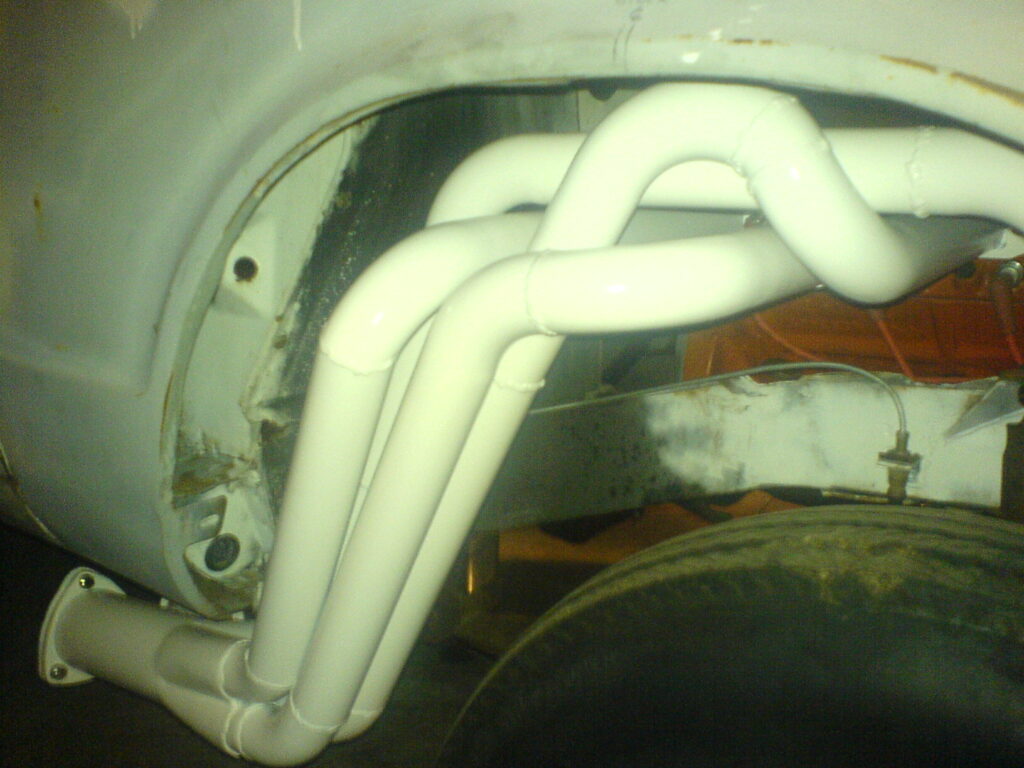
When do you actually need a mandrel?
You need a mandrel when the wall is too thin for the radius you want. Two ratios tell you where you stand. You can find both with our bend calculator:
- D of bend = CLR ÷ OD. Lower is tighter.
- Wall factor = OD ÷ wall. Higher is thinner and harder.
What the sources say
Without a mandrel, Pro-Tools gives about 3 × OD as the practical minimum CLR (Pro-Tools). Rogue Fab’s mandrel guide treats about 3.0D as the point where a mandrel is worth serious thought. It says that below about 2.0D, a mandrel is typically required on most materials. It also flags wall ratios above about 20, combined with a tight D, as mandrel territory.
Those are one maker’s guidelines, and Rogue Fab’s own pages don’t fully agree on where a wiper die becomes necessary. So treat them as a starting point. The real answer for your tube is the mandrel and wiper selection chart from a tooling maker. The Fabricator walks through one: 2″ OD × .065″ wall on a 4″ CLR gives a wall factor of about 30.8 and a D of 2.0, and the chart calls for a two-ball mandrel with a wiper (The Fabricator).
| Example job | Tube and CLR | D of bend | Wall factor | Where it lands |
|---|---|---|---|---|
| Bumper or slider | 1.75″ × .120″ on 6″ CLR | 3.4 | 14.6 | Normal rotary-draw work. No mandrel needed. |
| Light frame | 1.5″ × .065″ on 4.5″ CLR | 3.0 | 23.1 | Near Rogue Fab’s “consider a mandrel” zone. Check the die chart. |
| Tight thin-wall bend | 2″ × .065″ on 4″ CLR | 2.0 | 30.8 | The Fabricator‘s chart example: two-ball mandrel with wiper |
| 1.5D exhaust U-bend | 2.5″ × .065″ on 3.75″ CLR | 1.5 | 38.5 | Below Rogue Fab’s 2.0D line, and above a 2″ machine limit. Buy it pre-bent. |
Enter your OD, wall and CLR in our bend calculator to get D of bend and wall factor. Then send those numbers, with the material, to your tooling maker and ask what they would specify.
Most bumper, slider and cage bends sit in the first row. That’s why most garage fabricators never own a mandrel. Our guide to wall factor and D of bend explains the ratios in more depth.
Home-shop mandrel tube benders: what’s out there
Mandrel benders started as big production machines. Garage-scale options are rare. In our research, the clearest published home-shop option was from Rogue Fabrication. It sells a mandrel attachment for its M600-series vertical benders, and a complete M600 mandrel bender package. Both are sold direct, not on Amazon.
We didn’t find published mandrel attachments for the other popular garage benders in our research. If you own another brand, ask its maker directly before you assume one exists.
Rogue Fab sells its benders and mandrel tooling direct. Before ordering, send them your bender model and serial details, plus every OD, wall and CLR you plan to bend. Older machines can have limits, as the mid-2014 Model 600 note below shows.
Rogue Fab’s mandrel attachment (Version 2.0)
Here’s what Rogue Fab’s attachment page says, in plain terms:
| Question | What Rogue Fab says |
|---|---|
| Which benders? | M600 xHD, M600 HD, M605 and M625. Standard M600 and M601 must be converted to HD or M605 spec first. |
| Which die radii? | Adjustable for 2.5″, 3.5″, 4.5″ and 6.0″ CLR dies. A mid-2014 Model 600 only works with 3.5″ and 4.5″ CLR dies on the attachment. |
| Max tube size? | The maximum bending diameter stays at 2″. |
| What’s included? | No mandrels or lubricant. |
| Pressure dies? | Every die used with a mandrel needs a roller pressure die. CLRs larger than 4.5″ need two. |
| Other add-ons? | May work with the Thin Wall Roller; not compatible with the Backstop, since both mount in the same place. |
| What’s new in 2.0? | Rogue Fab says it handles higher wall ratios (thinner tube) and lower D bends (tighter radii), without giving limits on that page. |
Mandrels are sized to the tube. Rogue Fab’s package listings show mandrels for combinations such as 1″ × .049″, 1.5″ × .065″ and 2″ × .095″, and it says custom sizes are available (Rogue Fab). In other words: one mandrel per OD and wall.
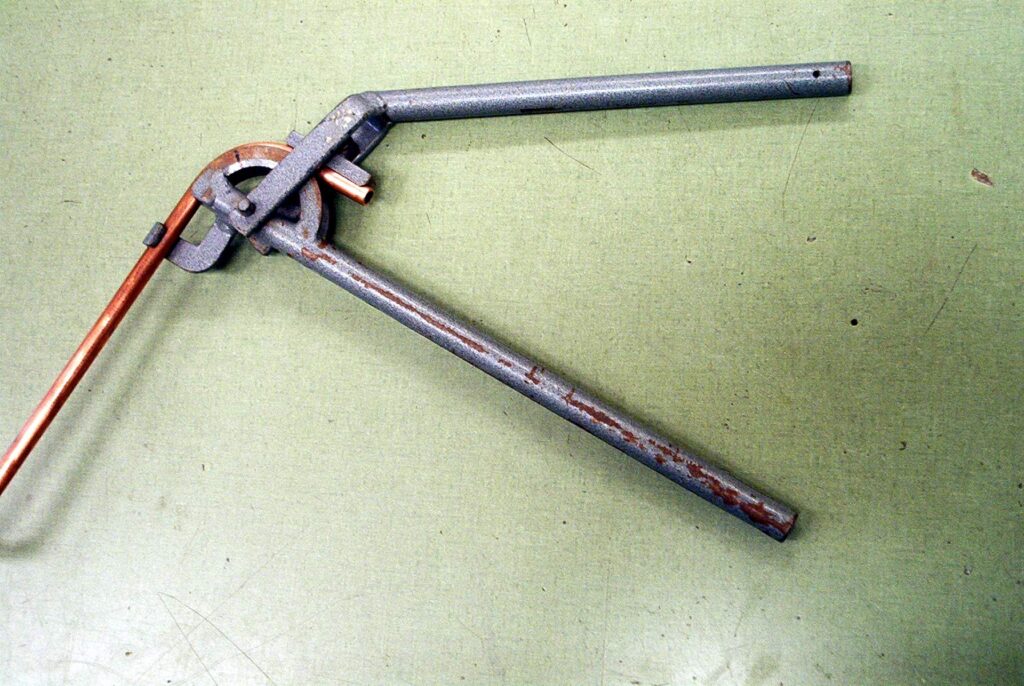
What a home mandrel bender can and can’t do
This is where expectations meet reality. A home mandrel setup is a real upgrade, but it’s not a production exhaust machine in your garage.
What it can do
- ✅ Bend thinner wall at the same radius. Rogue Fab’s capacity chart shows the M625 with the mandrel attachment going down to about .065″ wall on 1.75″ OD (Rogue Fab).
- ✅ Bend tighter. Version 2.0 is designed for lower D bends than standard die bending.
- ✅ Handle demanding materials. Rogue Fab links titanium test data from the attachment page. See our guide to bending titanium tubing.
- ✅ Use the dies you already own, if they’re M600-series dies in a supported CLR, with roller pressure dies.
What it can’t do
- ⚠️ Bend big exhaust. The attachment tops out at 2″ bending diameter. Common 2.5″ and 3″ exhaust is out of range.
- ⚠️ Match industrial tight radii. The Fabricator says rotary-draw bending with a mandrel can reach about 0.7 × OD in precision work, and BLM Group calls ratios below 1D “extreme.” That’s production-machine territory, with ball mandrels and wipers.
- ⚠️ Work as a one-size tool. Every OD and wall needs its own mandrel, and each die needs a roller pressure die.
- ⚠️ Run fast. Rogue Fab contrasts its attachment with large CNC mandrel machines, which it says cost far more and take longer to change over. Still, a manual setup isn’t a production line.
Clamp slip, a loose mandrel and the wrong lube all cause wrinkles, even with a mandrel in place. Tube Form Solutions lists a mandrel set too far back and too much clearance between mandrel and tube among its causes. Read our guide to fixing wrinkles, kinks and flattening.
The alternative: pre-bent mandrel sections
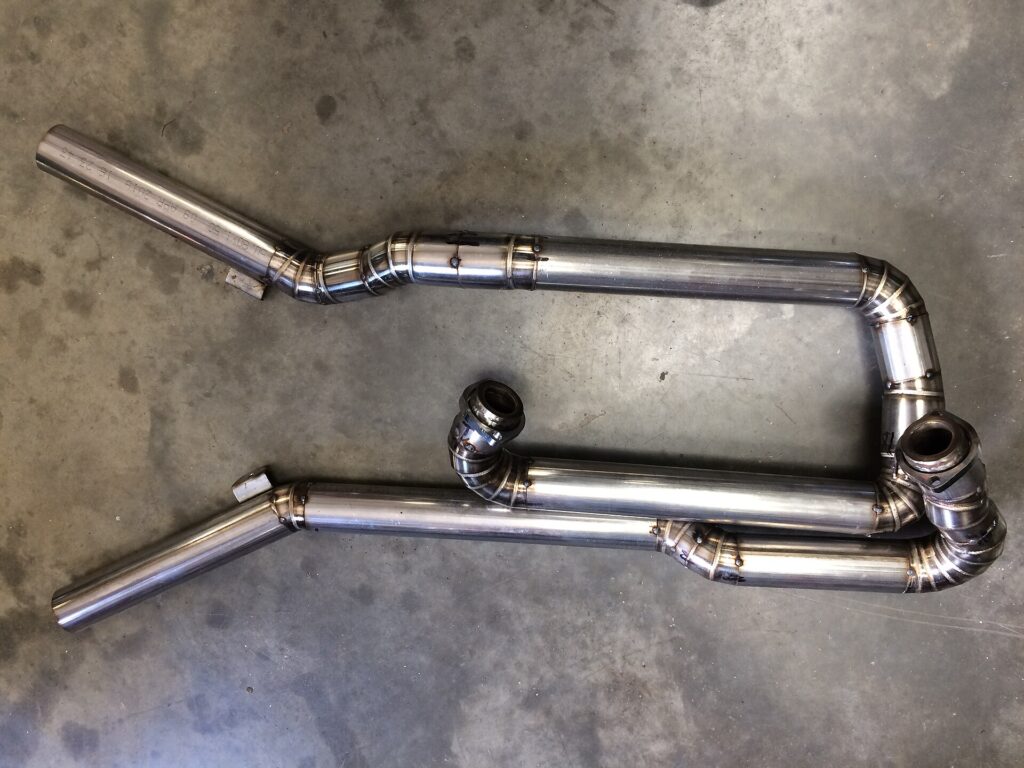
For exhaust and intake work, most home builders don’t bend tube at all. They buy pre-bent mandrel sections: U-bends, J-bends, 45s and 90s that were bent on production mandrel machines. Then they cut the curve they need from each section and weld the pieces together.
Why it works so well:
- Tight radii in big sizes. 1D to 1.5D bends are common in aftermarket mandrel bends. Vibrant, for example, sells 1D tight-radius 304 stainless bends (Vibrant).
- No tooling to buy. You need a saw, a deburring tool and a welder, which many shops already own.
- Any size you want. You’re not limited by your bender’s maximum OD.
The trade-off is welding. Every joint is a weld, and a smooth exhaust can have many of them. But for a one-off system, that’s usually far less effort and cost than buying and tooling up a mandrel bender. Rogue Fab’s own exhaust guidance also points out that ram-style benders suit exhaust repair work, not performance exhaust.
As an Amazon Associate I earn from qualifying purchases.
A pre-bent mandrel U-bend to start with
2.5″ OD 180° 304 Stainless Mandrel U-Bend (16 gauge, 3.75″ radius)
A single mandrel-bent U-bend you can cut into the curves you need.
A 180° U-bend is the most flexible pre-bent section. Cut it once and you have two 90s. Cut it at other angles and you can make almost any curve, then join the pieces with straight tube.
Who it’s for: builders making a one-off exhaust or intake who don’t need to bend thin-wall tube every week.
Do the math: a 3.75″ radius on 2.5″ OD is 1.5D, well past what a non-mandrel garage die can do in thin wall. Match OD, wall and alloy to the rest of your system.
- OD
- 2.5″
- Material
- 304 stainless
- Wall
- 16 gauge (listed as .065″)
- Bend
- 180°, 3.75″ radius (1.5D)
- Legs
- 6″ (per the listing)
Why it fits
- Tight 1.5D bend with mandrel support
- No bender, dies or mandrels needed
- One section can become two 90s
Know before you buy
- Every joint is a weld
- Check the radius against your design
- Stainless needs the right welding setup
Alternative: Patriot Exhaust H6937 2-1/2″ 304 stainless U-bend. Affiliate links. See our disclosure.
Want the full process? See our guides to buying mandrel bends vs bending your own exhaust and 1D vs 1.5D vs 2D exhaust bends.
Other ways to avoid needing a mandrel
Before you buy mandrel tooling, check whether a simpler change gets you there. Most of these cost less than a mandrel for a single size.
| Alternative | What it helps with | The trade-off |
|---|---|---|
| Bigger CLR die | Raises D of bend, so the wall has an easier time | Bends take more room and look less tight |
| Thicker wall | Lowers wall factor; less wrinkling and flattening | More weight and more bending force |
| DOM instead of ERW | Pro-Tools notes ERW can have thin spots | Check availability and cost in your size |
| Roller pressure die upgrade | Less deformation on work the bender is already rated for | Rogue Fab says it doesn’t extend the rating; thinner or tighter needs a mandrel |
| Pre-bent mandrel sections | Tight bends in any size | More welding |
| A local bending shop | Production-quality mandrel bends | Lead time, and you need an accurate drawing |
The roller pressure die option
Rogue Fab’s Thin Wall Roller is a pressure-die upgrade for its M600 to M625 benders. In Rogue Fab’s own testing, deformation was 10.0% with regular dies and 6.4% with the roller (Rogue Fab). It recommends the roller for wall ratios above 14. But it’s clear about the limit. The roller improves bend quality on jobs the machine is already rated for. For thinner walls or tighter radii, Rogue Fab points to the mandrel attachment.
That’s a useful middle step. If your bends are almost good enough, a better pressure die may close the gap without a mandrel. See our bender type comparison for how the machine types stack up.
Is a mandrel tube bender for home shop use worth it?
Here’s the honest decision. A home mandrel setup is a bigger investment than the attachment alone suggests. You’ll need a supported bender, a mandrel for every OD and wall, roller pressure dies and lube. That adds up fast. So it only pays off if you’ll use it a lot.
It’s probably worth it if…
- You already own, or plan to buy, a supported M600-series bender.
- You bend a lot of thin-wall tube at 2″ OD or under, in a small number of sizes.
- Your designs need radii your current dies can’t do without wrinkling.
- You make parts for others and the tooling cost spreads across many jobs.
It’s probably not worth it if…
- You mostly build bumpers, sliders, racks or cages in common wall thicknesses.
- You want one custom exhaust in 2.5″ or 3″ tube.
- You bend lots of different sizes, each a few times a year.
- Your bender isn’t one that supports a mandrel attachment.
A mandrel bender pays for itself through repetition. If you’ll bend the same thin-wall size again and again, it’s a tool. If you’ll bend it once, it’s an expensive shelf ornament.
Still unsure what kind of bender suits your projects? Our Find My Bender quiz asks about tube, projects and space, then explains which type fits.
Real-life lessons from the garage
These are composite stories. The same situations come up again and again in garage-fab forums and build threads. They show who a mandrel helps, and who it doesn’t.
A builder wants a custom 3″ exhaust for a project car. They start pricing a mandrel setup. Then they read the size limit: the attachment they’re looking at tops out at 2″. They build the exhaust from pre-bent mandrel U-bends and J-bends instead, and finish in a few weekends.
Lesson: check the maximum size before you price anything. For one exhaust, pre-bent sections usually win.
Someone builds lightweight tube frames for small vehicles. Every job uses the same two thin-wall sizes, both under 2″, with tight bends that wrinkle on standard dies. They already own a supported vertical bender. Adding a mandrel setup for those two sizes turns scrapped bends into clean ones.
Lesson: a mandrel pays off when the same thin-wall sizes repeat, inside the machine’s range.
A builder buys thin-wall tube from a new supplier. Same OD, slightly different wall. The bends start wrinkling even with the mandrel in. The mandrel was sized for the old wall, so it sat loose in the new tube.
Lesson: a mandrel matches one OD and wall. Change the tube, check the fit.
Common mistakes (and how to fix them)
Mandrel bending adds parts, and every part adds a way to go wrong. These are the ones that cost home builders the most.
❌ Buying a mandrel setup for one exhaust. The tooling costs more than the pre-bent parts would have.
✅ Fix: buy pre-bent mandrel sections for one-off exhaust and intake work.
❌ Ignoring the size limit. A 2″ machine can’t bend 2.5″ or 3″ exhaust.
✅ Fix: list every OD you’ll bend and check it against the maker’s maximum before you buy.
❌ Using a mandrel that doesn’t match the wall. A loose mandrel lets the wall deform into the gap.
✅ Fix: order a mandrel for each OD and wall combination, and measure the tube before every job.
❌ Forgetting the extra parts. Mandrels, lube and roller pressure dies aren’t in the box.
✅ Fix: list every part per size from the maker’s page and budget for the whole set.
❌ Too much or the wrong lube. Tube Form Solutions warns that too much oil, or oil that’s too heavy, in the wiper area causes wrinkles.
✅ Fix: use the lubricant your tooling maker recommends, in the amount they recommend.
❌ Skipping the cheaper fixes. Sometimes a bigger CLR, a heavier wall or a roller pressure die is enough.
✅ Fix: work out D of bend and wall factor, and try the simple changes before buying mandrel tooling.
Pro tips before you go mandrel
A little planning makes the mandrel decision easy, and makes mandrel bending go smoother if you do take the plunge.
- 💡 Standardize your sizes. Pick one or two thin-wall OD and wall combinations and design around them. Fewer sizes means fewer mandrels.
- Buy tube by spec. Mandrel fit depends on the inside diameter, so order a consistent OD and wall from a consistent supplier.
- Ask the maker for the chart. Before you order, send your OD, wall, material and CLR to the tooling maker and ask what mandrel and wiper they’d specify.
- Practice on scrap. Mandrel position, lube and pressure-die setup all take a few test bends to dial in.
- Keep mandrels clean and protected. A nicked mandrel can mark the inside of every tube it touches.
- Mix methods. Many builders bend the gentle bends themselves and buy pre-bent sections for the tight ones.
- Learn the comparison. Our guide to mandrel vs crush bending explains why exhaust bends look the way they do.
Experienced fabricators pick their bend radii and tube sizes to match the tooling they already own. If a design needs a mandrel for one bend, they first ask whether a slightly bigger radius would work just as well.
Frequently asked questions
Can you mandrel bend tube in a home shop?
Yes, within limits. Rogue Fab sells a mandrel attachment for its M600-series benders, with a 2″ maximum bending diameter. You’ll need a mandrel for each OD and wall, roller pressure dies and lube.
Do I need a mandrel bender to build an exhaust?
Usually not. Most home builders buy pre-bent mandrel U-bends and J-bends, then cut and weld them. That avoids tooling costs and size limits.
What’s the difference between mandrel and non-mandrel bending?
Non-mandrel bending supports the tube only from the outside, with the dies. Mandrel bending adds a support inside the tube at the bend point. That lets thinner wall bend tighter without wrinkling or collapsing.
Can a home mandrel bender make 1D bends?
Don’t count on it. Rogue Fab’s attachment is built for lower D bends than standard dies, but very tight 1D work is usually done on production machines with ball mandrels and wipers. Pre-bent 1D sections are sold by exhaust suppliers.
Can I add a mandrel to the bender I already own?
Only if its maker offers one. Rogue Fab lists the M600 xHD, M600 HD, M605 and M625 as supported, with standard M600 and M601 needing conversion first. For other brands, ask the maker.
Is a home mandrel setup expensive?
It’s a bigger investment than the attachment alone. Every tube size needs its own mandrel, and each die needs a roller pressure die. Price the complete set for the sizes you’ll use before deciding.
Your mandrel decision checklist
Answer these before you spend anything on mandrel tooling. If most of them point to “yes,” a home mandrel setup may be right for you.
- I’ve listed every tube OD, wall and material I plan to bend
- Every size is within the mandrel setup’s maximum bending diameter
- I’ve worked out D of bend and wall factor for my tightest bends
- Those bends fall outside what my current dies can do cleanly
- I’ve tried, or ruled out, a bigger CLR, a heavier wall and a roller pressure die
- My bender is a model the maker supports for a mandrel attachment
- I’ve priced a mandrel, die and roller pressure die for each size
- I’ll bend these sizes often enough to justify the tooling
- I’ve compared the cost and effort of pre-bent mandrel sections
- I have the welding setup for the material if I go pre-bent
A mandrel bender is a great tool in the right shop. For many home builders, though, the smarter move is a good rotary-draw bender for structural work plus pre-bent mandrel sections for the tight stuff. Know your sizes, do the math, and buy only the tooling you’ll actually use. 🔧
Find out what your bend really needs
Check D of bend and wall factor in seconds with the bend calculator, or compare bender types side by side.
Keep reading
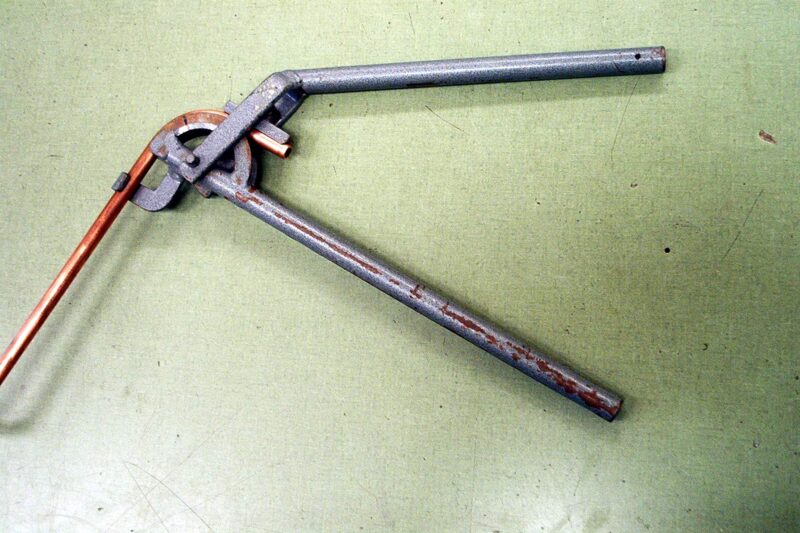
Rogue Fab M605 vs M625: Which Rogue Bender Do You Need?
Rogue Fab M605 vs M625, compared from Rogue's published specs: wall ratings, frame, power, shared dies and the M605's .188 vs .250…
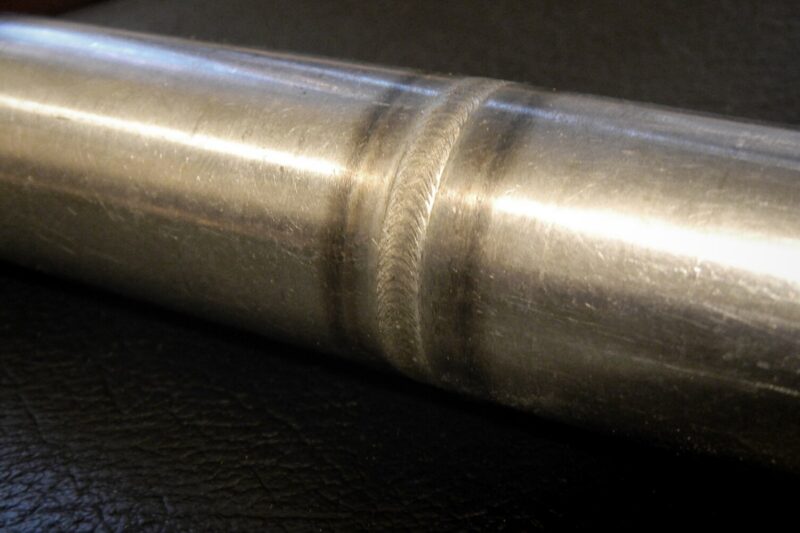
Aluminized vs Stainless Exhaust Tubing: 409, 304, 321 & Titanium
Aluminized vs stainless exhaust tubing explained: 409, 304, 321 and titanium compared on bending, welding, heat and corrosion, with sourced data.

Best Tube Bender for Chromoly: Picks by Published 4130 Rating
The best tube bender for chromoly has a published 4130 rating. Compare Baileigh, Eastwood and Pro-Tools 4130 capacities, springback tips and more.