Rogue Fab M605 vs M625: Which Rogue Bender Do You Need?
Rogue Fab M605 vs M625, compared from Rogue's published specs: wall ratings, frame, power, shared dies and the M605's .188 vs .250 conflict.

You’ve decided on a Rogue Fabrication vertical bender. Good choice to narrow it down. Now comes the harder question: Rogue Fab M605 vs M625? They share dies, they look almost the same, and both bend tube up to 2.00″ OD. So what does the bigger machine really buy you?
The short version is frame, wall rating and power. The long version matters, though, because the M605’s wall rating is listed two different ways on Rogue’s own site. If your projects sit near the top of that range, that’s the number that decides everything.
This comparison is built only from what Rogue Fabrication publishes, checked in October 2026. Nobody at Benders Hub has run either machine. You can read how we research equipment. Both benders are sold direct by Rogue, not on Amazon.
Same dies, same footprint, same 2.00″ OD limit. The M625 is the heavier-built machine for thick wall.
- Pick the M605 if most of your tube is 2.00″ × .188″ wall or lighter, and you want a choice of manual, air or electric hydraulic power.
- Pick the M625 if you bend 2.00″ × .250″ DOM often. Rogue rates it for that daily under warranty, with a 5/16″ frame instead of 3/16″.
- Check first: Rogue’s product page lists the M605 at .188″ wall, but its FAQ says .250″ DOM. Rogue also says you can’t turn an M605 into an M625 later without a new frame.
📋 In this comparison
- Rogue Fab M605 vs M625 at a glance
- What actually changes: frame, bar and upgrades
- The M605 wall rating: .188″ or .250″?
- Shared dies, CLR and bend angle
- Power, space and setup
- The two benders up close
- Accessories worth adding
- Which one should you buy?
- Real-life lessons from builders
- Common mistakes when choosing
- Pro tips for Rogue owners
- FAQ
- Your decision checklist
Rogue Fab M605 vs M625 at a glance
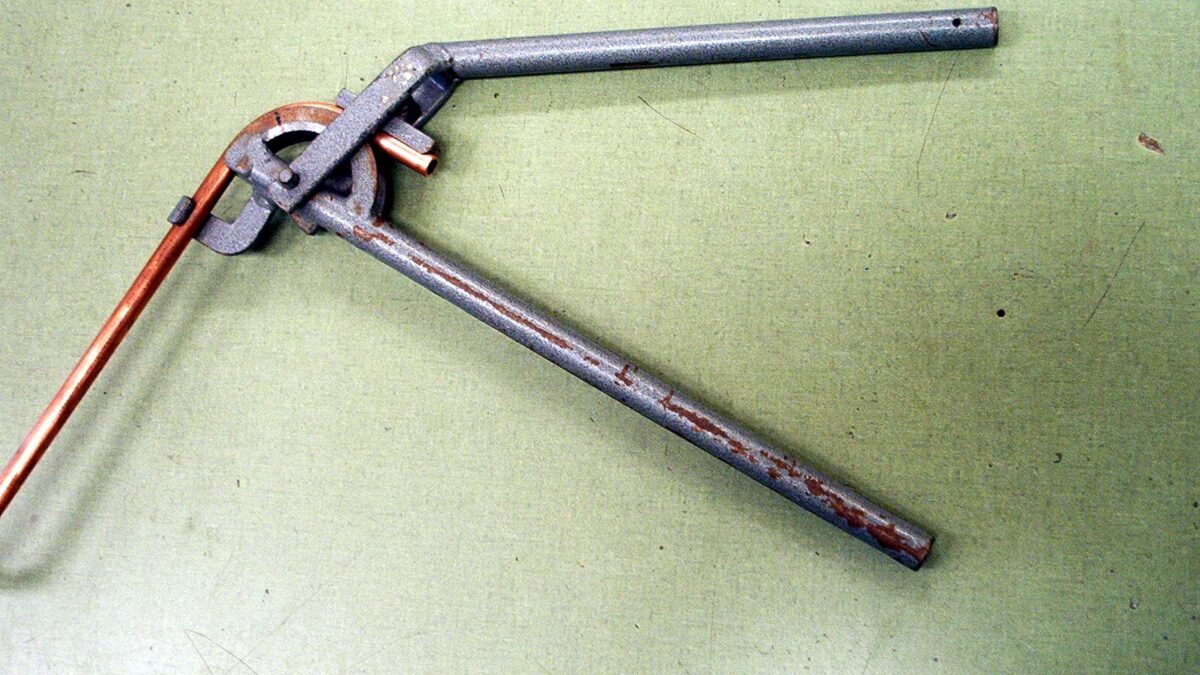
Both machines are vertical rotary-draw benders. The tube is clamped to a round die. A hydraulic ram turns the die and draws the tube around it, while a pressure die supports the outside of the bend. Don’t confuse this with a bottle-jack “pipe bender” that pushes on the middle of a pipe. The ram here turns a die. It’s still true rotary-draw bending.
Rogue sells three machines in this family. Its capacity chart labels them M601 = Standard, M605 = HD (heavy duty) and M625 = xHD (extreme heavy duty). This guide focuses on the top two, with a short note on the M601 later.
| Spec | Rogue Fab M605 | Rogue Fab M625 |
|---|---|---|
| Rogue’s label | HD (heavy duty) | xHD (extreme heavy duty) |
| Max round OD | 2.00″ | 2.00″ |
| Max wall (round) | .188″ (product page) vs .250″ DOM (FAQ): conflict | .250″ DOM, daily under warranty |
| Solid bar | 1-1/2″ (one package page says 2″) | 1-3/4″ |
| Frame uprights | 3/16″ plate | 5/16″ plate |
| Dies | Shared with the M601 and M625 | Shared with the M601 and M605 |
| Bend per stroke | About 94° (some pages say 90°) | Same family design |
| Power | Manual hydraulic, air, 1.5 HP or 2.0 HP electric | 2.0 HP electric-hydraulic listed as standard |
| Where to buy | Sold direct from Rogue | Sold direct from Rogue |
How to read this table: the rows that differ are wall, solid bar, frame and power. Everything else, including dies and footprint, carries across. So the decision is really about the heaviest tube you’ll bend, how often you’ll bend it, and what power you have in the garage.
Specs are from the M605 page, the M625 page, the tube capacity chart and the Rogue FAQ. Many were read from search summaries of those pages, so confirm on the live page before you order.
What actually changes: frame, bar and upgrades
If the two machines share dies and footprint, where does the extra go? Into the parts that carry the load. Here’s what Rogue says changes as you step up.
A thicker frame
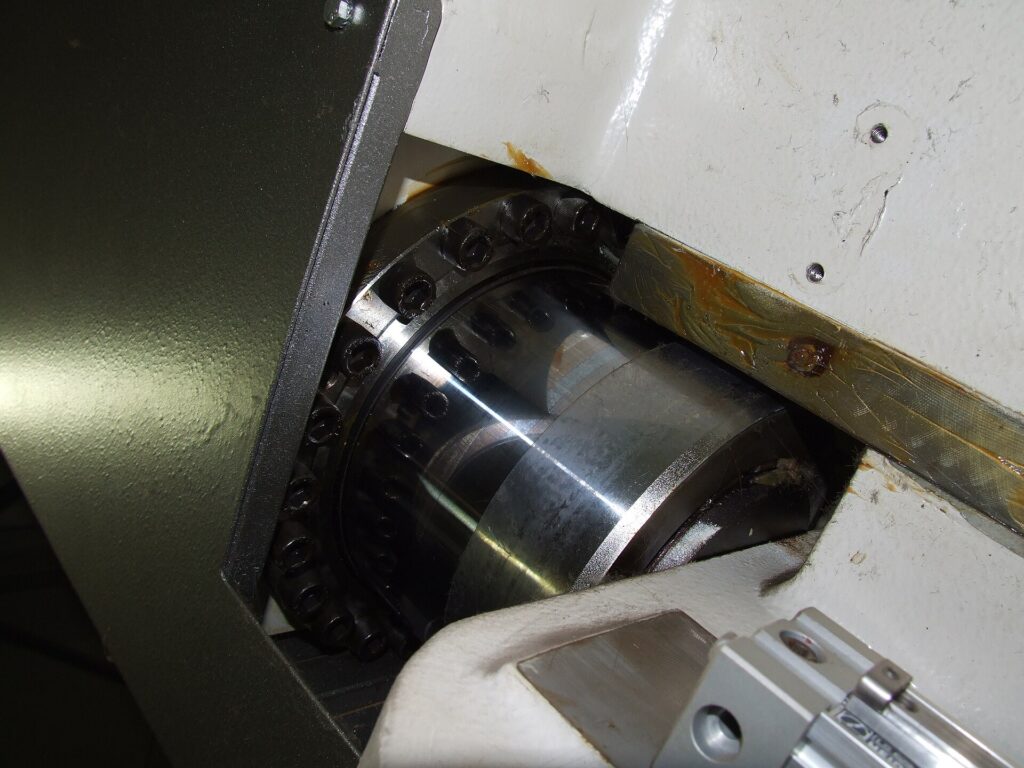
Rogue lists the M605’s uprights at 3/16″ plate and the M625’s at 5/16″. That’s the side plates that hold the die and take the bending force. A thicker plate flexes less under load. Less flex means the machine holds its shape better when you’re pushing heavy wall, bend after bend. Rogue describes the step up as extra rigidity.
A higher, firmer rating
Rogue rates the M625 for 2.00″ × .250″ DOM daily under warranty. That wording matters. “Daily” tells you it’s meant for that work as a routine, not as an occasional stretch. The M605’s rating, as we’ll see in the next section, depends on which Rogue page you read.
More solid bar
Rogue lists the M625 for 1-3/4″ solid bar. The M605’s main spec table says 1-1/2″. One Tradesman package page says the M605 can bend 2″ solid, which doesn’t match the spec table. If you bend solid bar for hitches, brackets or ag work, ask Rogue which figure applies.
No frame upgrade later
Here’s the one that catches people. A Rogue article says you can’t convert an M605 into an M625 later without replacing the frame. Your dies carry over, because the whole family shares them. But the frame doesn’t. So “buy the M605 now and upgrade later” really means “buy a second frame later.” Plan with that in mind.
With these two, the dies are an investment that moves with you. The frame isn’t. Choose the frame for the heaviest tube you’ll bend, not the lightest.
The M605 wall rating: .188″ or .250″?
This is the single most important detail in the whole comparison, so let’s slow down. Rogue’s pages describe the M605 two ways:
- The M605 product page and catalogue list round tube up to 2.00″ × .188″ wall.
- The Rogue FAQ says the M605 handles 2.0″ OD DOM with walls up to .250″.
- The M625 product page describes the M625 as the one rated for 2.00″ × .250″ DOM daily under warranty.
We can’t tell you which M605 figure is right. Both come from Rogue. What we can tell you is how to act on it. If your heaviest tube is .188″ or lighter, both readings agree and the M605 covers you. If you plan to bend .250″ wall, contact Rogue with your exact OD, wall, material and how often you’ll bend it. Keep the reply with your receipt.
Why the jump from .188″ to .250″ is so big
It looks like a small step. It isn’t. Pro-Tools explains wall factor as OD ÷ wall. A lower number means thicker wall and more force to bend. Here’s how common 2″ tube lines up. Our wall factor guide explains the idea in more depth.
| Tube | Wall factor (OD ÷ wall) | M605 | M625 |
|---|---|---|---|
| 2.00″ × .120″ | About 16.7 | In range | In range |
| 2.00″ × .188″ | About 10.6 | At the product-page limit | In range |
| 2.00″ × .250″ DOM | 8.0 | ⚠️ Conflict: FAQ yes, product page no | Rated daily under warranty |
| Over 2.00″ OD | Any | Outside the listed range | Outside the listed range |
Going from .188″ to .250″ on 2″ tube adds about a third more wall. More wall means more steel to stretch on the outside of the bend and compress on the inside. That’s why a maker might rate a lighter frame for occasional heavy wall but a heavier frame for daily heavy wall. Our capacity chart guide compares published wall limits across brands.
Shared dies, CLR and bend angle
This is the good news section. Whatever you choose, your die collection works across the whole family. Rogue says all dies are shared across the M601, M605 and M625. That’s rare, and it protects your biggest long-term spend.
CLR options
Centerline radius (CLR) is the bend radius, measured to the middle of the tube. The die sets it. Rogue offers dies at 2.5″, 3.5″, 4.5″ and 6.0″ CLR. For a feel of what that means, a 1.75″ tube on a 6.0″ CLR die bends at about 3.4D, which sits in the range common for off-road and cage tube. For 6061-T6 aluminium, Rogue recommends about 3.5 to 4D and calls 3D marginal.
Minimum wall and pressure dies
Rogue’s capacity chart lists a minimum wall for each die and material. Two details matter here. First, the chart’s footnote says you need two pressure dies once you reach .156″ wall or thicker. That applies to heavy-wall work on either machine. Second, Rogue notes it hasn’t yet tested every die to its minimum wall limit. One example also conflicts: for 1.50″ tube on a 3.5″ CLR die, the web chart shows .156″ minimum for carbon steel, while the 2025 catalogue shows about .120″. Ask Rogue if you’re near either number.
Rogue’s optional thin-wall roller is offered only for 4.5″ and 6.0″ CLR dies. Rogue says it improves bend quality within the rated range rather than adding new capability. For really thin wall, Rogue sells a mandrel attachment. Its notes for the M625 say that with the mandrel it can go down to about .065″ wall on 1.75″ OD. More on that in our home-shop mandrel bender guide.
Bend angle
Rogue says these machines bend about 94° in one ram stroke, then you reset and continue past 180°. Some Rogue pages say 90° per stroke instead. For the maximum, Rogue pages list both 194° and 195°. Either way, full 180° hoops are well within reach on both.
Power, space and setup
Power is the second big difference, and it can decide the whole thing before you look at wall ratings. Check what your garage can supply first.
Power choices
Rogue offers the M605 with manual hydraulic, air-over-hydraulic, or 1.5 HP or 2.0 HP electric-hydraulic power. One Rogue page says the M625 ships standard with the 2.0 HP electric-hydraulic system. Confirm current options with Rogue, but plan on electric for the M625.
Rogue’s electric units run on 220 to 250 V AC and are rated at 3,000 psi. Rogue lists about 8.1 amps for the 1.5 HP unit and about 12.5 amps for the 2.0 HP unit. Rogue’s air ram uses about 6 CFM at 110 psi. Rogue suggests a compressor that makes 125 psi with a 30-gallon or bigger tank, and says smaller tanks still work but cycle more often.
| Power option | M605 | M625 | What your garage needs |
|---|---|---|---|
| Manual hydraulic | Offered | Ask Rogue | Just your arm |
| Air-over-hydraulic | Offered | Ask Rogue | About 6 CFM at 110 psi; 125 psi compressor suggested |
| 1.5 HP electric | Offered | Ask Rogue | 220 to 250 V AC, about 8.1 A |
| 2.0 HP electric | Offered | Listed as standard | 220 to 250 V AC, about 12.5 A |
If your garage only has 110 V outlets, the electric options mean calling an electrician. Our electric vs air-over-hydraulic pump guide walks through that choice.
Space and mounting
Both machines share the same upright layout. Rogue lists a 12″ × 30″ footprint when assembled, or 22″ × 34″ on its optional cart, which stands 68″ tall. Rogue says the vertical design doesn’t push a twisting load into the floor, so the bender can sit on a wheeled cart without anchors. The trade-off is headroom. Rogue says the distance from the die to the last bend is about 4 feet for most motorsport parts. Measure under your garage door track and opener before you pick a spot.
A long tube swings up and over as it bends. Keep your head, hands and helpers out of its path, and never stand over the tube while the ram is moving. Read our workshop safety notes before your first bend.
The two benders up close
Here’s each machine in one place, with who it suits and what to check before you order. Neither is sold on Amazon. The buttons go straight to Rogue’s own pages, and Benders Hub earns nothing from them.
Rogue Fab M605: the flexible all-rounder
Rogue Fabrication M605 Tube Bender
An HD vertical rotary-draw bender for tube up to 2.00″ OD, with manual, air or electric hydraulic power.
The M605 is Rogue’s heavy-duty middle model. It sits upright on a small footprint and turns the die with a hydraulic ram. You pick the power to suit your garage.
Who it’s for: builders whose heaviest tube is 2.00″ × .188″ or lighter, and anyone who wants air or hand-pumped hydraulics rather than 220 V electric.
Why it’s on this page: it covers most bumper, rack and frame work, and its dies carry straight over to the M625.
- Rogue label
- HD
- Round tube
- Up to 2.00″ OD
- Max wall
- .188″ (product page) vs .250″ DOM (FAQ)
- Solid bar
- 1-1/2″
- Frame
- 3/16″ uprights
- Power
- Manual, air, 1.5 or 2.0 HP electric
Why builders like it
- Widest choice of power options
- Same dies as the M625
- Small footprint; Rogue says no anchors needed
- About 94° per stroke
Know before you buy
- Conflicting wall rating: confirm with Rogue
- Can’t be converted to an M625 later
- Tops out at 2.00″ OD
Sold direct by Rogue Fabrication. Not an affiliate link.
Rogue Fab M625: the heavy-wall specialist
Rogue Fabrication M625 Tube Bender
An xHD vertical rotary-draw bender with a 5/16″ frame, rated for 2.00″ × .250″ DOM daily under warranty.
The M625 is the top of Rogue’s M600 family. It uses the same dies as the M605 but steps up the frame plate and the rating. One Rogue page lists 2.0 HP electric-hydraulic power as standard.
Who it’s for: builders who bend 2.00″ × .250″ DOM as a routine, production shops, and anyone who wants the clearest published heavy-wall rating in the family.
Why it’s on this page: it removes the wall-rating doubt. If .250″ is your daily tube, this is the one Rogue rates for it.
- Rogue label
- xHD
- Round tube
- Up to 2.00″ OD
- Max wall
- .250″ DOM, daily under warranty
- Solid bar
- 1-3/4″
- Frame
- 5/16″ uprights
- Power
- 2.0 HP electric listed as standard
Why builders like it
- Clear .250″ DOM daily rating
- Heavier 5/16″ frame
- Same dies as the M601 and M605
- More solid-bar capacity
Know before you buy
- Plan on 220 to 250 V electric power
- A bigger investment than the M605
- Same 2.00″ OD limit as the M605
Sold direct by Rogue Fabrication. Not an affiliate link.
Accessories worth adding
A couple of tools make either Rogue far more useful. Some are sold on Amazon, which is where our affiliate links come in. We only list items whose Amazon listings we checked, and only ones that fit this job.
As an Amazon Associate I earn from qualifying purchases.
A hole-saw tube notcher
Your bender gives you the shape. A notcher gives you the fit. Every joint needs a fishmouth cut so one tube saddles tightly onto another, and tight joints weld better.
Eastwood Tube & Pipe Notcher (0°–60°)
Hole-saw notcher for round tube up to 2″, adjustable from 0° to 60°.
It clamps the tube and guides a standard hole saw at the angle you set. It runs from a hand drill or a drill press. Its 2″ round-tube range matches the M605 and M625’s 2.00″ OD limit.
Who it’s for: anyone building cages, bumpers or frames. Match the hole saw to the OD of the tube you’re joining to.
- Round tube
- Up to 2″
- Angle range
- 0°–60°
- Drive
- Hand drill or drill press
- Hole saws
- Not included
Alternative: Woodward Fab 2″ hole-saw notcher. Affiliate links. See our disclosure.
A digital angle finder
The degree wheel shows where the die stopped. It can’t show where the tube ended up after springback. Rogue’s own example shows a mild-steel bend that read 86.5° after a 90° target. A digital angle finder on the tube tells you the truth.
eOUTIL Digital Protractor Angle Finder with V-Groove Magnetic Base
A digital inclinometer whose V-groove magnetic base sits on round tube.
The V-groove base helps it sit on round tube, and the magnet holds it on steel. Zero it on one leg, move it to the other, and read the real angle after release.
Who it’s for: anyone measuring springback, setting rotation between bends or checking finished parts.
- Type
- Digital angle finder
- Base
- Magnetic, with V-groove
- Use
- Springback checks, rotation, fit-up
Affiliate link. See our disclosure.
Not sure you need hydraulics at all? A manual rotary-draw bender may be enough for light-wall work. The Baileigh RDB-050 is rated to 2.5″ × .120″ mild steel, and the Eastwood High Capacity can add a hydraulic kit later.
Which one should you buy?
Start with your heaviest tube and how often you’ll bend it. Then check your power. Here’s how we’d think it through, from Rogue’s published specs.
Choose the M605 if…
- Your heaviest round tube is 2.00″ × .188″ or lighter. Both of Rogue’s M605 figures cover that.
- You want air or hand-pumped hydraulics, or you don’t have 220 V in the garage yet.
- You bend .250″ wall rarely, if ever, and you’ve confirmed your plans with Rogue.
- You want to start building a die collection that will also fit an M625 later.
Choose the M625 if…
- You bend 2.00″ × .250″ DOM as a routine. Rogue rates the M625 for it daily under warranty.
- You bend solid bar up to 1-3/4″.
- You run a busy shop, and a stiffer 5/16″ frame gives you peace of mind.
- You have, or can add, 220 to 250 V power for the 2.0 HP electric unit.
Where the M601 fits in
Rogue’s entry machine, the M601, carries the “Standard” label on the capacity chart. It shares dies with the M605 and M625. Rogue’s comparison page suggests the M601 for builders who want a machine that grows with their work, and the M605 or M625 for 2″ tube and heavy material. Check the M601’s own listing for its capacity before you compare.
Thinking about a roll cage?
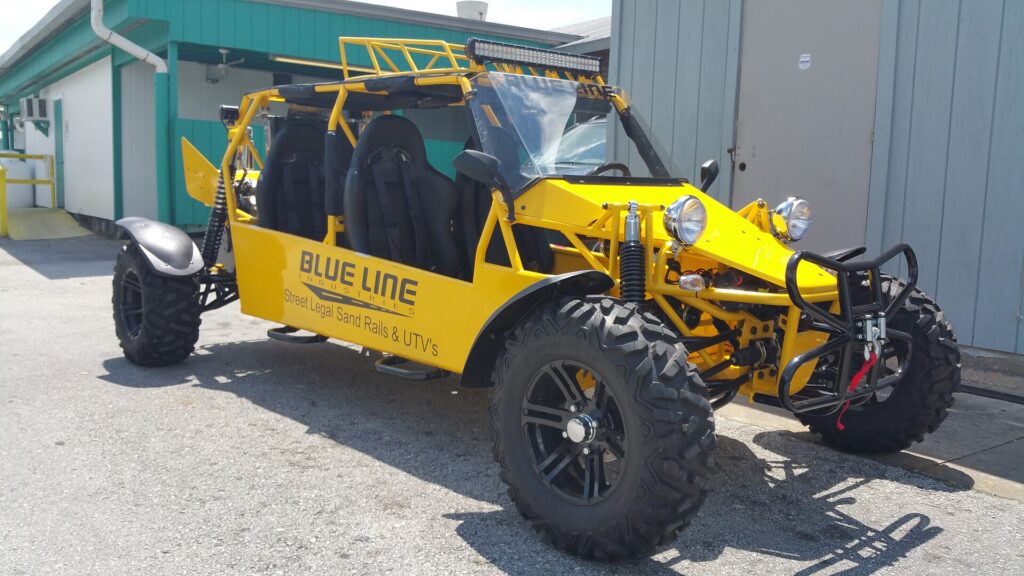
Either machine can bend common cage tube sizes. But your sanctioning body’s current rulebook sets tube size, wall, material and minimum bend radius. Benders Hub isn’t a tech inspector or an engineer. Confirm with your rulebook and inspector before you buy dies or tube. Our roll cage bender guide covers this in depth.
Because the dies fit all three machines, list the dies you’ll need first. Then choose the frame for your heaviest tube. Your die list doesn’t change, whichever frame you pick.
Weighing other brands too? Our JD2 Model 32 vs Rogue Fab M605 comparison and our bender type comparison are good next reads.
Real-life lessons from builders
The stories below are composites. The same situations come up again and again in garage-fab forums and build threads. They’re not one person’s story, but they’re very common.
A builder buys an M605 to save money, planning to “upgrade to the M625” when bigger jobs come. Two years later, the jobs arrive. They learn the frame can’t be converted. Their dies move straight over to a new M625, but they still buy a whole new frame.
Lesson: dies carry over, frames don’t. If heavy wall is in your near future, buy the M625 the first time.
Someone orders the bigger machine for its rating. Then they look at the power spec. Their garage has only 110 V outlets, and the electric unit needs 220 to 250 V. The bender waits a month for an electrician.
Lesson: check your outlets and breaker panel before you choose a power option.
A builder plans a chassis in 2″ × .250″ DOM on an M605 because the FAQ says it can. A friend points to the product page, which says .188″. They email Rogue with their tube, use and volume, and buy based on the reply.
Lesson: when a maker’s pages disagree, ask the maker, and keep the answer in writing.
Common mistakes when choosing
Most regrets with these two machines come from a short list. Here they are, with a fix for each.
❌ Buying on one page’s wall rating. The M605 appears as both .188″ and .250″.
✅ Fix: email Rogue with your exact OD, wall, material and volume. Keep the reply.
❌ Counting on a frame upgrade later. Rogue says an M605 can’t become an M625 without a new frame.
✅ Fix: buy the frame for your heaviest planned tube. Let the dies be what carries over.
❌ Ignoring the power spec. Rogue’s electric units need 220 to 250 V.
✅ Fix: check your outlets, or choose air power and check your compressor against Rogue’s 6 CFM figure.
❌ Skipping the second pressure die. Rogue’s chart calls for two at .156″ wall and thicker.
✅ Fix: order the second pressure die with your heavy-wall dies.
❌ Buying a die without checking its minimum wall. Thin wall on a tight CLR can wrinkle.
✅ Fix: look up each die’s minimum wall on Rogue’s capacity chart, and ask if your tube is close.
❌ Forgetting headroom. A vertical bender saves floor space but needs room above.
✅ Fix: sweep a long stick through a 180° arc where the die will sit before you settle on a spot.
Pro tips for Rogue owners
These habits come from Rogue’s own pages and the common wisdom in build threads. They cost little and save a lot of tube.
- 💡 Plan bends around the stroke. At about 94° per stroke, a 180° hoop takes more than one stroke. Draw a reference line along the tube so you can spot any slip between strokes.
- 💡 Use the thin-wall roller where it fits. It’s offered for 4.5″ and 6.0″ CLR dies, and Rogue says it improves bend quality.
- 💡 Keep a bend log. Write down tube, wall, material, die, degree wheel reading and the measured angle after release.
- 💡 Test-bend every new batch. Springback changes with material and batch, so bend a scrap piece first and measure it. Then plan cut lengths in the bend calculator.
- 💡 Respect the warranty wording. Rogue’s dies carry a lifetime warranty against breakage when bending appropriate material. Stay inside the chart.
- 💡 Size your air supply honestly. Rogue says a storage tank helps, but a compressor that can’t keep up will slow every stroke.
Many experienced builders design most projects around one tube size, such as 1.75″. With Rogue’s shared dies, that one die set keeps working even if you change frames later.
Frequently asked questions
What’s the difference between the Rogue Fab M605 and M625?
The M625 has thicker 5/16″ frame uprights (the M605 uses 3/16″), a 2.00″ × .250″ DOM daily rating under warranty, and 1-3/4″ solid-bar capacity. Both share dies and the same 2.00″ OD limit.
Can the Rogue Fab M605 bend .250″ wall?
Rogue’s pages disagree. The product page and catalogue list .188″. The FAQ says up to .250″ DOM. Rogue rates the M625 for .250″ DOM daily, so confirm with Rogue before planning .250″ work on an M605.
Do M605 dies fit the M625?
Yes. Rogue says all dies are shared across the M601, M605 and M625.
Can I upgrade an M605 to an M625 later?
Not by swapping parts. A Rogue article says you can’t convert an M605 to an M625 without replacing the frame. Your dies will carry over.
Does the M625 need 220 V power?
One Rogue page lists 2.0 HP electric-hydraulic power as standard on the M625, and Rogue’s electric units run on 220 to 250 V AC. Ask Rogue about other power options before you order.
Does either bender need to be bolted down?
Rogue says its vertical design doesn’t load the floor like a horizontal bender, so both can sit on a wheeled cart without anchors. Follow Rogue’s setup instructions.
Your decision checklist
Run through this list before you order. If you can tick every box, you’re ready to choose with confidence.
- I’ve listed OD, wall and material for my next three projects
- I know my heaviest tube, and how often I’ll bend it
- If any tube is over .188″ wall, I’ve asked Rogue about the M605 in writing
- I understand an M605 can’t be converted to an M625 later
- I’ve listed the dies I need, knowing they fit either frame
- I’ve ordered a second pressure die if I’ll bend .156″ wall or thicker
- My garage has the power I need: 220 to 250 V, or a compressor for about 6 CFM at 110 psi
- I’ve checked headroom for long tube swinging upward
- For cage work, I’ve read my current rulebook and talked to my inspector
- I’ve budgeted for a notcher, hole saws and an angle finder
The M605 and M625 are close cousins. The right one is simply the frame that covers your heaviest tube, on the power your garage can supply. Confirm the numbers with Rogue, start a die collection you’ll keep, and practise on scrap first. 🔥
Still deciding on a bender type?
Answer a few quick questions and get a recommendation with the reasons behind it. Or plan your first part in the bend calculator.
Keep reading
Aluminized vs Stainless Exhaust Tubing: 409, 304, 321 & Titanium
Aluminized vs stainless exhaust tubing explained: 409, 304, 321 and titanium compared on bending, welding, heat and corrosion, with sourced data.
Best Tube Bender for Chromoly: Picks by Published 4130 Rating
The best tube bender for chromoly has a published 4130 rating. Compare Baileigh, Eastwood and Pro-Tools 4130 capacities, springback tips and more.
Pro-Tools 105HD vs JD2 Model 32: Manual Bender Specs Compared
Pro-Tools 105HD vs JD2 Model 32, compared from published specs: tube and pipe capacity, 4130 by hand, dies, CLR and hydraulic upgrades.