Baileigh RDB-050 Review: Specs, Strengths and Who It Suits
Baileigh RDB-050 review based on published specs: capacity, the 190° vs 200° conflict, dies, who it suits and the best alternatives.

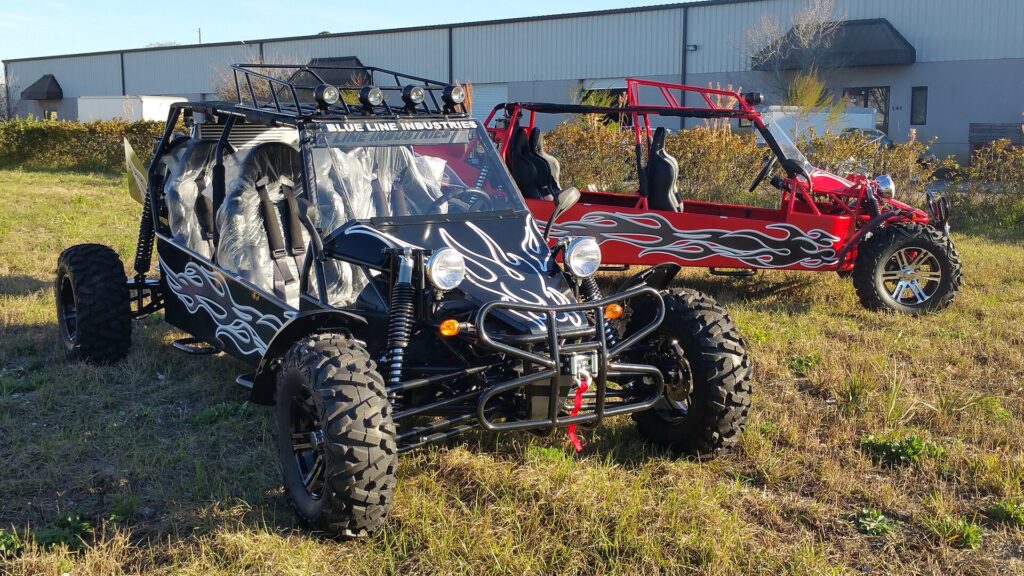
You’ve outgrown the idea of a cheap bender. Maybe you’re planning a buggy chassis in 1.75″ tube, or a bumper in 2″ chromoly. One name keeps coming up in build threads: the Baileigh RDB-050. Its numbers look big for a hand-powered machine. But is it the right bender for you? This Baileigh RDB-050 review pulls together what Baileigh, retailers and owners actually say, so you can decide with clear eyes.
First, a straight answer about what this page is. It’s a research review. Nobody at Benders Hub has bent tube on an RDB-050. We read Baileigh’s product page, its die listings and blog, the Amazon listing and retailer spec sheets, then cross-checked the numbers. Where sources disagree, we show you both figures. The big one is the maximum bend angle. Baileigh lists both 190° and 200°, and we’ll explain what that means in a real garage.
By the end, you’ll know what each spec means in plain English, where the RDB-050 shines, where it falls short, and who it really suits. You’ll also see how it stacks up against the JD2 Model 32, the Eastwood High Capacity and a few other benders worth pricing before you buy.
The Baileigh RDB-050 is a stout manual rotary-draw bender for people who bend big tube or chromoly and want to stay off hydraulics.
- Capacity: rated to 2.5″ OD × .120″ mild steel and 2″ OD × .120″ 4130. See the specs explained.
- Bend angle: Baileigh lists both 190° and 200°. Either way, it goes past 180°. Here’s the conflict, openly.
- Best for: serious hobbyists and small shops with regular 2″ or chromoly work. See who should skip it.
- Alternatives: the Eastwood High Capacity for a hydraulic upgrade path, or the JD2 Model 32, sold direct.
📋 In this review
- Baileigh RDB-050 review: the short version
- RDB-050 specs explained
- 190° or 200°? The bend-angle conflict
- Strengths
- Limitations and trade-offs
- Who it suits (and who should skip it)
- Dies and tooling
- RDB-050 vs JD2, Eastwood and others
- Setup and first bends
- Common buyer mistakes
- Pro tips
- FAQ
- Pre-purchase checklist
Baileigh RDB-050 review: the short version
The RDB-050 is a manual rotary-draw bender. You clamp the tube to a round die, then pull a handle. The die turns and draws the tube around it, so you get a smooth bend at a fixed radius. It’s the same basic method most garage benders use. What sets the RDB-050 apart is how much tube Baileigh says it can handle by hand.
Baileigh rates it for 3/4″ to 2.5″ OD mild steel tube at up to .120″ wall, and for 2″ OD × .120″ 4130 chromoly (Baileigh product page). A three-speed ratchet gives 4°, 8° or 12° of bend per pull. An anti-springback mechanism holds the bend while you reset the handle. Retail listings say it ships with a stand, a bend handle and a degree dial. Dies are sold separately.
Our verdict, based on published specs: of the manual benders we’ve researched on Amazon, it has the highest published capacity. It suits people who bend 2″ tube or chromoly often and want one machine to cover nearly everything. It’s overkill if you mostly bend 1.5″ mild steel a few times a year. And it’s a manual machine for life. We didn’t find a factory hydraulic kit for it.
Where our information comes from: specs come from Baileigh and retailer pages, checked in October 2026. Owner comments come from public forums and Baileigh’s own blog. You can read how we evaluate equipment. Listings change, so confirm the details with Baileigh before you order.
As an Amazon Associate I earn from qualifying purchases.
Baileigh RDB-050 at a glance
Baileigh RDB-050 Manual Rotary Draw Bender
Rated for 2.5″ mild steel and 2″ chromoly by hand, with a 3-speed ratchet and anti-springback.
The RDB-050 is the bender to look at when you want more capacity without going hydraulic. The ratchet lets you trade speed for force. Small tube moves 12° per pull. Big, thick tube moves 4° per pull, which is far easier on your arms.
Who it’s for: serious hobbyists and small shops that bend 2″ tube, 4130 chromoly or long cage and chassis jobs, and want a manual machine that won’t be the weak link.
Why it stands out: a strong published chromoly rating, bends past 180° in one setup, and a die range from 3/4″ to 2-1/2″. Expect a bigger investment than entry-level benders.
- Type
- Manual rotary draw, 3-speed ratchet
- Tube OD
- 3/4″ to 2.5″
- Mild steel
- 2.5″ OD × .120″ wall
- 4130 chromoly
- 2″ OD × .120″ wall
- Bend angle
- Baileigh lists both 190° and 200°
- Max CLR
- 7″ (Baileigh spec table)
- Warranty
- 1 year (Baileigh)
- Sold separately
- Dies
Why it stands out
- High capacity for a hand-powered bender
- Ratchet speeds make big tube manageable
- Anti-springback holds the bend between pulls
- Bends past 180° in one shot, per listings
- Stand and handle included, per retail listings
Know before you buy
- Manual only: no factory hydraulic kit found
- Dies fit the RDB-050 only, and they add up
- Heavy, so plan your floor anchoring
- Listings disagree on max angle and weight
Check die availability for your tube size before ordering. Affiliate link. See our disclosure.
RDB-050 specs explained in plain English
Spec sheets are full of numbers that look alike. Here’s what Baileigh lists for the RDB-050, and what each number means when you’re standing at the bender. Most figures come from Baileigh’s product page. Where a retailer is the only source, we say so.
| Spec | What the listings say | What it means for you |
|---|---|---|
| Tube OD range | 3/4″ to 2.5″ | Covers kart frames through big bumpers and chassis tube |
| Mild steel | 2.5″ OD × .120″ wall | Thick-wall DOM and ERW in common off-road sizes |
| 4130 chromoly | 2″ OD × .120″ wall | Room to spare for typical 1.5″–1.75″ chromoly work |
| Max bend | 190° (spec table) and 200° (feature copy) | Past 180° either way, with room to over-bend |
| Ratchet speeds | 4°, 8° or 12° per pull | Pick force or speed to suit the tube |
| Max CLR | 7″ | Big, gentle radii are possible on large tube |
| Weight | 290 lb listed; 310 lb gross | Plan on about 300 lb that needs solid anchoring |
| Warranty | 1 year | Keep your paperwork and serial number |
Capacity: always read OD × wall × material
“Bends 2.5-inch tube” is only part of the story. The full rating is 2.5″ OD at .120″ wall in mild steel. Thinner wall is easier. Thicker wall is harder and may be outside the rating. Chromoly is stronger, so its rating drops to 2″ OD. One retailer listing also warns that heavy wall and high-tensile materials may reduce capacity. Treat the chart as a ceiling, not a target. If you want to learn to read these charts, our guide to the tube bender capacity chart walks through it.
The three-speed ratchet
A ratchet lets you bend in short strokes instead of one huge pull. Speed 1 moves the die about 4° per pull. Speed 2 is 8°. Speed 3 is 12°. Think of it like gears on a bike. Low gear for big, thick tube. High gear for small tube when you want to work fast.
Anti-springback and the degree dial
Baileigh says the anti-springback mechanism holds the bend in place during operation. In practice, that means the tube shouldn’t relax every time you reset the handle. It does not remove springback after you release the tube. You’ll still need test bends. The degree dial lets you read where the die sits, so you can repeat a bend once you know your over-bend number.
190° or 200°? Reconciling the bend-angle conflict
Here’s the conflict in one line: Baileigh lists both 190° and 200° for the RDB-050’s maximum bend. Both numbers appear on Baileigh’s own product page. We won’t pick one for you. Instead, here’s where each figure shows up and what it means in practice.
| Source | Angle stated | Notes |
|---|---|---|
| Baileigh product page, spec table | 190° | Listed as “Maximum Bend Degrees” |
| Baileigh product page, feature copy | 200° | “Up to 200° in one smooth motion” |
| Amazon listing title | 200° | Title reads “Manual Rotary Draw Bender, 200 Degrees” |
| Baileigh RDB-050 die sets | 180° | Die sets are labelled 180 degree |
| Baileigh blog post on the RDB-050 | 180° dies | An older post that mentions 180° dies |
Why might the numbers differ?
Honestly, we don’t know. Baileigh doesn’t explain the gap on the pages we saw. A spec table and a marketing line can drift apart over the years. The frame’s travel and the die’s usable arc can also be two different things. Until Baileigh clarifies it, treat 190° as the safe planning figure, because it’s the lower one.
Does the difference matter?
For most projects, no. Bumpers, sliders and most cage bends sit well under 90°. Even a main hoop rarely needs more than 180°. The real question is over-bend. Tube springs back after you release it. Rogue Fabrication shows a mild-steel bend that read 86.5° after release when 90° was the target (Rogue Fab). JD2 says 4130 springs back about twice as much as mild steel of the same size and wall (JD2 manual). So a 180° hoop in chromoly needs some extra travel. Either 190° or 200° gives you headroom past 180°.
The bigger unknown is the die. Baileigh labels its RDB-050 die sets as 180°. Before you plan a full U-bend, ask Baileigh how far past 180° the die lets you go to cover springback.
Call or email Baileigh with your serial number and ask for the maximum bend angle of your frame and your die set, in writing. Then check the operator’s manual that ships with your machine. If your project needs more than 180° plus springback, get that answer before you buy tube.
Strengths: where the RDB-050 stands out
Based on the published specs and what owners commonly report, these are the RDB-050’s real selling points. Each one matters most to a certain kind of builder, so we’ve said who benefits.
Big capacity without hydraulics
A 2″ × .120″ chromoly rating by hand is strong. For comparison, Eastwood limits its High Capacity bender to .090″ wall in 4130. JD2 says its Model 32 needs hydraulics for round tube over 2″ × .120″. That makes the RDB-050 a good fit for builders who want serious capacity but don’t have shop air or room for a pump. Who benefits: chromoly chassis and cage builders.
The ratchet makes it usable
High capacity is useless if you can’t pull the handle. The three speeds solve that. You can drop to 4° per pull for 2″ tube and still finish the bend without a cheater bar. Who benefits: anyone who bends thick wall often, or doesn’t want a sore back after a long session.
Past 180° in one setup
The Amazon listing says the RDB-050 bends past 180° in one shot, with no need to stop and re-set the machine mid-bend. That saves time and helps accuracy on hoops and U-bends. Who benefits: cage builders and anyone making hoops or hairpin parts.
A wide, dedicated die range
Baileigh’s RDB-050 tooling page lists die sets from 3/4″ to 2-1/2″ tube, with CLRs from 3″ to 7″ (Baileigh tooling). Each set includes a forming die, counter die and hook sleeve. Baileigh’s 1-3/4″ die page describes a billet steel forming die with replaceable counter-die inserts.
Repeatability
A Baileigh blog post on the RDB-050 praises the degree dial for keeping marks consistent from bend to bend (Baileigh blog). It’s an older, maker-written post, so read it as a description, not an independent test.
A big capacity rating only helps if you can pull the handle. The RDB-050’s ratchet is what turns its numbers into bends you can actually make.
Limitations and trade-offs to know before you buy
No bender is perfect. These are the points we’d want a friend to know before spending real money on an RDB-050.
Manual only, with no clear upgrade path
Baileigh sells the RDB-050 as a manual machine. In our research we didn’t find a factory hydraulic conversion kit for it. Baileigh’s powered benders, like the RDB-125 and RDB-250, are separate machines. If you think you’ll bend 2″ thick wall all day, a bender that accepts a hydraulic cylinder may age better. Our guide to manual vs hydraulic tube benders explains where that line usually falls.
Dies are RDB-050-specific
Baileigh lists its RDB-050 die sets as compatible with the RDB-050 only. Dies from the smaller RDB-100 won’t fit. So you can’t mix and match from other brands or Baileigh models. Some tooling listings also note that dies are non-refundable. Order the right size the first time.
Weight and assembly
Baileigh’s page lists a weight of 290 lb and a gross weight of 310 lb. Some listings quote 310 lb on its own, so the figures aren’t fully consistent. Either way, plan for roughly 300 lb on a stand that needs anchoring. Baileigh’s own blog post says assembly took a solid 3–4 hours. Budget an afternoon and a helper.
Inconsistent listings
Beyond the 190°/200° gap, one Amazon comparison table shows a “3 inch” capacity for the RDB-050. That doesn’t match Baileigh’s own 2.5″ rating. Go by the maker’s spec table, and ask Baileigh if anything looks off.
Cost
The RDB-050 is a bigger investment than entry-level benders, and the dies add a lot to the total. If you only bend a few simple parts a year, that money may be better spent elsewhere.
A retailer listing for the RDB-050 notes that heavy wall and high-tensile materials may reduce capacity. If your tube sits right at the limit, ask Baileigh before you buy. Working at the edge of a rating every day is hard on any machine.
Who the RDB-050 suits (and who should skip it)
The best bender is the one that matches your most common job. Here’s how the RDB-050 lines up with different builders.
A strong fit if you…
- Bend 2″ tube or 4130 chromoly regularly, not just once.
- Build chassis, cages or buggies with dozens of bends per project.
- Want one manual machine that covers 3/4″ up to 2.5″ tube.
- Have no shop air or room for a hydraulic pump, but still need real capacity.
- Have a concrete floor and space to anchor a heavy stand.
Probably skip it if you…
- Mostly bend 1.5″ or 1.75″ mild steel for bumpers and sliders a few times a year.
- Want to go hydraulic later. A bender with a hydraulic kit fits that plan better.
- Need square tube. Check Baileigh’s die list for your size before assuming it’s covered.
- Are on a tight budget. The frame plus a couple of die sets is a serious outlay.
The stories below are composites. The same situations come up again and again in garage-fab forums and build threads.
A builder has been making buggy parts on a light-duty bender. The next project is a full chassis in 1.75″ × .120″ chromoly. The old bender is rated well below that in 4130, and every bend is a fight. They step up to a bender with a 2″ × .120″ chromoly rating and a low ratchet speed. Bends become steady and controlled instead of a wrestling match.
Lesson: check the chromoly line of the capacity chart, not just the mild steel line.
Someone buys a heavy manual bender for a few runs of 1″ handrail and a garden arch. It works fine. But the machine takes up a corner of the garage, and the die sets cost more than the projects. A lighter bender would have done the same work.
Lesson: buy for the tube you’ll bend most, with some headroom, not for the biggest tube you might bend one day.
Still unsure? Our best tube bender for chromoly guide goes deeper on 4130 work.
RDB-050 dies and tooling: what to budget for
The frame is only half the tool. Every tube size and every bend radius needs its own die set. Here’s what Baileigh’s RDB-050 tooling page shows, based on the listings we saw in October 2026.
What’s in a die set
Each RDB-050 set includes a forming die (the round part the tube wraps around), a counter die (which supports the outside of the bend) and a hook sleeve (which grips the tube). The sets we saw were labelled 180°. Baileigh lists them as RDB-050 only.
Sizes and radii
The table below shows example sets from the tooling page. We’ve added the D of bend, which is CLR ÷ OD. Lower numbers mean a tighter, harder bend.
| Tube OD | CLR listed | D of bend | Typical use |
|---|---|---|---|
| 3/4″ | 3″ | 4.0D | Small frames, brackets |
| 1″ | 3″ | 3.0D | Kart frames, racks |
| 1-1/4″ | 4″ | 3.2D | Light frames, bars |
| 1-1/2″ | 5″ | 3.3D | Bumpers, sliders, bars |
| 1-3/4″ | 6″ | 3.4D | Cages, chassis, bumpers |
| 2″ | 6″ | 3.0D | Heavy bumpers, frames |
| 2-1/2″ | 7″ | 2.8D | Big structural work |
A common shop rule puts the practical minimum for non-mandrel bending around 3 × OD (Pro-Tools). Most of these sets sit right around that. The 2-1/2″ set is a little tighter, so ask Baileigh which wall it’s meant for. Other CLRs may exist, so check the page for your size. Our die compatibility guide covers how to match dies to tube.
Rulebooks and CLR
Building a cage? Some rulebooks set a minimum radius. SCCA Time Trials, for example, calls for a bend radius at the centreline of at least three times the tube diameter (SCCA). Benders Hub isn’t a tech inspector. Confirm your die’s CLR with your current rulebook and inspector before you buy tube.
Start with a single set for the tube you’ll use most. Learn its springback, then add sizes as projects need them. It’s the cheapest way to own an RDB-050.
RDB-050 vs JD2 Model 32, Eastwood and other alternatives
The RDB-050 isn’t the only serious manual bender. Here’s how it compares with the machines builders most often weigh against it. Specs come from each maker or the retail listing. Where sources disagree, we say so.
| Bender | Drive | Mild steel | 4130 | Max bend | Where to buy |
|---|---|---|---|---|---|
| Baileigh RDB-050 | Manual, 3-speed ratchet | 2.5″ × .120″ | 2″ × .120″ | 190°/200° (both listed) | Amazon |
| JD2 Model 32 | Manual, hydraulic option | Over 2″ × .120″ needs hydraulics | See JD2 charts | 180° die sets sold | Direct from JD2 |
| Pro-Tools 105HD | Manual ratchet, hydraulic package | To .134″ wall | 2″ × .134″ (extension handle) | 180° | Direct from Pro-Tools |
| Eastwood High Capacity | Manual, hydraulic-ready | 2″ × .120″ | .090″ wall | 180° (240° dies) | Amazon |
| Woodward Fab WFB2 | Manual lever | Up to 2″; 2″ die listed to .134″ | Not stated | About 110°–120° (die listings) | Amazon |
RDB-050 vs JD2 Model 32
This is the comparison most people search for. The JD2 Model 32 takes 1/2″ to 2-1/2″ round tube. JD2 says round tube over 2″ × .120″ needs its hydraulic add-on. With hydraulics, it’s rated to 2″ × .250″ DOM (JD2). It’s sold direct, not on Amazon, and has a huge die catalogue. Choose the JD2 if you want a clear hydraulic path. Choose the RDB-050 if you want strong manual ratings and built-in ratchet speeds.
RDB-050 vs Eastwood High Capacity
The Eastwood is lighter-duty on paper, especially for chromoly. But it can grow with you, thanks to Eastwood’s air- and electric-hydraulic kits.
Eastwood High Capacity Tube Bender (#21115)
Bend by hand today. Add air- or electric-hydraulic power when your projects grow.
If the RDB-050’s “manual forever” design worries you, the Eastwood is the obvious counterpoint. You start with a handle, then bolt on a hydraulic kit later.
Who it’s for: builders who mostly bend mild steel up to 2″ and want the option of powered bending without buying a new machine.
Why it’s here: clear published limits, 240° dies for full 180° bends, and both hydraulic kits sold on Amazon. Note the lower .090″ chromoly wall limit.
- Type
- Manual rotary draw, hydraulic-ready
- Mild steel
- Up to 2″ × .120″ wall
- 4130 chromoly
- Limited to .090″ wall
- Bend angle
- Up to 180° with 240° dies
- Sold separately
- Dies, handle and stand (check the listing)
Why it’s worth a look
- Air- and electric-hydraulic upgrade kits
- 180° bends with 240° dies
- Clear published capacities
Know before you buy
- Lower chromoly wall limit than the RDB-050
- Several parts sold separately
- Air kit needs about 90 psi of shop air
Add-ons: air-hydraulic kit · electric-hydraulic kit. Affiliate links. See our disclosure.
Smaller and budget options
If 2″ chromoly isn’t on your list, the Woodward Fab WFB2 is a simpler way into rotary-draw bending. Read our Woodward Fab WFB2 review for the details. Baileigh’s own RDB-100 is a smaller manual machine. Baileigh lists it for tube up to 1.75″ OD and bends up to about 206°. The Amazon listing gives a .095″ maximum wall, which we couldn’t confirm on Baileigh’s page.
The Pro-Tools 105HD is also worth pricing. It handles 1/2″ to 2″ round tube to .134″ wall, including 2″ × .134″ 4130 with its extension handle (Pro-Tools). It’s sold direct. Want the wider picture? See our best tube bender for a home garage roundup or the bender type comparison.
Setting up an RDB-050 and making your first bends
A heavy manual bender needs a solid home. A little planning here keeps your bends accurate and keeps everyone safe.
Anchor it properly. A rotary-draw bender twists hard against its stand, and the RDB-050 is rated for big tube. Follow Baileigh’s instructions for mounting, which usually means bolting to a sound concrete floor. Never bend on a stand that rocks or walks.
Plan the swing. As the bend forms, the free end of the tube sweeps through an arc. A 180° bend on a long stick needs a lot of room. Walk a tube through the motion before you anchor anything.
Then run a test bend routine. It works on any rotary-draw bender, and it’s how you’ll learn your springback.
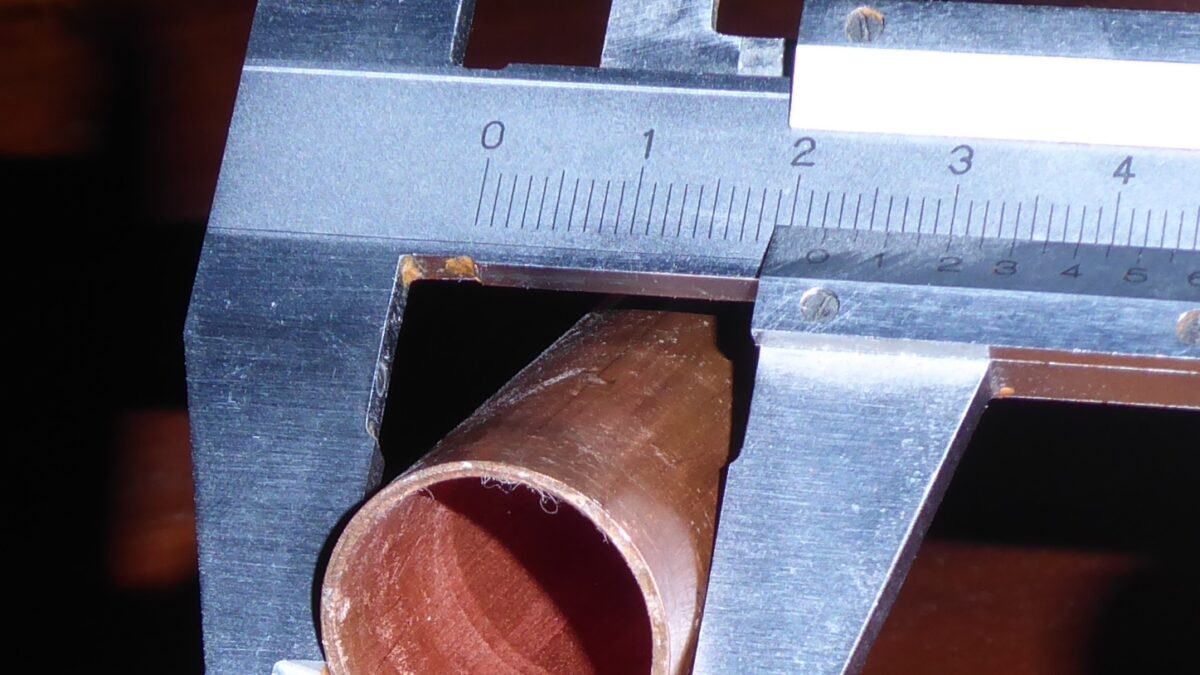
- Measure the tube. Check the real OD and wall with calipers. Confirm they match the die and the rating.
- Pick a ratchet speed. Start slow on thick wall or chromoly. Use the faster speeds on small, thin tube.
- Mark a reference line. Draw a straight line along the tube so you can see any rotation in the die.
- Clamp and bend to a round number. Bend a scrap piece to 90° on the degree dial.
- Release and measure. Check the real angle with a digital angle finder. The difference is your springback.
- Log it. Write down tube, wall, material, die and springback. Next time, over-bend by that amount.
Remember that 4130 springs back about twice as much as mild steel, per JD2. Test every new material and batch. Our springback guide goes deeper, and the bend calculator works out arc and cut lengths.
Keep your body out of the handle’s path in case the tube slips. Keep helpers clear of the swing zone. Wear eye protection and gloves. Read our workshop safety notes before your first bend.
Common mistakes RDB-050 buyers make
Most regrets with a machine like this come from a short list of mistakes. Here they are, with the fix for each.
❌ Planning around 200° without checking. Baileigh lists both 190° and 200°, and the die sets are labelled 180°.
✅ Fix: plan with the lower figure. Ask Baileigh in writing how far your frame and die can go.
❌ Reading only the mild steel rating. Chromoly is rated at a smaller OD.
✅ Fix: match your exact OD, wall and material to the right line of the chart.
❌ Buying dies for another model. RDB-100 dies and other brands won’t fit.
✅ Fix: buy sets listed for the RDB-050, and double-check before ordering, since tooling may be non-refundable.
❌ Expecting a hydraulic upgrade later. We found no factory kit for it.
✅ Fix: if powered bending is in your future, compare benders that accept a cylinder from day one.
❌ Using the fastest ratchet speed on thick tube. It makes every pull a fight.
✅ Fix: drop to 4° per pull for big or chromoly tube. Speed up only on small, thin tube.
❌ Skipping the anchor bolts. A 300 lb stand can still tip under a thick-wall bend.
✅ Fix: anchor to concrete before the first real bend, every time.
Pro tips for getting the most from an RDB-050
These habits help any heavy manual bender. None of them cost much, and all of them save tube.
- 💡 Pick one “house” size. Many experienced builders design most parts around one tube, such as 1.75″. One die set, one springback number, and parts that match.
- Keep a bend log. Note tube size, wall, material, heat or batch number, die, ratchet speed and springback.
- Leave clamp room. Rotary-draw benders need a straight section to clamp. Plan bends so there’s always enough, or leave extra and trim later.
- Bend in the right order. Number your bends on a sketch. The frame can block a bend if you do them out of sequence.
- Mock up first. Bend tricky parts in cheap mild steel before cutting expensive chromoly.
- Notch for tight fit-up. A hole-saw notcher makes tight joints easy. See the Eastwood tube notcher for a common garage option.
- Inspect the counter die. Baileigh describes the counter-die inserts as replaceable and consumable. Check them for wear and keep a spare set if you bend a lot.
Bend a test piece until it reads a true 90° with an angle finder, then note what the dial says. Baileigh’s manual for a larger bender, the RDB-175, describes this same idea of recording a machine offset. That number is your over-bend for that tube and die.
Your bend log is worth more than any spec sheet. It’s the only chart written for your machine, your dies and your tube.
Frequently asked questions
Is the Baileigh RDB-050 worth it?
It’s worth it if you bend 2″ tube or 4130 chromoly regularly and want to stay manual. For occasional 1.5″ mild steel parts, a lighter bender usually makes more sense. This is a research review based on published specs, not a hands-on test.
Does the RDB-050 bend 190° or 200°?
Baileigh lists both. Its spec table says 190°, while its feature copy and the Amazon title say 200°. The die sets are labelled 180°. Plan with the lower number and confirm with Baileigh for your serial number.
Can the RDB-050 bend chromoly?
Yes. Baileigh rates it for 2″ OD × .120″ wall 4130. Chromoly springs back more than mild steel, about twice as much per JD2, so test-bend every batch.
Can you add hydraulics to the RDB-050?
We didn’t find a factory hydraulic kit for it. Baileigh’s powered benders are separate machines. If you want a hydraulic path, look at benders like the JD2 Model 32 or Eastwood High Capacity.
Do RDB-100 dies fit the RDB-050?
No. Baileigh lists RDB-050 die sets as fitting the RDB-050 only, and RDB-100 tooling is marked as not for the RDB-050.
RDB-050 vs JD2 Model 32: which is better?
It depends on your plans. The RDB-050 has strong manual ratings and a built-in ratchet. The JD2 needs hydraulics above 2″ × .120″ round tube but offers that upgrade and a huge die catalogue.
Your RDB-050 pre-purchase checklist
Run through this list before you order. If you can tick every box, the RDB-050 is probably a good match.
- I’ve listed my projects with tube OD, wall and material for each
- My chromoly work fits the 2″ × .120″ 4130 line, with headroom
- I’ve planned around 190°, the lower of Baileigh’s two angle figures
- I’ve asked Baileigh how far past 180° my die set allows
- RDB-050 die sets exist in my size and CLR, and I’ve priced the first set
- My die’s CLR meets any rulebook minimum for cage or roll bar work
- I’m happy staying manual, with no factory hydraulic kit
- I have a concrete floor spot and swing room for a heavy stand
- I’ve budgeted for a notcher, hole saws and a digital angle finder
- I’ve bought extra tube for test bends and a springback log
That’s the RDB-050 in a nutshell: big manual capacity, a smart ratchet, and a few listing conflicts worth clearing up before you buy. Match it to your tube, confirm the angle with Baileigh, and log every test bend. Do that, and it can carry you through years of projects.
Not sure the RDB-050 is your bender?
Answer nine quick questions and get a recommendation with the reasons behind it. Or plan your first part with the bend calculator.
Keep reading
Best Tube Notcher for Roll Cage Builds (and Tight Fishmouth Joints)
Find the best tube notcher for roll cage work: notcher types, spec-based picks, hole saw sizing and a step-by-step guide to tight…
Best Exhaust Pipe Bender for Home Garage Builds (2026)
Looking for the best exhaust pipe bender for home garage builds? Compare crush benders, mandrel benders and pre-bent mandrel bends, with sourced…
Tube Bender Die Compatibility: What Fits What, Brand by Brand
Tube bender die compatibility, brand by brand: which dies makers say fit, which don't, pin sizes, and why cross-brand fit stays unknown…