Best Exhaust Pipe Bender for Home Garage Builds (2026)
Looking for the best exhaust pipe bender for home garage builds? Compare crush benders, mandrel benders and pre-bent mandrel bends, with sourced specs.

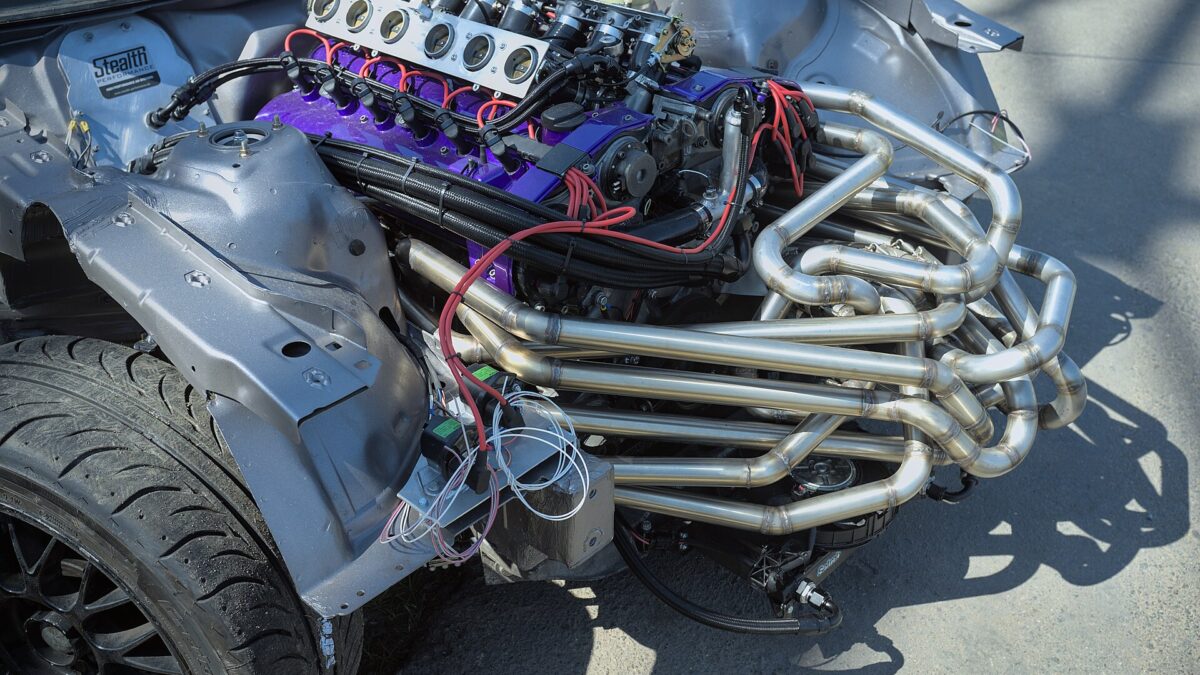
You want a custom exhaust. Maybe it’s a turbo downpipe, a cat-back for a swap, or a full system for a project car. So you start shopping for the best exhaust pipe bender for home garage use, and the results are all over the place. Bottle-jack benders call themselves “exhaust tubing benders.” Muffler-shop machines cost as much as a car. Real mandrel benders are hard to find at all.
Here’s the honest truth up front: many home builders shouldn’t buy an exhaust bender at all. Pre-bent mandrel U-bends and J-bends, cut and welded together, give smooth bends with far less tool spend. This guide explains why. It also covers the three real routes to bent exhaust: crush benders for repair work, rotary-draw and mandrel benders for performance work, and pre-bent mandrel bend kits. You’ll know which one fits your garage by the end.
As always, no fake test badges. Nobody at Benders Hub has bent exhaust on these products for this guide. Our picks are based on published specs, maker guidance and retail listings, plus what builders commonly report. Key numbers link to their sources.
For most home garages, the best “exhaust bender” is a box of pre-bent mandrel bends.
- Best for most builders: Stainless Bros 2.5″ 304 mandrel bends in 90°, 45° and 180° U-bend shapes.
- Best budget bends: Vibrant 2.5″ aluminized U-J bends.
- Best crush bender for repair shops: KAKA Industrial EPB-3, a powered muffler-shop style bender.
- Mandrel bender: only worth it for regular header or small-tube work. See our mandrel section.
📋 In this guide
Three ways to get bent exhaust (and which fits a home garage)
“Exhaust pipe bender” covers machines that work in very different ways. Before you spend anything, it helps to see all three routes side by side.
1. Crush (ram) exhaust benders
A crush bender, also called a ram or press bender, pushes the tube around a shoe with a hydraulic ram. Nothing supports the inside of the tube. This is the standard machine in muffler shops. Rogue Fabrication describes them as quick to set up and fine for OEM-style repair, but notes that they distort the tube’s cross-section and wrinkle the inside of the bend (Rogue Fab).
2. Rotary-draw and mandrel benders
A rotary-draw bender clamps the tube to a turning die and draws it around. A mandrel bender adds a support inside the tube while it bends. That inside support is what keeps thin exhaust walls from wrinkling or going oval on tight bends. This is how performance exhaust and headers are made.
3. Pre-bent mandrel bends
Here, someone else does the bending on an industrial mandrel machine. You buy U-bends, J-bends, 90s and 45s in your diameter, then cut and weld them into a system. You get mandrel-quality bends with a saw and a welder.
| Route | Bend quality | Tools you need | Investment | Best for |
|---|---|---|---|---|
| Crush (ram) bender | Distorted cross-section, wrinkled inside | The bender and its dies | Big for a real exhaust bender | Repair and OEM-style replacement |
| Mandrel bender | Smooth, round, full flow area | Bender, dies, mandrels, lube | Large | Regular header or small-tube work |
| Pre-bent mandrel bends | Smooth, round, full flow area | Saw, deburring, welder | Small per project | ✅ Most home builders |
Our mandrel vs crush bending guide goes deeper on what happens inside the tube with each method.
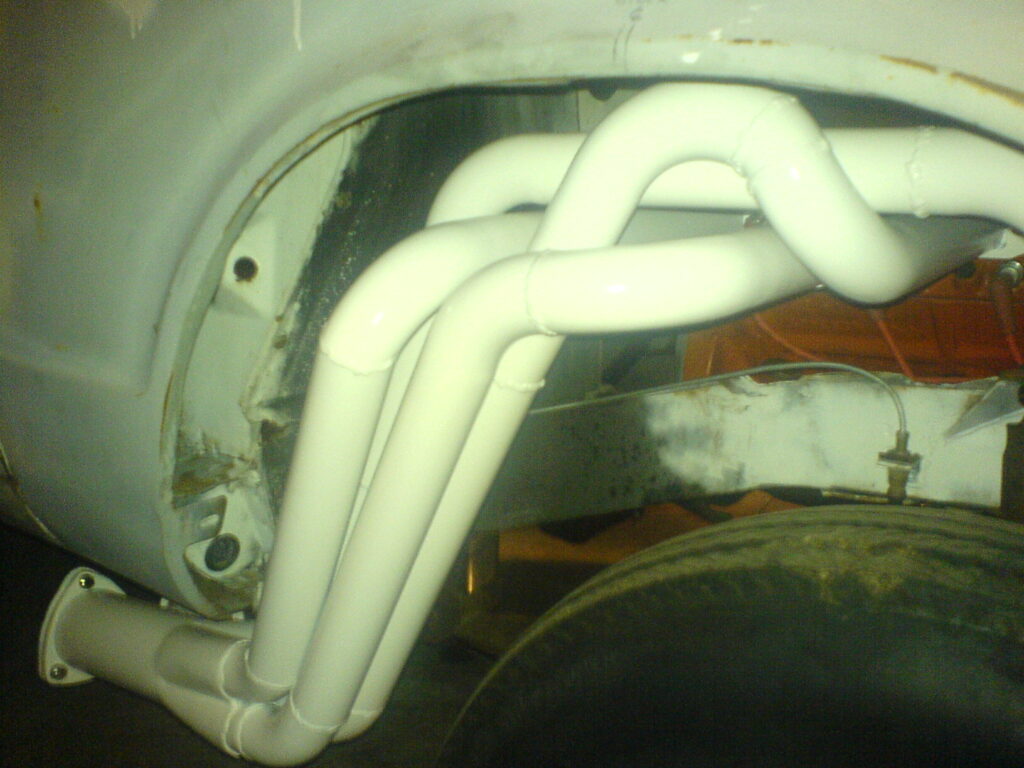
Why exhaust tubing is so hard to bend
Exhaust tube has two things working against it: thin walls and tight bends. Each one alone is manageable. Together, they make the inside of the bend wrinkle and the tube go oval.
Two numbers that explain it
The first is the wall ratio, also called wall factor. It’s the tube’s outside diameter divided by its wall thickness. Higher numbers mean thinner walls for the size, and a harder bend. The second is D of bend, the centerline radius divided by the OD. Lower numbers mean tighter bends.
Rogue Fab’s exhaust guide says to use a mandrel for anything with a wall ratio above 20 or a D/R below 3.0 (Rogue Fab). Its mandrel-bending article puts the wall-ratio trigger at 15 instead (Rogue Fab). So the line isn’t sharp. But look at a typical exhaust tube. A 2.5″ OD tube with a .065″ wall has a wall ratio of about 38. That’s far past either trigger. Rogue Fab calls a 2.5″ × .065″ 304 bend on a 3.5″ CLR a demanding bend that needs a mandrel.
What happens without support
Rogue Fab says common rotary-draw deformation runs about 5.5% to 11% at moderate wall ratios. With mandrels set up properly, it reports about 1.8% to 2.5%. It also shows a 2.75″ tube mandrel-bent at 1D with 0.9% deformation. These are the maker’s own figures, so treat them as examples, not guarantees.
The size problem
Garage rotary-draw benders mostly top out around 2″ OD. Even Rogue Fab says its mandrel attachment keeps the maximum bending diameter at 2″ (Rogue Fab). Many popular exhaust sizes, like 2.25″ and 2.5″, are bigger than that.
Enter your OD, wall and CLR in our bend calculator. It shows wall factor and D of bend, so you can see how demanding your bend really is.
The best exhaust pipe bender for home garage builders (and the smarter alternative)
Here’s how we picked. Because most home builders are better off buying bends, two of our three picks are pre-bent mandrel bends, not machines. The third is a true crush exhaust bender for builders doing repair work in volume. We looked for products with clear published specs: diameter, wall, radius, material and angle. We checked listings and maker pages in October 2026. We haven’t used these products ourselves, so this is a research-based shortlist. Read how we evaluate equipment, and confirm specs on the listing before you order.
As an Amazon Associate I earn from qualifying purchases.
Stainless Bros 2.5″ 304 mandrel bends
1.5D bends in .065″ 304 stainless, sold by shape.
Buy from AmazonKAKA Industrial EPB-3
Powered crush bender with 1-1/2″ to 3″ dies.
Buy from AmazonStainless Bros 2.5″ 304 mandrel bends: best for most home builders
Stainless Bros 2.5″ Stainless 90° Mandrel Bend, 1.5D/3.75″ CLR, 16GA/.065″, SS304
Mandrel-bent 304 stainless, sold as single 90°, 45° and 180° shapes so you buy only what you need.
Stainless Bros sells its bends one shape at a time. The 90° bend has a 1.5D (3.75″) centerline radius, a .065″ wall and 5″ and 8″ legs. The listing says the ends are laser cut. Matching 45° bends and 180° U-bends use the same radius and wall, so your whole system looks consistent.
Who it’s for: anyone building a 2.5″ system who wants smooth, full-diameter bends without buying a bender.
Why we picked it: every key spec is in the listing title: OD, angle, CLR, wall, legs and alloy. That makes planning and cut-length math easy.
- OD
- 2.5″
- Material
- 304 stainless
- Wall
- 16 gauge (.065″)
- CLR
- 3.75″ (1.5D)
- 90° legs
- 5″ and 8″
- 180° U-bend legs
- 6″ and 6″
Why we like it
- Full specs in every listing title
- Same radius across 45°, 90° and 180° shapes
- No bender, dies or mandrels to buy
Know before you buy
- Stainless costs more than aluminized steel
- You need a saw and a welder suited to stainless
- 1.5D radius may not fit very tight spaces
Matching shapes: 2.5″ 45° bend · 2.5″ 180° U-bend. Affiliate links. See our disclosure.
Vibrant 2.5″ aluminized U-J bends: best budget mandrel bends
Vibrant Performance 12609 2.5″ Aluminized Mild Steel U-J Mandrel Bent Tubing
A U-J combination bend in aluminized mild steel, with legs long enough to cut several bends from one piece.
A U-J bend is a 180° U-bend with one long leg, so you can cut it into a J, a 90° and more. Vibrant says its aluminized U-J bends can yield up to three separate bends. It also calls them a cost-effective alternative to its T304 stainless bends.
Who it’s for: budget builds, daily drivers and first-time fabricators who want mandrel bends without the cost of stainless.
Why we picked it: Vibrant is a well-known exhaust-parts maker, and dealer listings publish the full geometry. We didn’t find Vibrant’s own page for this part number, so confirm the specs on the listing.
- OD
- 2.50″
- Material
- Aluminized mild steel
- Wall
- 16 gauge (.065″)
- Radius
- 4.25″ (dealer listing)
- Legs
- 5″, 8″ and 12″ (dealer listing)
Why we like it
- Several bends from one piece
- Easier on the budget than stainless
- Mild steel is easy to cut and weld
Know before you buy
- Specs come from dealer listings, not Vibrant’s own page
- Aluminized steel won’t match stainless for looks
- Gentler radius than 1D or 1.5D bends
Specs per a Vibrant dealer listing. Affiliate link. See our disclosure.
KAKA Industrial EPB-3: best crush bender for repair work
KAKA Industrial EPB-3 Hydraulic Exhaust Pipe Tube Bender
A powered, muffler-shop style crush bender with dies for 1-1/2″ to 3″ exhaust and swaging tools.
This is a real exhaust bender, not a bottle-jack pipe bender with an “exhaust” label. The listing describes a 4.0 kW electric motor, 10 tons of pressure, a die set for 1-1/2″ to 3″ exhaust tubing, and a swager and expander for joining pipe. Like every crush bender, it doesn’t support the inside of the tube, so expect repair-grade bends.
Who it’s for: small shops or serious builders doing exhaust repair and replacement in volume.
Why we picked it: it covers the common exhaust sizes with dedicated dies and adds swaging, which is how many repair joints are made. For a single home project, it’s far more machine than you need.
- Type
- Powered hydraulic crush (ram) bender
- Tube size
- 1-1/2″ to 3″ exhaust tubing
- Force
- 10 tons
- Motor
- 4.0 kW
- Power
- Listings say 220 V and 240 V single phase (confirm)
- Extras
- Swager and expander tooling
Why we like it
- True exhaust dies across common sizes
- Swaging and expanding in the same machine
- Powered, so bends are quick
Know before you buy
- Crush bends: distorted cross-section, wrinkled inside
- A very large investment for a home garage
- Needs a 220/240 V circuit
Confirm voltage and die list with the seller before ordering. Affiliate link. See our disclosure.
What about multi-piece mandrel bend kits?
You’ll also see “mandrel bend kits” with 8 or 16 pieces: straights, U-bends, 45s and 90s in one box. They can be handy for a full system. But read those listings closely. In our research, we saw kits from the same brand listed as mild steel in one place and stainless in another, and listings that disagreed on weld-on versus bolt-on. If a kit doesn’t state OD, wall, CLR and alloy clearly, buy single bends from a maker that does.
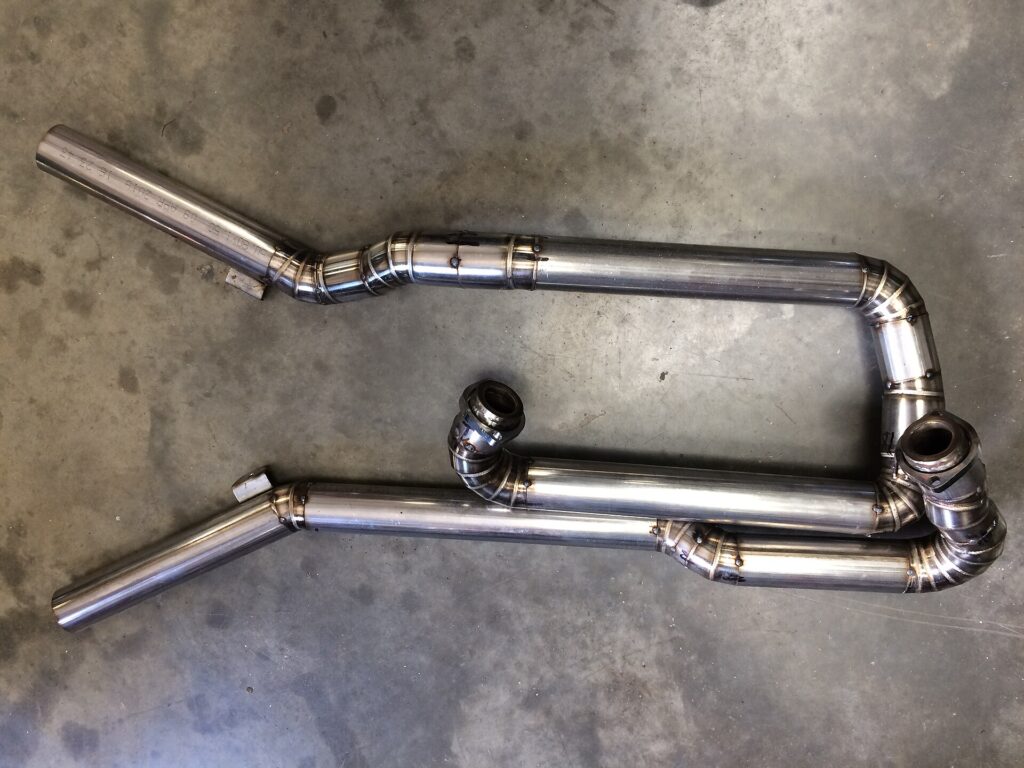
Side-by-side comparison
Here’s how the options stack up for a home garage. Specs come from listings and maker pages. Where a spec comes only from a dealer, we say so.
| Option | Type | Sizes | Wall | Radius | Bend quality | Where to buy |
|---|---|---|---|---|---|---|
| Stainless Bros 304 bends | Pre-bent mandrel | 2.5″ (other sizes listed) | .065″ | 3.75″ (1.5D) | Mandrel smooth | Amazon |
| Vibrant 12609 U-J | Pre-bent mandrel | 2.50″ | .065″ | 4.25″ (dealer listing) | Mandrel smooth | Amazon |
| KAKA EPB-3 | Powered crush bender | 1-1/2″ to 3″ | Not confirmed | Set by dies | Repair grade | Amazon |
| Rogue Fab M600 series + mandrel | Rotary draw with mandrel | Up to 2″ | Thin wall with mandrels | 2.5″ to 6.0″ CLR dies | Mandrel smooth | Rogue Fab direct |
| Bottle-jack “exhaust” bender | Manual ram | Varies | Made for thick pipe | Set by shoes | ❌ Poor on thin wall | Not recommended |
How to read this table: if your system is 2.25″ or bigger and you’re building one car, the top two rows are your answer. If you build small-diameter headers or lots of systems, look at the mandrel row. Only consider a crush bender if you’re doing repair work in volume.
For one exhaust system, a saw, a welder and a box of mandrel bends beat almost any bender you can fit in a garage.
Crush (ram) exhaust benders: the repair-shop tool
Crush benders have a place. Muffler shops use them because they’re fast and they make OEM-style replacement pipes quickly. If a customer needs a rusted tailpipe replaced today, a crush bender gets it done.
Two very different machines share the name
The first is a dedicated exhaust bender like the EPB-3. It has dies shaped for exhaust tubing and a powered ram. The second is the bottle-jack pipe bender. Many online listings for 12- and 16-ton bottle-jack benders call them “exhaust tubing benders.” Be careful. Those machines are built for thick Schedule 40 pipe. Harbor Freight’s own manual for its 12-ton bender says it isn’t intended for thin-wall pipe such as conduit or exhaust (Harbor Freight manual).
The trade-off
Even a good crush bender doesn’t support the inside of the tube. Rogue Fab notes that crush bends distort the cross-section and wrinkle the inside of the bend. That’s acceptable for a stock-style repair. It’s not what you want on a performance build where you’re paying for flow.
Check the die shapes, the tube sizes and the maker’s own manual. If the machine is a bottle-jack pipe bender, expect flattened, kinked thin-wall tube no matter what the title says.
The stories in this guide are composites. The same situations come up again and again in garage-fab forums and build threads. Here’s one. A builder buys a 16-ton bottle-jack bender listed as an exhaust tubing bender. The first 2.5″ bend kinks flat on the inside. They return it and order a set of mandrel bends instead.
Lesson: judge a bender by how it bends, not by its listing title.
Rotary-draw and mandrel benders for performance exhaust
If you want smooth bends and you want to make them yourself, you need mandrel support. That’s the performance route. It’s also the most expensive and the most limited in size for a home shop.
What a mandrel bender adds
A mandrel is a support that sits inside the tube at the point of the bend. It stops the wall collapsing inward. Together with the right dies, it lets thin-wall tube take tight bends without wrinkling. Rogue Fab’s mandrel attachment turns its M600, M601, M605 or M625 into a mandrel bender. It supports 2.5″ to 6.0″ CLR dies, and the mandrels and lube are sold separately (Rogue Fab). Rogue Fab reports bending 1.00″ × .065″ DOM on a 6″ CLR with the attachment, with a mid-bend OD of 0.972″.
When it’s worth it
A home mandrel setup makes sense if you build headers or small-diameter tubing regularly, or work with stainless and titanium where you want full control. Rogue Fab even shows a 1.5″ × .065″ 304L test bend labelled “Exhaust OK.” But remember the 2″ ceiling. A typical 2.5″ or 3″ cat-back is beyond it. For those, pre-bent bends are still the answer.
What about a regular rotary-draw bender?
A structural rotary-draw bender without a mandrel isn’t a good exhaust tool. It can wrinkle thin walls, and its dies usually stop at 2″. Our best tube bender hub covers those machines for bumpers and cages. If a home mandrel bender still tempts you, read our mandrel tube bender for home shop guide first.
A builder with a good rotary-draw bender tries a 2″ exhaust bend on a bumper die. The inside ripples and the tube goes oval. A slower second try looks the same. They finish the system with mandrel bends in a weekend.
Lesson: a great structural bender is still the wrong tool for thin-wall exhaust.
Building with pre-bent mandrel bends, step by step
This is the route we’d point most home builders to. It looks harder than it is. With a plan and a few simple tools, you can build a clean system in a weekend or two.
Pick your radius
Bends are sold by their D of bend. For example, a 1.5D bend on 2.5″ tube has a 3.75″ centerline radius (1.5 × 2.5). Tighter bends fit small spaces. Looser bends are a little gentler. Our guide to 1D vs 1.5D vs 2D exhaust bends walks through the trade-offs.
The build, step by step
- Mock up the path. With the car safely supported, run a cheap template or wire along the route. Note each change of direction.
- Choose your shapes. Match each turn to a 45°, 90°, J-bend or U-bend. U-J pieces can supply several bends.
- Do the math. A 90° bend on a 3.75″ CLR uses about 5.89″ of arc (3.75 × 1.571). Its tangent length equals the CLR. Our calculator does this for any angle.
- Mark and cut square. Use a marker line along the tube so you keep the bend plane straight. Cut with a fine blade, and deburr inside and out.
- Tack and test-fit. Tack each joint, then offer the section up to the car. Adjust before you commit.
- Weld and check. Weld fully, then check for leaks and clearance to fuel lines, brake lines and the floor.
Need the full cut-length method? See our exhaust tube cut length guide. For the full build process and a cost-versus-effort comparison, read buy mandrel bends vs bend your own exhaust.
Stainless Headers’ J-bend optimizer suggests leaving about 1/4″ for fit-up trimming. Cut slightly long, test-fit, then trim to a tight joint.
Common mistakes (and how to fix them)
Most exhaust-bending regrets come from the same few mistakes. Here they are, with the fix for each.
❌ Buying a bottle-jack pipe bender for exhaust. It flattens and kinks thin-wall tube.
✅ Fix: buy pre-bent mandrel bends, or a true mandrel bender if you build exhaust often.
❌ Using a bumper bender for exhaust. A structural rotary-draw bender without a mandrel wrinkles thin walls.
✅ Fix: check the wall ratio first. If it’s well over 20, plan for mandrel support.
❌ Ignoring the size limit. Many home mandrel and rotary-draw setups stop at 2″ OD.
✅ Fix: confirm your system diameter against the bender’s maximum before you buy anything.
❌ Mixing radii in one system. Bends from different makers may not line up as you planned.
✅ Fix: buy all bends with the same OD, wall and CLR, and note them on your plan.
❌ Cutting before mocking up. One wrong cut wastes a whole bend.
✅ Fix: mock up with a template, mark carefully, and leave a little to trim.
❌ Rolling the bend plane. Tiny twists between joints add up to a pipe that misses its hanger.
✅ Fix: draw a straight line along each piece and keep the lines aligned when you tack.
Pro tips for bending and building exhaust at home
These small habits make a home-built exhaust look professional. None of them cost much, and they save expensive stainless.
- 💡 Buy one extra of each shape. A spare 90° or U-bend saves a trip when a cut goes wrong.
- 💡 Use U-bends as raw stock. One U-bend can give you two 90s or several smaller angles.
- 💡 Keep the bend plane marked. A long line on every piece keeps the system straight.
- Match the material. Don’t mix stainless and aluminized steel in one system unless you’ve planned for it.
- Check clearance at full suspension travel. Pipes that clear at rest can hit under load.
- Think about service. Plan flanges or clamps where you’ll need to remove sections later.
- Leak-check before the first long drive. Exhaust leaks under the cabin are a safety issue, not just a noise. Fix any you find before you drive far.
Pick one D of bend for the whole system and order every shape in it. The joints line up, the math stays simple, and the finished exhaust looks deliberate.
Working under a car? Use proper stands, never just a jack. Our workshop safety notes cover the basics.
Frequently asked questions
What is the best exhaust pipe bender for a home garage?
For most people, it’s not a bender. Pre-bent mandrel bends like the Stainless Bros 304 range or Vibrant’s aluminized U-J bends give smooth results with just a saw and a welder. A crush bender like the KAKA EPB-3 suits repair shops.
Can I bend exhaust pipe with a hydraulic pipe bender?
Not well. Bottle-jack pipe benders are built for thick Schedule 40 pipe. Harbor Freight’s manual says its 12-ton bender isn’t intended for thin-wall pipe such as exhaust.
Do I need a mandrel bender for exhaust?
For smooth, tight bends in thin-wall tube, you need mandrel support. Rogue Fab recommends a mandrel above a wall ratio of 20 or below 3.0 D/R. Buying mandrel bends gives you that support without the machine.
Is crush bending bad for performance exhaust?
Crush bends distort the tube’s cross-section and wrinkle the inside of the bend, according to Rogue Fab. That’s fine for stock-style repair. For performance builds, mandrel bends are the usual choice.
What size exhaust can a home mandrel bender do?
It depends on the machine. Rogue Fab says its mandrel attachment keeps the maximum bending diameter at 2″. Larger systems are usually built from pre-bent sections.
Your exhaust build checklist
Before you order anything, run through this list.
- I’ve decided between pre-bent bends, a mandrel bender and a crush bender
- I know my system’s OD, wall and material
- I’ve worked out the wall ratio and D of bend for my tightest turn
- If I’m buying a bender, its maximum OD covers my exhaust size
- I’ve ruled out bottle-jack pipe benders for thin-wall tube
- I’ve chosen one CLR for all my bends
- I’ve mocked up the route and listed every shape I need
- I’ve ordered one spare of the shapes I’ll cut most
- I have a fine-blade saw, deburring tools and a suitable welder
- I’ve planned hangers, clamps or flanges for service
That’s the honest picture. For most home garages, the best exhaust bender is someone else’s mandrel bender, delivered as a box of bends. Pick your radius, plan your cuts, and enjoy the welding. 🔥
Plan your exhaust before you cut
Work out arc and tangent lengths for every bend in seconds. Or see how bender types compare before you buy one.
Keep reading
Tube Bender Die Compatibility: What Fits What, Brand by Brand
Tube bender die compatibility, brand by brand: which dies makers say fit, which don't, pin sizes, and why cross-brand fit stays unknown…
How to Choose a Tube Bender: A 10-Step Buying Guide
How to choose a tube bender in 10 steps: match capacity, CLR, dies, drive and floor mounting to your projects, with worksheets…
Woodward Fab WFB2 Review: Specs, Dies and Upgrade Path
Woodward Fab WFB2 review from published specs: capacity, dies, listing conflicts on handle and weight, who it suits and the upgrade path.