Electric vs Air Over Hydraulic Tube Bender Pump: Which Fits?
Electric vs air over hydraulic tube bender pump? See what each needs from your shop, with a power table from maker specs and a simple checklist.


Your arms are done. You’ve pulled a long handle through one too many thick-wall bends, and you’re ready to add hydraulics to your tube bender. Now you’re choosing between an electric vs air over hydraulic tube bender pump, and the listings don’t say much beyond “fits your bender.” Which one actually suits your garage?
The short answer: it depends less on the pump and more on your shop’s power. An air-over-hydraulic pump leans on your compressor. An electric-hydraulic pump leans on your wiring. Pick the one your garage can feed without strain, and either will save your back.
This guide explains how each pump works in plain terms. You’ll get a power-requirement table built only from numbers the makers publish, a simple way to check your compressor and your circuits, and the mistakes people make when they add power to a bender. No hands-on testing claims and no prices. Just what matters, why, and how to check it in your own shop.
Choose the pump your shop can power comfortably.
- Air-over-hydraulic suits garages with a strong compressor. Eastwood’s air kit runs at 90 psi working pressure. See the Eastwood air-hydraulic kit.
- Electric-hydraulic suits garages with weak or no shop air. Eastwood’s electric kit uses a 0.75 HP motor on 110 V. See the Eastwood electric-hydraulic kit.
- Either way, buy the pump or kit your bender’s maker specifies, and check the spec plate before you plug in or hook up air.
📋 In this guide
- How a bender pump works
- Air-over-hydraulic pumps
- Electric-hydraulic pumps
- Electric vs air over hydraulic: side by side
- Power requirements by maker
- Is your compressor big enough?
- 110 V vs 220 V: circuits and wiring
- Maker kits: which pump fits which bender
- Real-life lessons
- Common mistakes and fixes
- Pro tips
- FAQ
- Your pump checklist
How a hydraulic bender pump works
Every powered rotary-draw bender has the same basic parts. Once you know them, the electric vs air question gets much simpler.
- The cylinder (or ram) pushes on the bender’s arm. That push turns the die and draws the tube around it.
- The pump pushes hydraulic oil into the cylinder. Oil barely compresses, so pressure in the oil becomes force at the cylinder.
- Hoses and a valve carry the oil and let you stop, hold and release the bend.
- The power source drives the pump. That’s the only part this article is really about.
There are three ways to drive the pump. A hand pump uses your arm on a lever. An air-over-hydraulic pump uses compressed air from your shop compressor. An electric-hydraulic pump uses an electric motor. All three can feed the same kind of cylinder. What changes is speed, effort, noise and what your shop needs to supply.
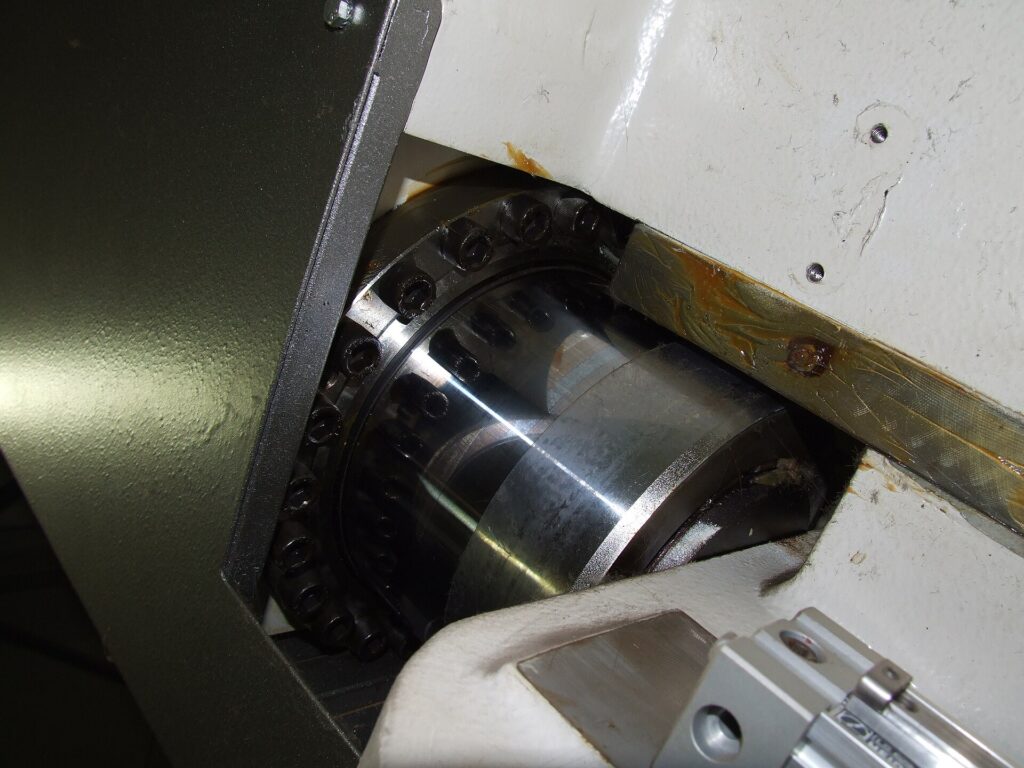
Why bother with hydraulics at all?
Thick wall and big tube take serious force. JD2 is a clear example. It says manual bending on its Model 32 tops out around 2″ × .120″ round tube, and anything bigger needs its hydraulic add-on. With hydraulics, JD2 rates the Model 32 to 2″ × .250″ DOM (JD2). Hydraulics also make long sessions far less tiring, and smooth pressure helps your bends stay consistent.
Not sure you need power yet? Our guide to manual vs hydraulic tube benders helps you decide before you spend anything.
The pump doesn’t change how your bender bends. It changes where the effort comes from: your arm, your compressor or your wall outlet.
Air-over-hydraulic pumps: shop air does the work
An air-over-hydraulic pump uses compressed air to drive a small hydraulic pump. You connect it to your shop air line, press a pedal or lever, and the pump builds oil pressure in the cylinder. Your compressor supplies the energy. The pump turns it into hydraulic force.
What it needs from your shop
Two things: enough pressure and enough air volume. Pressure is measured in psi. Volume is measured in CFM (cubic feet per minute). Eastwood’s air-hydraulic kit for its High Capacity bender lists 90 psi working pressure on its retail listing (see the kit details below). That pressure has to hold steady while you bend, not just show on the gauge when the tank is full.
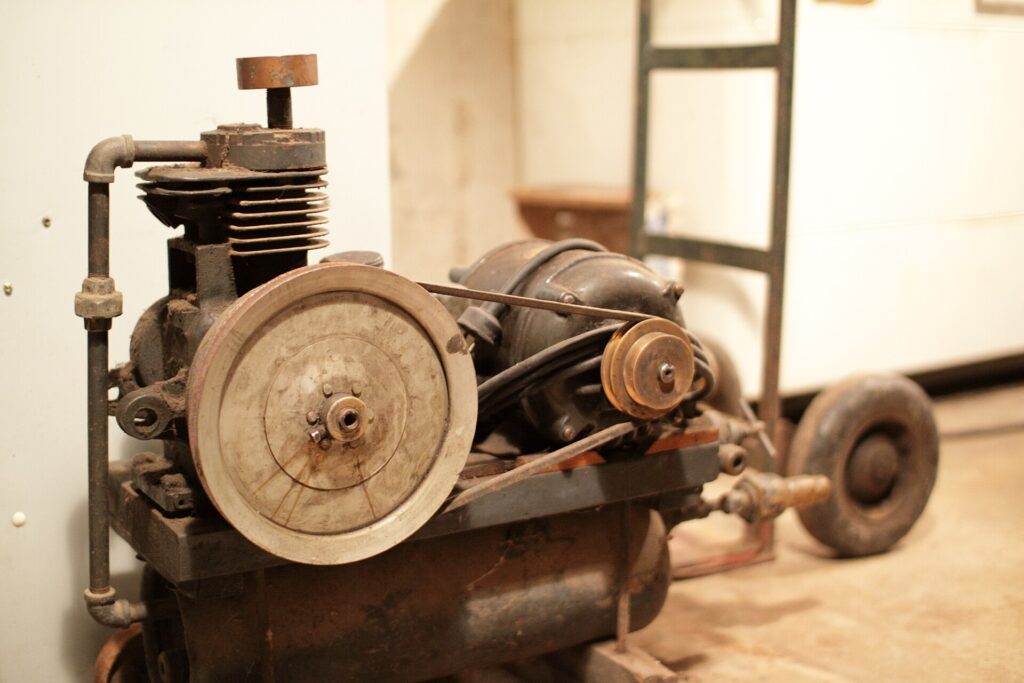
Why people like air
- ✅ Most fab shops already have a compressor. If yours is big enough, you don’t need to add anything to run the pump.
- ✅ No high-amp motor at the bender. The heavy electrical load stays at the compressor.
- ✅ Simple hookup. It’s another air tool on your line.
Where air falls short
- ⚠️ Small compressors struggle. A pancake or small portable unit may not keep up through a long bend.
- ⚠️ Noise. Your compressor will cycle on during a bending session.
- ⚠️ Air quality. Water and dirt in the line are bad for air-driven tools. Follow the pump maker’s advice on filters and lubrication.
Who it’s for: builders with a strong compressor and good air plumbing, who want to keep their electrical setup simple. If you already run air tools like a die grinder or sandblaster all day, you probably have the air for it.
Electric-hydraulic pumps: plug in and bend
An electric-hydraulic pump puts an electric motor right on the pump. You plug it in, hit the switch or pedal, and the motor drives the pump. No compressor is involved at all.
What it needs from your shop
A circuit that can feed the motor. That means the right voltage and enough amps. Eastwood’s electric-hydraulic kit lists a 0.75 HP motor on 110 V on its retail listing (see the kit details below). Bigger machines use bigger motors. Rogue Fabrication, for example, offers its M605 with 1.5 HP or 2.0 HP electric-hydraulic power units (Rogue Fab). Always read the motor plate for the voltage and amp draw.
Why people like electric
- ✅ No compressor needed. Great for small garages with weak or no shop air.
- ✅ Steady power. The motor doesn’t run out of air halfway through a bend.
- ✅ Quieter session. You hear the pump motor, but not a compressor cycling on and off.
Where electric falls short
- ⚠️ Circuit limits. A motor on a shared or long, thin extension circuit can trip breakers or run poorly.
- ⚠️ Duty cycle. Electric motors need rest time. Check what the maker says about continuous use.
- ⚠️ Voltage surprises. Bigger units may need a different supply than a standard outlet. Read the plate before you buy.
Who it’s for: builders in smaller garages, people with a small compressor, and anyone who wants to bend without listening to an air tank fill. It’s also the simpler choice if your bender lives far from your air lines.
Air and electric pumps can drive the same type of cylinder. The force at the bender comes from the pump’s oil pressure and the cylinder’s size, not from whether air or electricity drives it. Our hydraulic cylinder guide covers matching the cylinder to your bender.
Electric vs air over hydraulic tube bender pump: side by side
Here’s how the two compare on the things that matter day to day. We’ve kept this qualitative on purpose. Real numbers depend on the exact pump, so check the maker’s sheet for yours.
| Factor | Air-over-hydraulic | Electric-hydraulic |
|---|---|---|
| Power source | Shop compressor and air line | Wall outlet or dedicated circuit |
| Shop must supply | Steady pressure (Eastwood: 90 psi) and enough CFM | Correct voltage and amps (Eastwood: 0.75 HP, 110 V) |
| Noise | Compressor cycles during sessions | Pump motor only |
| Performance limit | Compressor air delivery | Motor size and duty cycle |
| Placement | Near an air drop or a long hose | Near a suitable outlet |
| Upkeep | Dry, clean air; drain the tank | Good cord and circuit; keep the motor cool |
| Best for | Shops with a strong compressor | Small garages, weak or no shop air |
Speed and control
Both pump types are smoother and far less tiring than a hand pump or a long handle. Exact speed depends on the pump, not on whether it’s air or electric. Check how the kit is controlled, too. Many powered pumps use a pedal or remote, which leaves your hands free to watch the degree ring.
How far does one stroke go?
The cylinder’s stroke decides how far the bender moves before you reset it. On the Rogue Fab M605, one ram stroke gives about 94° of bend, and you reset to keep going past 180° (Rogue Fab). That’s the same whether air or electricity drives the pump.
Power requirements by maker
This table only lists what the makers or their retail listings publish. Where we couldn’t find a number, we say so. Don’t fill those gaps with guesses. Ask the maker before you buy.
| Bender / kit | Pump type | Published power spec | What to confirm with the maker |
|---|---|---|---|
| Eastwood High Capacity, air-hydraulic kit | Air over hydraulic | 90 psi working pressure | Air consumption (CFM) and hose fitting |
| Eastwood High Capacity, electric-hydraulic kit | Electric hydraulic | 0.75 HP, 110 V | Amp draw and duty cycle |
| Rogue Fab M605 / M625 | Manual hydraulic, air over hydraulic, or electric hydraulic | Electric units offered at 1.5 HP or 2.0 HP | Voltage, amp draw and air spec for the air option |
| JD2 Model 32 | Hydraulic add-on | JD2 recommends a 10-ton cylinder | Which pumps JD2 approves, and their power needs |
| Pro-Tools 105HD | Hydraulic package | Package built around a 10-ton cylinder | Pump type and power supply |
| Hand pump (any) | Manual | Your arm | Pump and hose rating match the cylinder |
As an Amazon Associate I earn from qualifying purchases.
Sources: Eastwood’s air kit and electric kit listings, Rogue Fab, JD2 and Pro-Tools.
If a maker doesn’t publish air consumption, amp draw or duty cycle, email or call them. Ask for the number in writing. It takes five minutes and can save you from buying the wrong pump for your shop.
Is your compressor big enough for an air pump?
This is the question that decides most air-vs-electric choices. The good news: you can answer it yourself in about ten minutes.
Step 1: find the pump’s needs
Look at the pump’s spec sheet or listing for two numbers. The first is working pressure, like Eastwood’s 90 psi. The second is air consumption in CFM. If the CFM isn’t listed, ask the maker. Don’t guess.
Step 2: find your compressor’s real output
Check the compressor’s label for its air delivery in CFM, and at what pressure that rating applies. Compare it with the pump at the pump’s working pressure. Tank size helps a little, but a big tank on a small pump only delays the moment it runs out.
Step 3: check the path between them
Long, skinny hoses and small quick-connect fittings choke air flow. If the pump sits far from the compressor, run a proper air line or a large hose. Add a regulator and a water separator, as the pump maker recommends.
Step 4: watch it under load
On your first test bend, watch the regulator gauge. If pressure sags well below the working pressure as the pump runs, your air supply is the weak link. The pump will slow or stall, and your bend may stop part-way.

If your compressor is clearly too small, you have two honest options. Upgrade the compressor, or choose an electric pump instead. The reference point from our home-garage bender guide still holds: a small pancake compressor may struggle with an air kit.
110 V vs 220 V: circuits and wiring for electric pumps
Electric pumps are simple to run, as long as the circuit behind the outlet is up to the job. Here’s what to check, in plain terms. If any of this feels unfamiliar, that’s what licensed electricians are for.
Match the voltage on the plate
The motor plate tells you the voltage. Eastwood’s electric kit lists 110 V, the usual household outlet voltage in the US. Larger power units may be built for a higher-voltage supply. Rogue Fab’s 1.5 HP and 2.0 HP options are bigger motors than Eastwood’s 0.75 HP kit, so check what supply they need before you order.
Check the amps
The plate also lists amp draw. Compare it with the breaker rating for that circuit. Then think about what else shares it. A compressor, a welder, a heater or a fridge on the same circuit can trip the breaker mid-bend.
Go easy on extension cords
A long, thin extension cord drops voltage. Motors don’t like low voltage. They run hot and may struggle to start under load. If you must use a cord, use a short, heavy-gauge one rated for the motor, or better, add an outlet near the bender.
Adding a 220/240 V circuit or a new outlet is electrical work. Local codes and permits may apply. Hire a licensed electrician, and read our workshop safety notes.
Once the circuit is right, an electric pump is about as simple as shop power gets. Plug it in, check the oil and bend. If your garage is wired for a welder already, you may have more options than you think.
Maker kits: which pump fits which bender
Here’s the rule we’d follow: use the hydraulic kit your bender’s maker specifies. The maker has matched the cylinder, mounts, hoses and pump to the bender’s frame and its rated capacity. Mixing parts can overload the frame or leave you short of force.
- Eastwood High Capacity: Eastwood sells both an air-hydraulic and an electric-hydraulic conversion kit. The bender itself is rated to 2″ × .120″ mild steel and 4130 at .090″ wall.
- Rogue Fab M605: offered with manual hydraulic, air-over-hydraulic or electric-hydraulic power, with 1.5 HP and 2.0 HP electric units.
- JD2 Model 32: JD2 sells a hydraulic add-on and recommends a 10-ton cylinder.
- Pro-Tools 105HD: a hydraulic package is available.
Eastwood air-hydraulic conversion kit
Eastwood Air-Hydraulic Conversion Kit for the High Capacity Tube Bender
Turns Eastwood’s manual High Capacity bender into an air-over-hydraulic machine.
This is Eastwood’s own kit for adding air-over-hydraulic power to its High Capacity bender. Using the maker’s kit means the mounts and cylinder are matched to the frame.
Who it’s for: High Capacity owners with a compressor that can hold the working pressure through a full bend.
How to check it fits your shop: confirm the air consumption with Eastwood and compare it with your compressor’s CFM rating.
- Fits
- Eastwood High Capacity tube bender
- Power
- Shop compressed air
- Working pressure
- 90 psi (per listing)
- Check
- Air consumption and what’s in the box
Why we like it
- Maker-matched to the bender
- No extra electrical load at the bender
- Upgrade path for a bender you may already own
Know before you buy
- Needs a compressor that holds 90 psi under load
- Compressor noise during sessions
- Only for the Eastwood High Capacity
Need the bender too? Eastwood High Capacity tube bender. Affiliate links. See our disclosure.
Eastwood electric-hydraulic conversion kit
Eastwood Electric-Hydraulic Conversion Kit for the High Capacity Tube Bender
A 0.75 HP, 110 V power option that skips the compressor entirely.
This is Eastwood’s electric option for the same bender. It’s the natural choice if your compressor is small, noisy or far from where the bender lives.
Who it’s for: High Capacity owners in smaller garages, or anyone who’d rather not run a compressor during long bending sessions.
How to check it fits your shop: read the amp draw on the listing or motor plate and match it to a circuit that isn’t shared with other big loads.
- Fits
- Eastwood High Capacity tube bender
- Motor
- 0.75 HP (per listing)
- Voltage
- 110 V (per listing)
- Check
- Amp draw, duty cycle and what’s in the box
Why we like it
- No compressor needed
- Runs on household voltage
- Maker-matched to the bender
Know before you buy
- Needs a circuit with spare capacity
- Check duty cycle for long sessions
- Only for the Eastwood High Capacity
Planning 180° hoops? Add the 1.75″ × 6″ CLR 240° die. Affiliate links. See our disclosure.
Comparing powered benders from scratch? Our best hydraulic tube bender guide looks at complete machines. And don’t confuse a powered rotary-draw bender with a bottle-jack ram bender. A ram bender with a hand pump is a different tool for heavy pipe, as our Harbor Freight 12-ton guide explains.
Real-life lessons from garage builders
These are composite stories. The same situations come up again and again in garage-fab forums and build threads. Each one is a cheap way to learn an expensive lesson.
A builder adds an air-hydraulic kit and hooks it to a small pancake compressor. The first bend starts strong, then slows to a crawl as the tank drains. They wait for the compressor to catch up between pulls, and every bend takes several stops.
Lesson: check the pump’s air consumption against your compressor’s real output before you buy.
Someone runs an electric pump on the same garage circuit as a space heater. Halfway through a thick-wall bend, the breaker trips. The tube sits half-bent while they reset everything.
Lesson: give the pump its own circuit, or at least turn off other big loads while you bend.
A builder mounts the bender by the garage door so long tube can swing outside. The compressor is at the back wall, so they run a long, thin hose. The pump never quite reaches full pressure. A larger air line to the front of the shop fixes it.
Lesson: the path from compressor to pump matters as much as the compressor itself.
Common mistakes (and how to fix them)
Adding power to a bender is straightforward. These are the mistakes that turn it into a headache.
❌ Choosing air with an undersized compressor. The pump stalls part-way through long bends.
✅ Fix: compare the pump’s CFM need with your compressor’s rating at the working pressure. If it falls short, go electric or upgrade the compressor.
❌ Ignoring the motor plate. The pump needs a different voltage or more amps than the outlet provides.
✅ Fix: read the plate before you buy, and have an electrician check the circuit.
❌ Mixing pumps and cylinders from different sources. The parts don’t match the bender’s rated force or mounts.
✅ Fix: buy the kit your bender’s maker specifies. If you must mix, get the maker’s approval in writing.
❌ Running on a long, thin extension cord. The motor runs hot and weak.
✅ Fix: use a short, heavy cord rated for the motor, or add an outlet near the bender.
❌ Wet, dirty shop air. Water and grit wear out air-driven parts.
✅ Fix: drain the compressor tank and fit a filter or water separator, as the pump maker advises.
❌ Thinking power raises capacity. A pump doesn’t make the bender rated for bigger tube.
✅ Fix: go by the maker’s capacity chart for the powered setup. See our capacity chart guide.
Pro tips for powering your bender
These small habits make a powered bender smoother, safer and more consistent. None of them cost much.
- 💡 Map your shop power first. Before you choose, note where your outlets, circuits and air drops are. Then decide where the bender goes.
- 💡 Ask for missing numbers. If CFM, amps or duty cycle aren’t listed, ask the maker and keep the answer.
- 💡 Leave room for the pump. Plan a spot for the pump and hoses where they won’t be kicked, crushed or swept by swinging tube.
- 💡 Watch the pressure gauge. If your setup has one, it tells you a lot about how hard each bend is working. Log it with your springback notes.
- 💡 Check oil and hoses before each session. Look for leaks, kinks and wear. Follow the maker’s oil type and level.
- 💡 Bend slowly near the target. Feather the pedal or valve as you approach your angle. You’ll overshoot less.
- 💡 Keep your manual handle. Some setups let you finish small bends by hand. It’s handy if the power is down.
Experienced builders don’t ask “air or electric?” first. They ask “what can my shop feed all day?” Then the pump choice makes itself.
Still deciding which bender to power? Use our project prioritizer to rank what matters most in your shop.
Frequently asked questions
Is an electric or air over hydraulic pump better for a tube bender?
Neither is better in every shop. Air suits shops with a strong compressor. Electric suits shops with weak or no shop air. Choose the one your shop can power steadily for a whole bending session.
What air pressure does an air-over-hydraulic bender kit need?
It depends on the kit. Eastwood’s air-hydraulic kit for its High Capacity bender lists 90 psi working pressure. Check the air consumption too, and make sure your compressor holds that pressure under load.
Can I run an electric bender pump on 110 V?
Some pumps are built for it. Eastwood’s electric kit lists a 0.75 HP motor on 110 V. Larger power units may need a different supply, so always read the motor plate first.
Does a hydraulic pump let my bender bend bigger tube?
Only within the maker’s rating for the powered setup. For example, JD2 rates its Model 32 to 2″ × .250″ DOM with hydraulics. Never go beyond the published chart.
Can I use any hydraulic pump with my bender?
Use the pump and cylinder your bender’s maker specifies. They’ve matched the parts to the frame and the rated force. If you want to use something else, ask the maker first.
Your pump checklist
Run through this list before you order an air or electric pump for your bender.
- I’ve confirmed my bender’s maker offers a hydraulic kit, and which pump types it supports
- I’ve checked the maker’s capacity chart for the powered setup
- For air: I know the pump’s working pressure and air consumption
- For air: my compressor’s rated output covers the pump at that pressure
- For air: I have a proper air line, regulator and water separator to the bender
- For electric: I’ve read the motor plate for voltage and amps
- For electric: the pump has a circuit that isn’t shared with other big loads
- I’ve asked the maker in writing for any missing specs
- I’ve planned a safe spot for the pump and hoses, clear of the tube’s swing
- I’ve read the maker’s safety instructions for the hydraulic system
That’s the decision in a nutshell. Feed the pump what it needs, buy the maker’s matched kit, and your bender will do the heavy lifting from here on. ✅
Not sure which bender to power up?
Answer a few quick questions and get a bender recommendation with the reasons behind it. Or compare bender types side by side.
Keep reading
Mandrel Tube Bender for Home Shop Use: What It Can and Can’t Do
Thinking about a mandrel tube bender for home shop use? What a home mandrel setup can and can't do, its limits, and…
Ovality in Tube Bending: Formula, Measuring and Limits
Ovality in tube bending made simple: the formula, how to measure it with calipers, a worked example, and why your spec, not…
Tube Bend Rotation: Plane of Bend, Degree Wheels and Eliminating Twist
Tube bend rotation explained: plane of bend, 0°/90°/180° shapes, degree wheels, the angle-finder trap and simple checks to eliminate twist.