Tube Bender Die Compatibility: What Fits What, Brand by Brand
Tube bender die compatibility, brand by brand: which dies makers say fit, which don't, pin sizes, and why cross-brand fit stays unknown until confirmed.

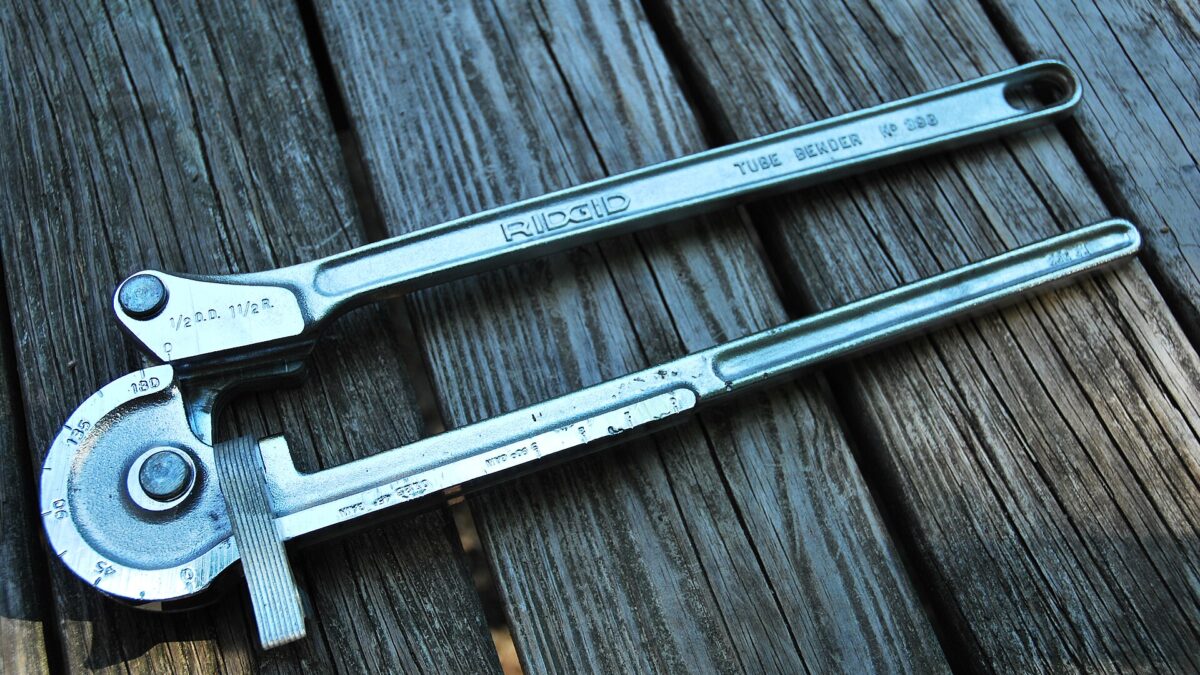
You’ve found a great deal on a used die. Or a friend has a box of dies from his old bender. Or you’re wondering if your new bender can take dies from a cheaper brand. It’s one of the most common questions in garage fab: are tube bender dies interchangeable? This guide to tube bender die compatibility sticks to what makers and retailers actually state, and says “unknown” everywhere else.
Dies are where the real money goes. The bender frame is a one-time purchase, but every tube size and every bend radius needs its own die set. So buying the wrong die isn’t a small mistake. It can mean a die that won’t seat, a pin that won’t go through, or a bend that comes out wrong.
Here’s what you’ll get: a compatibility matrix for popular benders from JD2, Rogue Fab, Baileigh, Pro-Tools, Woodward Fab, Eastwood and Harbor Freight. You’ll learn which parts of a die set have to match, how pin size and machine version change things, and a simple way to check fit before you spend a cent. Where nobody has published an answer, we’ll tell you to ask the maker.
Assume tube bender dies are not interchangeable between brands unless the maker or retailer says so in writing.
- Some dies swap within a brand: Rogue Fab says its M601, M605 and M625 share dies. Woodward Fab says its dies fit the WFB2 and WFPB1000. JD2 says Model 3 dies fit the Model 4.
- Some don’t, even within a brand: Baileigh’s drop-on die sets are marked “Not RDB-050”. JD2 says no other current models interchange.
- Cross-brand fit: no maker we checked states it. The honest answer is unknown, ask the maker. See the matrix.
📋 In this guide
- Why dies rarely swap between brands
- The die compatibility matrix
- Brand-by-brand die notes
- What has to match in a die set
- Pin size and machine versions
- How to check fit before you buy
- Die ratings vs bender ratings
- Buying your first dies
- Used dies and “universal fit” claims
- Common mistakes
- Pro tips
- FAQ
- Die buying checklist
Why tube bender dies rarely swap between brands
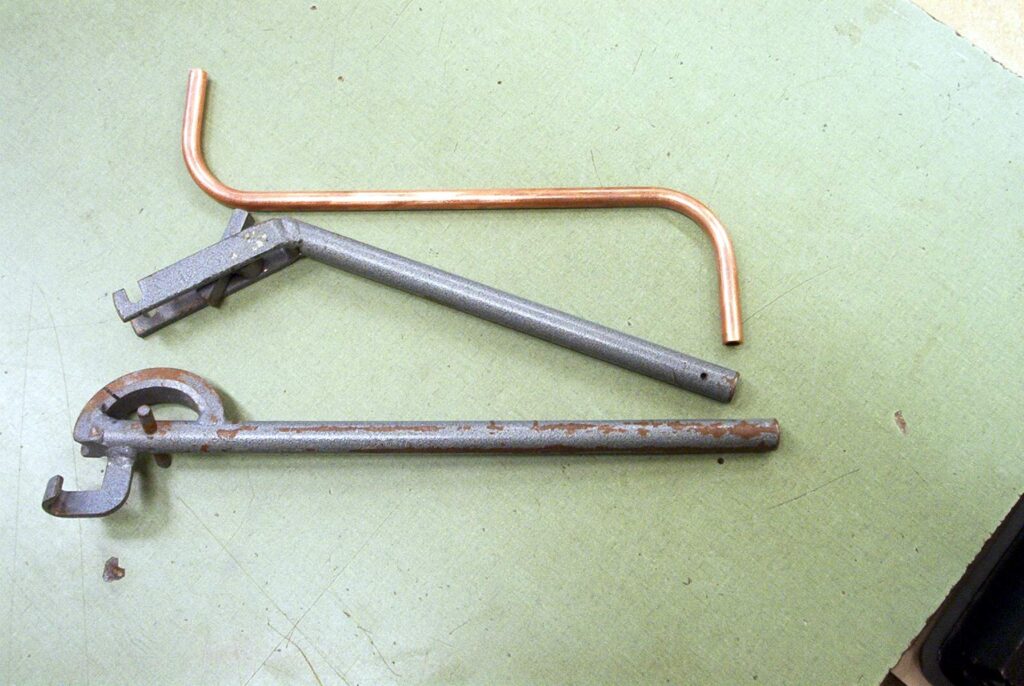
A rotary-draw die looks simple. It’s a round, grooved wheel with a clamp and a follower. But it has to match the bender in several hidden ways. The pin hole has to fit the bender’s main pin. The die’s height has to line up with the frame. The clamp and the follower block (some makers call it a counter die or pressure die) have to sit in the right place. And the drive features have to lock the die to whatever turns it.
Every maker designs those details for its own frames. There’s no shared industry standard for garage benders that we’ve seen any maker claim. So even two dies with the same tube size and the same centerline radius (CLR) can be completely different underneath.
Pin size is a good example. JD2 says its Model 32 uses large 1-1/4″ alloy pins, compared with 7/8″ pins on its Model 3 (JD2). That’s two benders from the same maker, with different pins. Rogue Fab says its benders built from 2023 use a 7/8″ main pin, while older ones may use 3/4″ (Rogue Fab FAQ).
A die that almost fits can slip, shift or crack under load. That ruins tube at best, and it’s a safety risk at worst. Only trust a fit statement from the maker or the retailer selling the die.
That’s why this guide has one firm rule. If a maker or retailer hasn’t stated a fit, we don’t claim it. Forum posts and Q&A answers can be a lead for your own question to the maker. They aren’t a guarantee.
The tube bender die compatibility matrix
Here’s what makers and retailers state about die fit, checked in October 2026. Every row has a source link. The last column covers cross-brand fit, and for every row the answer is the same: no maker or retailer we found states it. So the honest entry is “Unknown, ask the maker.”
| Bender | Dies the maker says fit | Limits or exceptions stated | Cross-brand fit | Source |
|---|---|---|---|---|
| JD2 Model 32 | JD2 Model 32 dies | JD2 says no current models interchange except Model 3 dies in a Model 4 | Unknown, ask the maker | JD2 FAQ |
| JD2 Model 4 | Model 4 dies, plus Model 3 dies (Model 1, 2 and 3 sets per the manual) | Model 4 dies won’t work in a Model 3 | Unknown, ask the maker | JD2 Model 4 manual |
| Rogue Fab M601, M605, M625 | All M6xx dies shared across the three | Match pin size (7/8″ or 3/4″); pressure die capacity should match the model | Unknown, ask the maker | Rogue Fab FAQ |
| Baileigh RDB-050 | RDB-050 tooling (90° and 180° sets) | Baileigh’s drop-on die sets say “Not RDB-050” | Unknown, ask the maker | Baileigh |
| Pro-Tools 105 SD and 105HD | Dies labelled for the 105 Standard Duty and Heavy Duty | Brute and Portabender have their own die pages | Unknown, ask the maker | Pro-Tools |
| Woodward Fab WFB2 | Woodward die sets; maker says they also fit its WFPB1000 hydraulic bender | None stated | Unknown, ask the maker | Woodward Fab |
| Eastwood High Capacity | Eastwood High Capacity 120° and 240° dies | Eastwood says the dies are for round tube only | Unknown, ask the maker | Eastwood |
| Harbor Freight 12-ton | Six cast pipe dies, 1/2″–2″ | Not for thin-wall pipe such as conduit or exhaust | Unknown, ask the maker | Harbor Freight |
How to use the matrix
Find your bender’s row first. The second column tells you which dies the maker supports. The third column lists any limits the maker states, even within its own range. If you’re looking at a die from another brand, the answer is in the fourth column: unknown until the maker confirms it. Want to plan a full setup, including dies? Try our compatibility tool.
The safest die is the one the maker sells for your exact machine. Anything else is a question, not an answer.
Brand-by-brand die notes
The matrix gives you the short version. Here’s the detail behind each row, with the maker’s own wording where it matters.
JD2
JD2’s FAQ is unusually clear. Die sets are only interchangeable for Model 3 dies in a Model 4. Model 4 dies won’t work in a Model 3, and no other current models are interchangeable. The FAQ also notes that the older Model 1 uses Model 4 dies, and the Model 2 uses Model 3 dies. JD2’s Model 4 manual adds a practical note: older die sets often have 3 to 5 holes drilled through them. For the Model 32, buy Model 32 dies. A retailer, Trick-Tools, also notes that Model 32 dies over 2″ OD are recommended for hydraulic benders only.
Rogue Fab
Rogue says all its dies are shared across the M601, M605 and M625, and that a die bought for an M601 works on an M625 without changes. Two catches. First, pin size: 2023-and-later benders use a 7/8″ main pin, and older ones may use 3/4″. Second, Rogue’s FAQ says pressure die capacity should match the bender model. Moving from an M605 to an M625 needs a frame swap, but Rogue says the dies, hydraulics and cart carry over. See Rogue Fab M605 vs M625.
Baileigh
The RDB-050 has its own tooling. Baileigh’s RDB-050 tooling page lists 90° and 180° sets from 3/4″ to 2-1/2″ round tube. Each set includes a forming die, counter die and hook sleeve. Baileigh’s separate drop-on die sets fit its rotary-draw benders that accept drop-on tooling, but they’re marked “Not RDB-050”. For example, the 1-3/4″ × 6″ CLR drop-on set (DS-1750T-R600) isn’t for the RDB-050. The RDB-050 versions carry their own part numbers, such as DS-90-1750T-R600 and DS-180-1750T-R600.
Pro-Tools
Pro-Tools names its 105 dies for the 105 Standard Duty and Heavy Duty benders, in 90° and 180° versions. The Brute and the Portabender have their own die pages. A retailer also describes Pro-Tools 105 dies as fitting the MB-105 and MB-105HD. If you own a different Pro-Tools model, check the die title before you buy.
Woodward Fab
Woodward Fab says its die sets are compatible with its WFB2 manual bender and its WFPB1000 hydraulic bender. It lists 180° round tube dies, 180° Schedule 40 pipe dies, a 120° round tube family and 120° square dies. Read each die’s listing for its own capacity. More in our Woodward Fab WFB2 research review.
Eastwood
Eastwood’s High Capacity dies come in 120° and 240° versions, sold separately, for round tube only. Its Amazon die listings are labelled for the High Capacity bender. Eastwood’s separate Pro Former bender comes with its own dies, and we found no statement that they swap with the High Capacity.
Harbor Freight 12-ton
This ram bender ships with six cast dies for 1/2″ to 2″ Schedule 40 and 80 pipe. They’re pipe shoes for a ram press, not rotary-draw dies. Its manual says the bender isn’t intended for thin-wall pipe such as conduit or exhaust, so don’t plan on tube dies for it.
What has to match: the parts of a die set
When you ask “will this die fit?”, you’re really asking about several parts at once. Knowing their names helps you ask the maker a clear question, and it helps you spot a mismatch on a used die.
| Part | What it does | What has to match |
|---|---|---|
| Forming die (bend die) | The grooved wheel the tube wraps around | Pin hole, height, drive features, tube OD and CLR |
| Clamp or hook sleeve | Grips the tube to the die at the start of the bend | The forming die it pairs with, and the tube OD |
| Follower, counter or pressure die | Supports the outside of the tube as it bends | The frame’s mounting point and the tube OD |
| Main pin | The pivot the forming die turns on | The die’s bore, such as 7/8″ or 3/4″ on Rogue Fab machines |
| Degree ring or stop | Shows or limits the bend angle | The die’s start point and the frame |
Two more details sit on the die itself. The CLR is fixed by the die and sets the bend radius. Our guide on centerline radius explains it. The bend angle family matters too. Many makers sell a short die (90° or 120°) and a long die (180° or 240°) in the same size. Eastwood, for example, recommends 90° as the max with its 120° dies, and 180° with its 240° dies.
A forming die without its matching clamp and follower is only half a die. When you buy used, make sure every piece of the set is there, and that all of them carry the same size and CLR.
Die pin size and machine versions
Pin size is the quickest way to rule a die in or out. The pin is the round shaft the forming die turns on. If the die’s bore doesn’t match the pin, the die won’t seat properly. And the pin isn’t always the same, even within one brand.
- JD2: the Model 32 uses 1-1/4″ alloy pins, and the Model 3 uses 7/8″ pins, according to JD2.
- Rogue Fab: benders made in 2023 and later use a 7/8″ main pin. Earlier machines may use 3/4″. Rogue labels its die bundles by pin size, sells press-in 3/4″ bushings, and says you can measure the pin with calipers.
- Rogue Fab conversion kits: Rogue sells kits that bring older M600-series machines up to its current designs, including a 7/8″ pin kit that converts an M600xHD to an M625.
- Other brands: we didn’t find a published pin size for every model. Ask the maker.
How to measure your pin
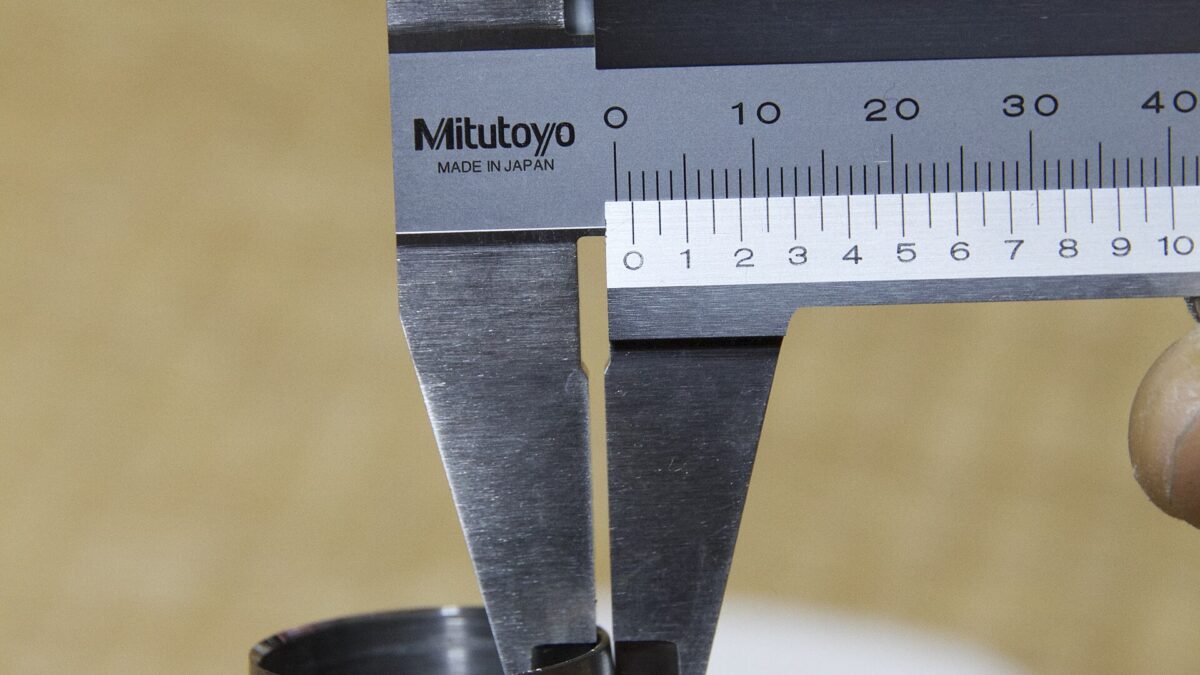
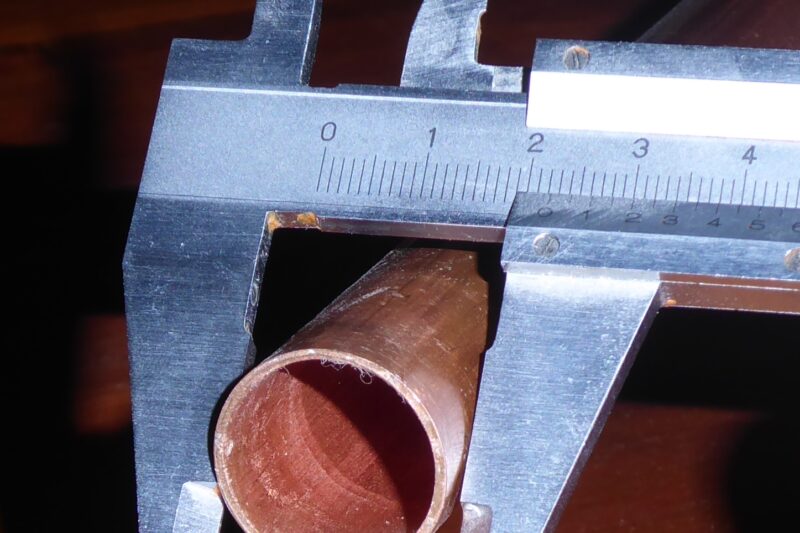
Remove the forming die as your bender’s manual describes. Measure the pin’s diameter with calipers in two places, at right angles to each other. Write it down along with your machine’s model and, if you can find it, its year or serial number. That one note answers half the questions a maker will ask you.
Machine versions matter for more than pins. Makers improve frames and change parts over the years. A die that fits a current model may not fit a ten-year-old one with the same name. When you email a maker, always give the model, the year if you know it, and the pin size you measured.
How to check die fit before you buy
Here’s a simple routine that works for any brand. It takes ten minutes and an email. It can save you from a die that never fits.
- Identify your bender exactly. Model name, version, year if known, and drive type. Check the frame for a plate or serial number.
- Measure the pin. Use calipers on the main pin, as above.
- Measure your tube. Real OD and wall, with calipers. Remember pipe sizes don’t match the real OD.
- Pick the die family. Decide on the CLR and the angle family you need, such as 120° or 240°.
- Find the maker’s part number. Look it up on the maker’s die page for your exact model.
- Read the die listing. Check the “fits” line, the wall basis or wall limits, and any notes like “Not RDB-050”.
- Ask in writing if anything is unclear. Email the maker your model, pin size, tube and the die part number. Keep the reply.
- For used dies, ask for photos. Request clear shots of the bore, the clamp and the follower, plus any stamped part numbers.
If the maker says yes in writing, you’re set. If the answer is “maybe” or “it should”, treat it as a no until you’ve seen it on your machine. That sounds strict, but a die that half-fits is worse than no die at all.
Not sure which bender you’ll end up with? Our Find My Bender quiz helps you choose the type first. Then you can pick dies from the same maker.
Die ratings vs bender ratings
Compatibility isn’t only about fit. A die that fits can still be the wrong die for your tube. That’s because dies have their own ratings, and some makers publish them separately from the bender’s headline capacity.
Examples from maker listings
- Baileigh RDB-050: each die set notes the wall its CLR is based on. Baileigh lists .095″ for the 1-3/4″ × 6″ set, .109″ for 2″ × 6″, and .120″ for 2-1/2″ × 7″.
- Rogue Fab: its tube capacity chart gives a minimum and maximum wall for each die and material. For example, the 1.75″ × 6.0″ die lists .095″ minimum and .250″ maximum in carbon steel, with two pressure dies needed at .156″ and up.
- Woodward Fab: die listings carry their own max wall, such as .134″ on the 2″ × 6″ CLR die.
- Pro-Tools: minimum wall depends on the die, and Pro-Tools points you to its die charts.
So when you check a die, read two lines: “fits” and “capacity”. A die that fits your bender but is rated for a thinner wall than your tube is still the wrong die. Our tube bender capacity chart gathers these die-level numbers in one place.
Enter your OD, wall and the die’s CLR in our bend calculator. It shows D of bend and wall factor, so you can see whether a die is a comfortable match for your tube.
Buying your first dies
The cheapest, safest way in is one die from your bender’s own maker, in the tube size you’ll use most. Add more as projects need them. Here are two die sets sold on Amazon for benders that are also on Amazon. They come from the same maker as the bender, so the fit is stated by the maker. These notes are based on published listings, not hands-on use.
As an Amazon Associate I earn from qualifying purchases.
Woodward Fab 2″ × 6″ CLR die for the WFB2
Woodward Fab WFBDT2X6 Round Tube Die (2″ OD × 6″ CLR)
A Woodward Fab die for its own WFB2 manual bender.
This is Woodward Fab’s 2″ OD round tube die with a 6″ centerline radius. That works out to a 3D bend on 2″ tube. The retail listing gives a .134″ max wall.
Who it’s for: WFB2 owners bending 2″ round tube for bumpers, racks and frames.
What to check: Woodward sells 120° and 180° die families, so confirm the bend angle on the listing before you order.
- Tube
- 2″ OD round
- CLR
- 6″
- Max wall
- .134″ (retail listing)
- Fits
- Woodward Fab WFB2
The bender: Woodward Fab WFB2. Affiliate links. See our disclosure.
Eastwood 1.75″ × 6″ CLR 240° die for the High Capacity
Eastwood 1.75″ × 6″ Radius 240° Die
The long die for full 180° bends on the Eastwood High Capacity bender.
Eastwood’s 240° dies are the ones that allow full 180° bends on the High Capacity. With 1.75″ tube on a 6″ CLR, you get about a 3.4D bend, a common size for off-road and frame work.
Who it’s for: High Capacity owners who need hoops or U-bends, not just bends under 90°.
What to check: Eastwood says its dies are for round tube only. The bender rates 4130 at a .090″ wall limit.
- Tube
- 1.75″ OD round
- CLR
- 6″
- Die angle
- 240° (for bends to 180°)
- Fits
- Eastwood High Capacity bender
Also: 1.75″ × 6″ 120° die · 1.5″ × 5″ 240° die · the High Capacity bender. Affiliate links. See our disclosure.
JD2, Rogue Fab and Pro-Tools sell their dies direct, and Baileigh lists RDB-050 tooling on its own site. For those, order from the maker’s die page for your exact model. Comparing whole machines rather than dies? See our tube bender comparison.
Used dies, bushings and “universal fit” claims
Used dies can be a smart buy, especially for common sizes. But a used die comes with no fit promise and no history, so you have to do the checking yourself.
What to ask a used-die seller
- Which bender, model and year was it used on?
- Is the full set there: forming die, clamp and follower?
- What’s the bore size, and can you send a photo with calipers on it?
- Are there part numbers stamped on the parts?
- Any cracks, gouges or weld repairs?
Bushings and adapters
Some makers offer their own way to bridge versions. Rogue Fab, for example, sells press-in 3/4″ bushings for older machines with smaller pins. That’s a maker solution within its own range. We found no maker that sells an adapter to run another brand’s dies, and we don’t recommend machining dies yourself to make them fit.
“Fits most benders” and Q&A answers
You’ll see owner answers in Q&A sections saying a die from one brand fits another. Some may be right. But an owner’s answer isn’t a maker’s promise, and it may be about a different version. Treat it as a reason to email the maker, not as proof.
These are composite stories. The same situations come up again and again in garage-fab forums and build threads.
A builder buys a used die from the same brand as their bender. It’s the right tube size and CLR. But their bender is an older version with a smaller pin, and the die is bored for the newer, larger pin. The fix turns out to be a maker-supplied bushing, but only after a week of back-and-forth.
Lesson: same brand doesn’t always mean same pin. Measure first.
Someone orders a die set from their bender maker’s website, in the right size. It arrives, and it’s from the maker’s drop-on line for its other benders. The listing said, in small print, that it wasn’t for their model. Back it goes.
Lesson: read the “fits” line on every die listing, even from your own maker.
Common die compatibility mistakes (and fixes)
These mistakes cost builders the most money and time. Each one has a simple fix.
❌ Assuming same size means same fit. Two 1.75″ × 6″ dies from different brands can be totally different underneath.
✅ Fix: buy dies made for your exact bender, or get a written fit statement.
❌ Assuming every die from your brand fits. Baileigh’s drop-on sets, for example, aren’t for the RDB-050.
✅ Fix: read the “fits” line on every listing.
❌ Ignoring pin size and version. Rogue Fab says its 2023-and-later benders use a 7/8″ pin, while older ones may use 3/4″.
✅ Fix: measure your pin with calipers and note your machine’s year.
❌ Buying the short die when you need hoops. A 120° die won’t make a 180° bend.
✅ Fix: choose the long die family (180° or 240°) for hoops and U-bends.
❌ Forgetting the die’s own wall rating. A die can be rated for less wall than the bender.
✅ Fix: check the die listing’s wall note as well as the bender’s chart.
❌ Trusting a Q&A answer as a fit guarantee. Owner answers aren’t maker statements.
✅ Fix: email the maker with your model, pin size and the die part number.
Pro tips for building a die collection
Experienced builders treat dies as a long-term investment. These habits help your collection grow without waste.
- 💡 Pick a house size. Many builders design most projects around one or two tube sizes, so one die set does most of the work.
- 💡 Buy the long die first if you’ll ever need hoops. A 180° or 240° die covers short bends too. A short die can’t do hoops.
- 💡 Label everything. Mark each set with size, CLR, angle and pin size. Keep the clamp and follower with their die.
- 💡 Keep the paperwork. Save listings and maker emails that confirm fit. They matter when you resell or upgrade.
- 💡 Think about resale. Dies for popular benders in common sizes tend to be easier to sell on later.
- 💡 Upgrade within a family when you can. Rogue Fab, for example, says dies carry over from an M605 to an M625.
Before you buy a bender, list the dies you’ll need in the first year. Check that the maker sells all of them. A great frame with a thin die catalogue can leave you stuck.
Frequently asked questions
Are tube bender dies interchangeable between brands?
Not as a rule. None of the makers we checked state that their dies fit another brand’s bender. Pin size, die height, clamps and followers all differ. Ask the maker before you buy.
Do JD2 Model 3 dies fit the Model 32?
JD2’s FAQ says the only current interchange is Model 3 dies in a Model 4, and that no other current models are interchangeable. JD2 also says the Model 32 uses larger 1-1/4″ pins. Buy Model 32 dies for a Model 32.
Will Rogue Fab M601 dies fit an M605 or M625?
Rogue Fab says its dies are shared across all three. Check that the die’s pin size matches your machine, 7/8″ or 3/4″, and that your pressure die suits your model.
Can I use Baileigh drop-on dies on the RDB-050?
No. Baileigh marks its drop-on die sets “Not RDB-050”. The RDB-050 uses its own 90° and 180° tooling sets.
What other benders take Woodward Fab WFB2 dies?
Woodward Fab says its dies fit the WFB2 and its WFPB1000 hydraulic bender. We found no maker statement about other brands, so that’s unknown. Ask the maker.
What is die pin size?
It’s the diameter of the main pin the forming die turns on. The die’s bore must match it. Measure it with calipers. Rogue Fab, for example, uses 7/8″ on 2023-and-later benders and 3/4″ on some older ones.
Your die buying checklist
Run through this list before you order any die, new or used.
- I know my bender’s exact model, version and year
- I’ve measured the main pin with calipers
- I’ve measured my tube’s real OD and wall
- The die listing names my exact bender in its “fits” line
- I’ve checked for exclusions, such as “Not RDB-050”
- The die’s wall rating or basis suits my tube
- I’ve chosen the right angle family: short die or long die
- The set includes the forming die, clamp and follower
- For cross-brand or unclear fits, I have the maker’s answer in writing
- For used dies, I’ve seen photos of the bore and part numbers
That’s the whole story on die fit. Buy from your bender’s maker when you can, measure your pin, read the “fits” line, and ask in writing whenever the answer isn’t clear. Your dies will last for years. ✅
Planning a bender and die setup?
Use our compatibility tool to plan your setup, or check your tube and die geometry with the bend calculator.
Keep reading
How to Choose a Tube Bender: A 10-Step Buying Guide
How to choose a tube bender in 10 steps: match capacity, CLR, dies, drive and floor mounting to your projects, with worksheets…
Woodward Fab WFB2 Review: Specs, Dies and Upgrade Path
Woodward Fab WFB2 review from published specs: capacity, dies, listing conflicts on handle and weight, who it suits and the upgrade path.
Tube Bender Capacity Chart: Published Limits for 9 Benders
A tube bender capacity chart built only from maker-published specs: OD, wall and 4130 limits for 9 benders, one source per row,…