Best Tube Bender for Roll Cage Builds (2026): Picks by Rule Needs
The best tube bender for roll cage work bends 180° hoops, takes dies that meet your rulebook's radius rule and is rated for 4130. Spec-based picks.

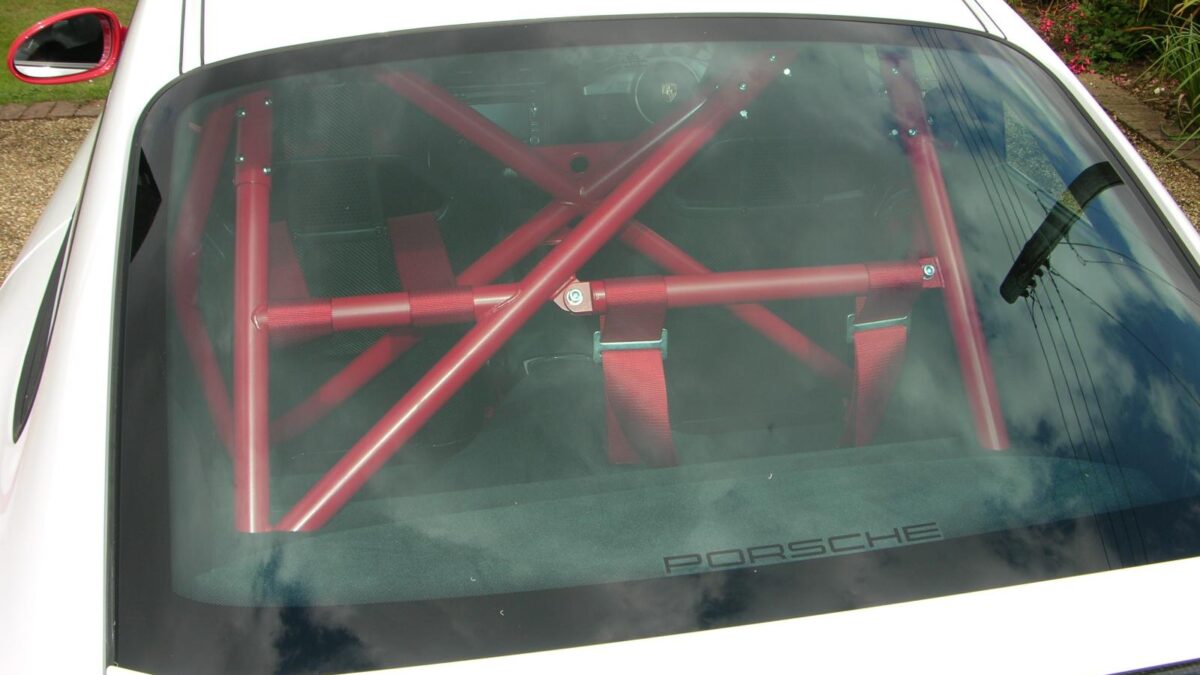
A roll cage is the one project where “close enough” isn’t good enough. Your tube has to match a rulebook. Your bends may have to meet a minimum radius. And the finished cage has to pass a tech inspector. So what’s the best tube bender for roll cage work? It’s not simply the biggest bender you can afford.
The right cage bender does four things well. It bends your rulebook’s tube size and wall with room to spare. It takes dies with a centerline radius (CLR) that meets your rulebook’s minimum. It reaches the bend angles your hoops need. And if you’re building in 4130 chromoly, the maker actually rates it for chromoly. This guide walks you through each one. Then it shows which benders fit, based on published specs.
One promise up front: we’ll keep it honest. Benders Hub is a magazine, not a tech inspector or an engineer. We’ll point you to the rules and show you how to check your setup. Your rulebook and your inspector have the final word.
For cage work, choose a rotary-draw bender with a published 4130 rating, 180° capability and a die that meets your rulebook’s CLR minimum. Never use a bottle-jack pipe bender for cage tube.
- Best for most cage builds: Eastwood High Capacity bender with a 240° die. It bends to 180° and accepts hydraulic kits.
- Best for chromoly cages: Baileigh RDB-050. It’s rated to 2″ × .120″ 4130.
- Best first cage die: 1.75″ × 6″ CLR, 240° die. That’s a 3.43D bend, above a “3× tube diameter” rule.
📋 In this guide
- Why a cage changes what bender you need
- Start with the rulebook, not the bender
- 5 cage requirements your bender must meet
- Best tube bender for roll cage builds
- Cage benders sold direct
- Side-by-side cage specs
- Choosing dies for cage tube
- Bending 4130 chromoly for a cage
- Real-life lessons from cage builders
- Common mistakes and fixes
- Pro tips for cage bending
- FAQ
- Your cage bender checklist
Why a roll cage changes what bender you need
A bumper only has to look good and hold up on the trail. A roll cage has to protect a person in a crash. That’s why racing bodies write rules for cages. It’s also why an inspector checks yours before you’re allowed on track.
Those rules reach right back to your bender. Most cage rulebooks set at least three things your bender has to handle:
- Tube size and wall. Rules set a minimum outside diameter (OD) and wall thickness. These often depend on vehicle weight, class or speed. Your bender has to bend that tube cleanly.
- Material. Many rules allow mild steel and 4130 chromoly. Some ban certain tube types. SCCA Time Trials, for example, doesn’t allow ERW (welded-seam) tube. Chromoly is harder to bend, so the bender needs a chromoly rating.
- Bend quality and radius. Some rulebooks set a minimum bend radius, measured at the tube’s centerline. The FIA also limits how oval a bend can get and bans ripples and cracks.
A garage bender that’s great for bumpers can still fall short on any of these. It may have no published 4130 rating. Its dies may be too tight for a cage rule. Or it may stop at about 120° when your hoop design needs more.
That’s the difference between this guide and our best tube bender for a home garage roundup. That one covers all-round garage use. This one filters every pick through cage requirements first.
Benders Hub is not a tech inspector or an engineer. Nothing in this guide certifies a cage or promises it will pass. Read the current rulebook for your class, and talk to your inspector before you buy tube, dies or a bender.

Start with the rulebook, not the bender
The most expensive cage mistake happens before anyone touches a tube. Someone buys a bender and a die, then reads the rulebook. Do it the other way around. Here’s where the main rulebooks live.
- NHRA (drag racing): the yearly NHRA Rulebook is sold through NHRA’s member shop. Rule amendments are posted on NHRARacer.com. Cage rules depend on elapsed time, vehicle type, and whether you need a roll bar or a full cage.
- SCCA: Time Trials publishes its safety rules online. Club Racing uses the General Competition Rules (GCR).
- NASA: roll cage rules sit in Rule 15.6 of the Club Codes & Regulations (CCR), on NASA’s rules page.
- FIA: safety cages are covered by Appendix J, Article 253. The FIA lists a 2026 edition on its regulations page.
- SFI Foundation: publishes chassis and roll cage specs, such as the 25.x series for full-bodied tube-chassis cars. See the SFI spec list.
Read the section for your class. Then write down five things: the tube OD, the wall, the allowed materials, any minimum bend radius, and the welding method. Those five facts decide your bender, your dies and your welder. Our roll cage tubing size and wall thickness guide walks through what each body covers.
If you race with more than one club, find the strictest rule for each item. Then show your plan to an inspector before you order tube. Most are happy to answer questions early. It’s far easier than failing tech later.
Read the rulebook first, then buy the bender. Doing it the other way around is how people end up owning a die they can’t use.
5 cage requirements your bender must meet
Once you know your rules, you can judge any bender against them. Here are the five things we’d check, in order.
1. Capacity for your OD and wall, with headroom
Find the maker’s capacity chart. It should list OD, maximum wall and material. Your cage tube should sit comfortably inside that chart, not right at the edge. A bender working at its limit is harder to pull and less forgiving.
2. A published 4130 rating
If you plan to use chromoly, look for a separate 4130 number. Makers usually rate 4130 lower than mild steel. Eastwood, for example, rates its High Capacity bender to 2″ × .120″ in mild steel but limits 4130 to .090″ wall. No chromoly rating on the listing? Treat that as a “no” for chromoly.
3. Dies that meet the bend radius rule
Some rulebooks set a minimum CLR. SCCA Time Trials says the radius of all cage bends, measured at the tubing centerline, must be at least three times the tube diameter. The FIA’s Article 253 uses the same 3× wording in its 2013, 2019 and 2020 editions. The bender doesn’t set the radius. The die does. So the bender must offer a die in your OD with a big enough CLR. Our roll cage bend radius rule guide shows the full check.
| Tube OD | Die CLR | D of bend (CLR ÷ OD) | Meets a “3× diameter” rule? |
|---|---|---|---|
| 1.5″ | 4.5″ | 3.0D | ⚠️ Exactly at the minimum |
| 1.5″ | 5.5″ | 3.67D | ✅ Yes, with margin |
| 1.75″ | 4.5″ | 2.57D | ❌ No |
| 1.75″ | 6″ | 3.43D | ✅ Yes, with margin |
| 1.75″ | 6.5″ | 3.71D | ✅ Yes, with margin |
| 2″ | 6″ | 3.0D | ⚠️ Exactly at the minimum |
4. Enough bend angle
Many single bends in a car cage are 90° or less. But some parts need more, such as a hoop bent from one tube with tight corners, a U-shaped bar, or buggy and tube-chassis hoops. Check both the bender’s limit and the die’s wrap angle. A bender that reaches 180° keeps your design options open.
5. Repeatable, controlled bends
A cage has many bends that must match side to side. Look for a clear degree ring or angle stop. Hydraulic power also helps. It gives smoother, steadier pulls on thick wall and saves your back over dozens of bends.
Best tube bender for roll cage builds in 2026
Here’s how we chose. We looked for rotary-draw benders sold on Amazon with published capacity charts, a stated 4130 rating, and dies that reach 180°. We have not run these benders through hands-on testing. Our picks are based on manufacturer and retailer specs checked in October 2026, plus what owners commonly report in public forums. Read how we evaluate equipment. Listings change, so confirm every spec on the product page before you order.
As an Amazon Associate I earn from qualifying purchases.
Eastwood High Capacity
180° with 240° dies, plus air- or electric-hydraulic upgrades.
Buy from AmazonEastwood 1.75″ × 6″ CLR 240° die
A 3.43D bend in the most common cage size.
Buy from AmazonEastwood High Capacity Tube Bender: best for most cage builds
Eastwood High Capacity Tube Bender (#21115)
Bends to 180° with 240° dies, and grows into air- or electric-hydraulic power for long cage builds.
A cage asks for two things many garage benders lack: 180° capability and stamina for dozens of bends. Eastwood covers both. Its instructions recommend 90° maximum with 120° dies and allow up to 180° with 240° dies. Eastwood also sells air-over-hydraulic and electric-hydraulic kits, so you can start by hand and add power later.
Who it’s for: builders doing a roll bar or a mild-steel cage in common sizes, who want room to grow. It also suits thin-wall chromoly, as long as your rule’s wall fits Eastwood’s 4130 limit.
Check this first: Eastwood limits 4130 to .090″ wall. Compare that with your rulebook’s chromoly wall before you buy.
- Type
- Manual rotary draw, hydraulic-ready
- Tube size
- Up to 2″ OD round
- Mild steel
- Up to 2″ × .120″ wall
- 4130 chromoly
- Limited to .090″ wall
- Bend angle
- 90° max with 120° dies; up to 180° with 240° dies
- Power options
- Air kit (about 90 psi working pressure) or electric kit (0.75 HP, 110 V)
Why it suits cages
- 180° bends for hoops with 240° dies
- Hydraulic kits for long, repeatable cage sessions
- Clear published limits, including 4130
- Cage-size 240° dies sold on Amazon
Know before you buy
- 4130 limit of .090″ wall rules out thicker chromoly
- Dies, handle and stand may be sold separately (check the listing)
- Air kit needs steady shop air
Add-ons: electric-hydraulic kit · air-hydraulic kit. Affiliate links. See our disclosure.
Baileigh RDB-050: best for chromoly cages
Baileigh RDB-050 Manual Rotary Draw Bender
The highest published 4130 rating of our Amazon picks: 2″ OD × .120″ wall chromoly.
If your cage is chromoly, the RDB-050 is the Amazon pick we’d look at first. Baileigh rates it to 2″ × .120″ 4130 and 2.5″ × .120″ mild steel. A three-speed ratchet gives 4°, 8° or 12° per pull, which keeps big tube manageable by hand. An anti-springback mechanism holds the bend while you reset the handle.
Who it’s for: serious builders and small shops bending chromoly cages, or 2″ tube, without going hydraulic.
One conflict to know: Baileigh lists both 190° and 200° as the maximum bend. Either way, it bends past 180° for hoops.
- Type
- Manual rotary draw, 3-speed ratchet
- Mild steel
- Up to 2.5″ OD × .120″ wall
- 4130 chromoly
- 2″ OD × .120″ wall
- Bend angle
- Baileigh lists both 190° and 200°
- Speeds
- 4°, 8° or 12° per pull
- Sold separately
- Dies
Why it suits cages
- Highest 4130 rating of our Amazon picks
- Bends past 180°
- Anti-springback helps with chromoly
- Ratchet speeds make thick wall manageable
Know before you buy
- A bigger investment than entry-level benders
- Heavy, so plan solid floor anchoring
- Dies add a lot to the total
Confirm die availability in your OD and CLR before ordering. Affiliate link. See our disclosure.
Eastwood 1.75″ × 6″ CLR 240° die: the first cage die
Eastwood 1.75″ × 6″ CLR 240° Die
A 3.43D die for 1.75″ tube, with the 240° wrap Eastwood needs for bends up to 180°.
A 6″ CLR on 1.75″ tube works out to 3.43D. That clears a “three times the tube diameter” rule, like the ones in SCCA Time Trials and FIA Article 253, with some margin. Rogue Fabrication’s cage guide also recommends a 6″ die for 1.75″ cage tube unless your design forces a tighter bend.
Who it’s for: Eastwood High Capacity owners building in 1.75″ tube. Check that your rulebook allows 1.75″ for your car first.
- Tube OD
- 1.75″
- CLR
- 6″
- D of bend
- 3.43D (6 ÷ 1.75)
- 3× minimum for 1.75″
- 5.25″ CLR
- Die wrap
- 240°, for bends up to 180°
- Fits
- Eastwood High Capacity (confirm on the listing)
Affiliate link. See our disclosure.
Don’t forget a notcher
Every cage joint needs a tight “fishmouth” so one tube saddles onto another. Gaps make welding harder and can fail tech. A hole-saw notcher is the usual garage choice. Match the hole saw to the tube you’re joining to.
Eastwood Tube & Pipe Notcher (0°–60°)
Hole-saw notcher for round tube up to 2″, adjustable from 0° to 60°.
This notcher clamps your tube and guides a hole saw through it at the angle you set. It runs from a hand drill or drill press. Match the hole saw to the OD of the tube you’re joining to.
Who it’s for: anyone building a cage or roll bar in tube up to 2″.
- Round tube
- Up to 2″
- Angle range
- 0°–60°
- Drive
- Hand drill or drill press
- Hole saws
- Not included
Alternative: Woodward Fab 2″ hole-saw notcher. Affiliate links. See our disclosure.
Why isn’t the Woodward Fab WFB2 here? It’s our value pick for general garage work. But its die listings show about 110° to 120°, and we found no published 4130 rating. For bumpers it’s great. For a cage that needs hoops or chromoly, the picks above fit better.
Cage benders sold direct: JD2, Pro-Tools and Rogue Fab
Some of the most popular cage benders aren’t sold on Amazon. You buy them direct from the maker. They’re worth pricing against the picks above, especially if you want a big die catalog.
JD2 Model 32
The JD2 Model 32 takes 1/2″ to 2-1/2″ OD round tube. JD2 says round tube over 2″ × .120″ needs its hydraulic add-on, and with hydraulics it’s rated to 2″ × .250″ DOM. JD2 sells 180° die sets. Its 1-1/2″ OD die set, for example, is listed in 4.5″, 5.5″ and 7.5″ CLR. On 1.5″ tube those work out to 3.0D, 3.67D and 5.0D. Sold direct from JD2.
Pro-Tools 105HD
The Pro-Tools 105HD handles 1/2″ to 2″ OD round tube up to .134″ wall. With its extension handle, Pro-Tools rates it to 2″ × .134″ 4130, and it bends to 180°. That’s a strong chromoly rating for a manual bender. A hydraulic package is also offered. Sold direct from Pro-Tools.
Rogue Fab M605 and M625
Rogue Fabrication’s M605 is a vertical rotary-draw bender for tube up to 2.00″ OD. It bends about 94° per stroke and continues past 180°. Its wall rating is a known conflict: the catalogue says .188″, while Rogue’s FAQ says .250″ DOM. The heavier M625 uses the same dies and is rated to 2.00″ × .250″ DOM. We didn’t find a separate 4130 rating for either one, so ask Rogue Fab directly. Sold direct from Rogue Fab.
Side-by-side: the cage specs that matter
Here’s how the benders compare on the numbers a cage builder cares about. Specs come from the maker or the retail listing. Where sources disagree, we say so.
| Bender | Mild steel capacity | 4130 rating | Max bend | Power | Where to buy |
|---|---|---|---|---|---|
| Eastwood High Capacity | 2″ × .120″ | .090″ wall max | 180° with 240° dies | Manual; air or electric kit | Amazon |
| Baileigh RDB-050 | 2.5″ × .120″ | 2″ × .120″ | 190°/200° (both listed) | Manual ratchet | Amazon |
| JD2 Model 32 | Over 2″ × .120″ needs hydraulics; 2″ × .250″ DOM with them | See JD2 charts | 180° die sets | Manual; hydraulic kit | Direct from JD2 |
| Pro-Tools 105HD | To .134″ wall | 2″ × .134″ (extension handle) | 180° | Manual; hydraulic package | Direct from Pro-Tools |
| Rogue Fab M605 | 2.00″ OD; .188″ or .250″ (sources conflict) | Ask Rogue Fab | Past 180° (about 94° per stroke) | Hydraulic | Direct from Rogue Fab |
| Rogue Fab M625 | 2.00″ × .250″ DOM | Ask Rogue Fab | Past 180° | Hydraulic | Direct from Rogue Fab |
How to read this table: start with your rulebook’s tube. Cross off any bender whose mild steel or 4130 column doesn’t cover it with room to spare. Next, check the bend column against your hoop design. Then look at power. A full cage means dozens of bends, and hydraulics make that far easier.
Building in chromoly? The 4130 column narrows things fast. The Baileigh RDB-050 and Pro-Tools 105HD publish the strongest chromoly ratings here. The Eastwood works for thin-wall chromoly up to .090″.
Still weighing types of bender? Our bender type comparison lays out rotary draw, ram and mandrel side by side. Or take the Find My Bender quiz for a recommendation based on your tube and projects.
Choosing dies for cage tube
On a cage, the die matters as much as the bender. It sets the radius, it limits the bend angle, and it must match your tube exactly. Here’s how to choose.
Match the OD exactly
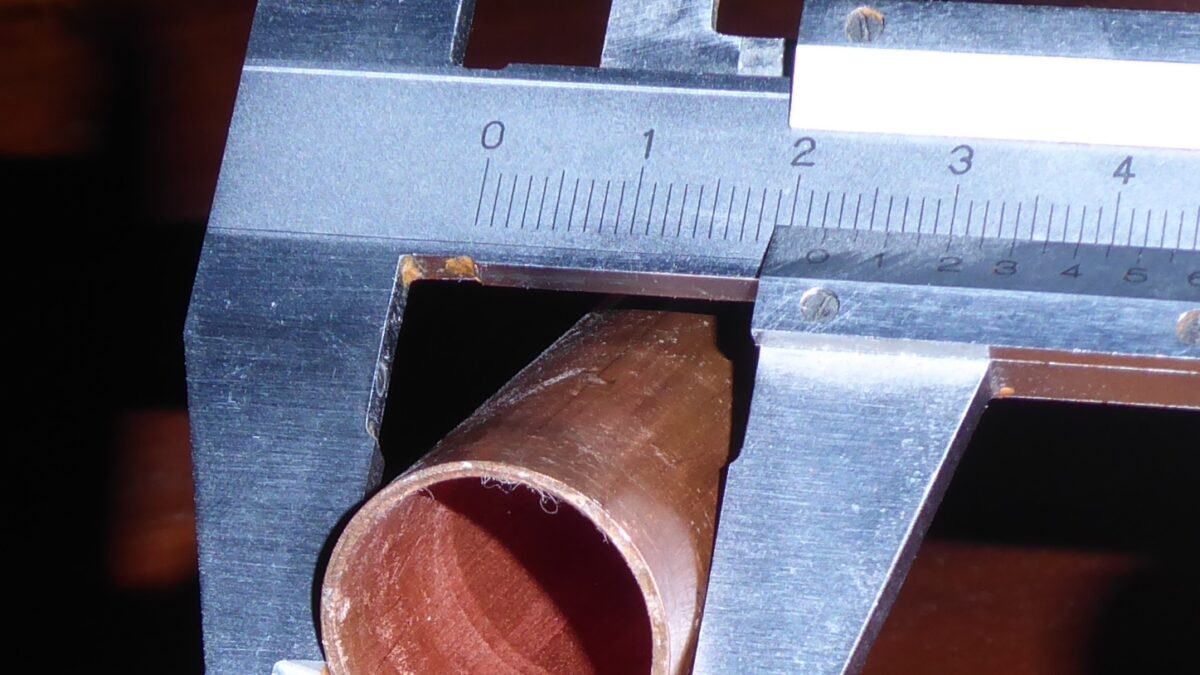
Buy dies for the tube’s real outside diameter. Tube is sold by OD, but pipe is sold by a nominal size that doesn’t match. For example, 1-1/2″ pipe actually measures 1.900″ OD. Measure your tube with calipers before you order dies.
Meet the radius rule, then go bigger if you can
First, make sure the die’s CLR meets your rulebook. Under a 3× rule, 1.75″ tube needs at least a 5.25″ CLR. Then think about margin. Rogue Fabrication’s cage guide advises using the largest CLR die that fits your design. It notes that a 6″ CLR on 1.75″ tube is a 3.43D bend, while a 4.5″ CLR on the same tube is 2.57D and produces more ovality and more wall thinning. That 2.57D die would also fail a 3× rule.
Check the die’s wrap angle
Dies have their own angle limit. Eastwood’s instructions recommend 90° maximum with its 120° dies, and up to 180° with its 240° dies. If your design has any bend over 90°, buy the bigger wrap.
Use one CLR across the cage
Many builders pick one die for the whole cage. You learn one springback number. Your bends look like they belong together. And your layout math stays simple.
Enter your OD, wall and die CLR in our bend calculator. It shows D of bend, so you can see at a glance whether a die clears a 3× rule. It also works out arc and tangent lengths for layout.
Bending 4130 chromoly for a cage
Chromoly is popular for cages because many rulebooks let you use a thinner wall in 4130 than in mild steel. NHRA’s past General Regulations, for example, paired .118″ mild steel with .083″ 4130 in their roll cage tube specs. The exact OD and rule depend on class and edition, so check the current rulebook. A thinner wall can mean a lighter cage, but chromoly asks more of your bender and your welder.
Your bender needs a 4130 rating
Chromoly is stronger and harder to bend. So makers rate it separately, and usually lower. Baileigh rates the RDB-050 to 2″ × .120″ 4130. Pro-Tools rates the 105HD to 2″ × .134″ 4130 with its extension handle. Eastwood limits 4130 to .090″ wall on its High Capacity bender. Match your rule’s chromoly wall to these numbers before you buy.
Expect more springback
JD2 says 4130 springs back about twice as much as mild steel of the same size and wall. So if you dialed in your bender on mild steel, your chromoly bends will come out short. Make test bends on chromoly scrap from the same batch. Log the numbers. Use the same test piece to confirm your die and clamp settings.
Welding comes from the rulebook
NHRA’s General Regulations (the 2017 and 2019 editions posted on NHRA’s site) say all 4130 chromoly tube welding must be done by an approved TIG (heliarc) process. They allow MIG or TIG for mild steel. NHRA’s 2024 Exhibition Vehicle supplement also requires TIG on chromoly. Confirm the wording in the current NHRA rulebook. Other bodies have their own rules. Our DOM vs 4130 chromoly guide covers the trade-offs.
Chromoly only makes sense if your rulebook allows it, your bender is rated for it, and your welder can meet the required process. If any of those is a “no,” a mild-steel cage built to the rule is the safer path.
Real-life lessons from cage builders
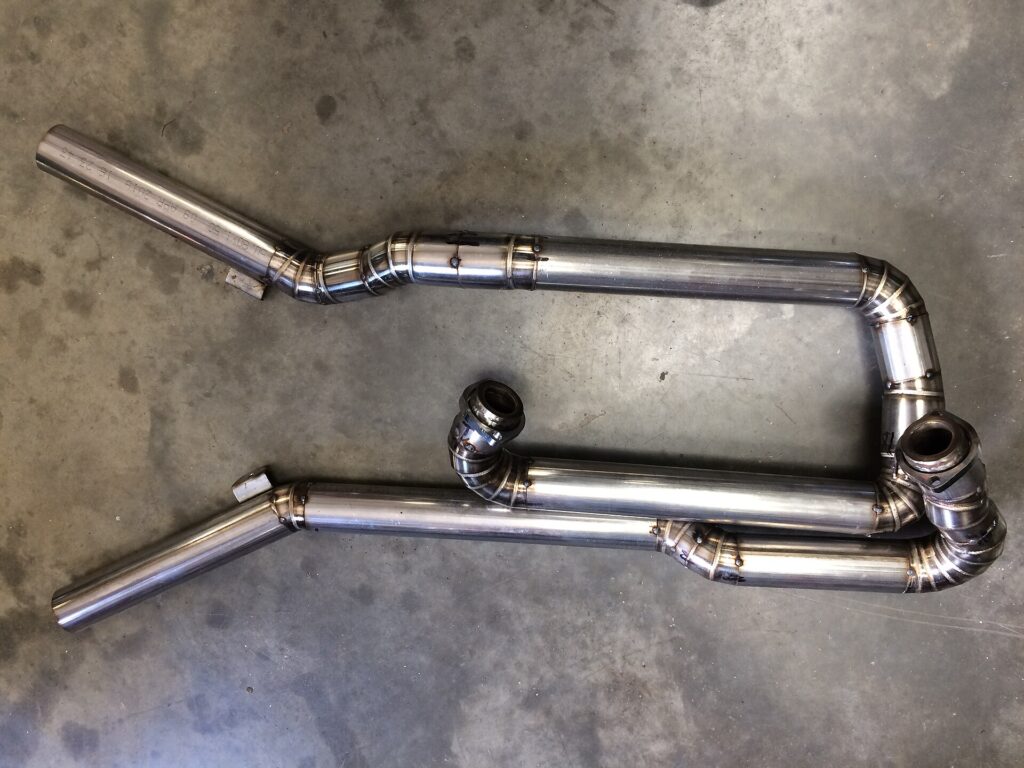
These are composite stories. The same situations come up again and again in garage-fab forums and build threads. Each one costs time, tube or a failed inspection. Learn from them and skip the pain.
A builder buys a 1.75″ die with a 4.5″ CLR because it tucks bends close to the roof. The cage looks great. Then they reread their rulebook. It calls for a centerline radius of at least three times the tube diameter. That’s 5.25″ for 1.75″ tube. The 4.5″ die is only 2.57D.
Lesson: check your die’s D of bend against the rulebook before the first bend, not after the last one.
Someone plans a chromoly cage and finds a bender that “does 2-inch tube.” Before ordering, they check the maker’s chart. The 4130 limit is lower than the wall their plan calls for. They switch to a bender with a higher published 4130 rating and avoid a costly mistake.
Lesson: “bends 2-inch tube” means nothing for chromoly. Find the 4130 line in the capacity chart.
A builder tries a 12-ton bottle-jack pipe bender on cage tube to save money. The first bend comes out flat on the inside, with a kink. They learn the hard way that these benders are built for thick-wall pipe. The tube goes in the scrap pile.
Lesson: never use a ram or bottle-jack pipe bender for cage tube. Use a rotary-draw bender with a proper die.
A cage builder’s design calls for one bend well past 90°. Their die only wraps 120°. The bend stops short, and the tube has to be cut and scrapped. They order a 240° die and start that tube again.
Lesson: check the die’s wrap angle against your tightest bend before you buy.
Common cage bender mistakes (and how to fix them)
Most cage bender regrets come from a short list. Here they are, with the fix for each.
❌ Using a bottle-jack pipe bender for cage tube. It pushes the tube like a press and tends to flatten or kink it.
✅ Fix: use a rotary-draw bender with a die matched to your tube’s OD. See our pipe bender vs tube bender explainer.
❌ Buying the bender before reading the rulebook. You may end up with the wrong capacity, die or material rating.
✅ Fix: list your rulebook’s OD, wall, material, bend radius and welding method first. Then shop.
❌ Choosing a die by looks. A tight radius looks sporty but can fall below a 3× rule.
✅ Fix: divide CLR by OD. Compare the result with your rule, and leave margin where the design allows.
❌ Assuming a mild-steel rating covers chromoly. Makers usually rate 4130 lower.
✅ Fix: find the separate 4130 line on the capacity chart. No line means no rating.
❌ Forgetting the die’s wrap angle. A 120° die can’t make a 180° bend.
✅ Fix: buy dies with enough wrap for your tightest bend. Eastwood pairs 180° bends with its 240° dies.
❌ Building to forum numbers. Posts quote old editions and other classes.
✅ Fix: read the current official rulebook for your class. Confirm with your inspector.
Pro tips for cage bending
These habits make cage work smoother, safer and cheaper. None of them cost much. All of them pay off on inspection day.
- 💡 Talk to your inspector early. Show your tube spec, die CLR and welding plan before you buy. It’s free advice from the person who decides.
- 💡 Buy extra tube from the same batch. Use it for test bends. Springback can vary between batches, especially in chromoly.
- 💡 Keep your paperwork. Save the tube invoice and any material certificate from your supplier. Inspectors may ask what the tube is.
- 💡 Mock up with cheap material. Some builders shape tricky bars from PVC or wire first. It’s a cheap way to find clearance problems.
- 💡 Draw a reference line on every tube. It shows if the tube rotates in the die, and it helps set the angle between bends.
- 💡 Plan bend order and clamp room. Rotary-draw benders need straight tube to clamp. Sketch the part and number the bends first.
- 💡 Anchor the bender properly. Thick cage tube puts big loads on the stand. Bolt it to solid concrete and keep people clear of the swing. Read our workshop safety notes.
Experienced cage builders often bend a whole cage on one OD and one CLR. They keep a log of tube batch, wall, material and springback. Their bends match, their layouts are faster, and their next cage starts with known numbers.
For the full build process, from layout to fit-up, see our guide on how to build a roll cage. And plan bend positions with the geometry visualizer before you cut tube.
Frequently asked questions
What is the best tube bender for a roll cage?
A rotary-draw bender that covers your rulebook’s tube with headroom, has a published 4130 rating if you use chromoly, and takes dies that meet your bend radius rule and reach 180°. On Amazon, the Eastwood High Capacity suits most builds, and the Baileigh RDB-050 suits chromoly.
Can I use a hydraulic pipe bender for a roll cage?
No. Bottle-jack and ram pipe benders push the tube like a press. They’re built for thick-wall pipe and tend to flatten or kink cage tube. Use a rotary-draw bender with a die matched to your tube.
What die size do I need for a roll cage?
Match the die OD to the tube your rulebook calls for. Then choose a CLR that meets any bend radius rule. Under a 3× rule, 1.75″ tube needs at least a 5.25″ CLR, so a 6″ CLR die gives some margin.
Do I need a hydraulic bender for a roll cage?
Not always. Manual benders can bend common cage tube. But a cage has dozens of bends, and hydraulics make them smoother and less tiring. A bender that accepts a hydraulic kit later is a smart middle path.
Can I bend 4130 chromoly with any tube bender?
Only if the maker rates it for 4130. Chromoly ratings are usually lower than mild steel ratings. Chromoly also springs back about twice as much as mild steel, according to JD2.
Will my cage pass tech if I follow this guide?
We can’t promise that. Benders Hub is not a tech inspector or an engineer. Your current rulebook and your inspector decide. Show them your plan before you buy tube.
Your cage bender checklist
Run through this list before you order a bender or a single die. If you can tick every box, you’re ready to shop.
- I’ve read the current rulebook section for my class and noted the edition
- I’ve written down the required OD, wall, material, bend radius and welding method
- I’ve shown my plan to a tech inspector
- I’ve chosen a rotary-draw bender, not a ram or bottle-jack pipe bender
- The bender’s capacity chart covers my tube with headroom
- If I’m using chromoly, the bender has a published 4130 rating that covers my wall
- My die’s CLR ÷ OD meets any bend radius rule, with margin where possible
- My die’s wrap angle covers my tightest bend
- I’ve planned for hydraulic power if I’m bending a full cage
- I’ve budgeted for a notcher, hole saws and test tube from the same batch
A good cage bender isn’t about brand or size. It’s about matching the rulebook, one requirement at a time. Get the rules first, choose the die second, and the right bender becomes obvious. Then bend carefully, check often, and let your inspector have the last word. 🏁
Check your die before you buy
Plug in your tube OD and die CLR to see your D of bend in seconds. Or answer nine quick questions to find the bender type that fits your cage project.
Keep reading
JD2 Model 32 vs Rogue Fab M605: Specs Compared Side by Side
JD2 Model 32 vs Rogue Fab M605, compared from published specs: capacity, power, dies, floor space and the M605 wall-rating conflict.
Baileigh RDB-050 Review: Specs, Strengths and Who It Suits
Baileigh RDB-050 review based on published specs: capacity, the 190° vs 200° conflict, dies, who it suits and the best alternatives.
Best Tube Notcher for Roll Cage Builds (and Tight Fishmouth Joints)
Find the best tube notcher for roll cage work: notcher types, spec-based picks, hole saw sizing and a step-by-step guide to tight…