Pipe Bender vs Tube Bender: Which One Do You Actually Need?
Pipe bender vs tube bender: how NPS pipe and OD tube differ, why a ram pipe bender kinks tubing, and which bender fits your project.

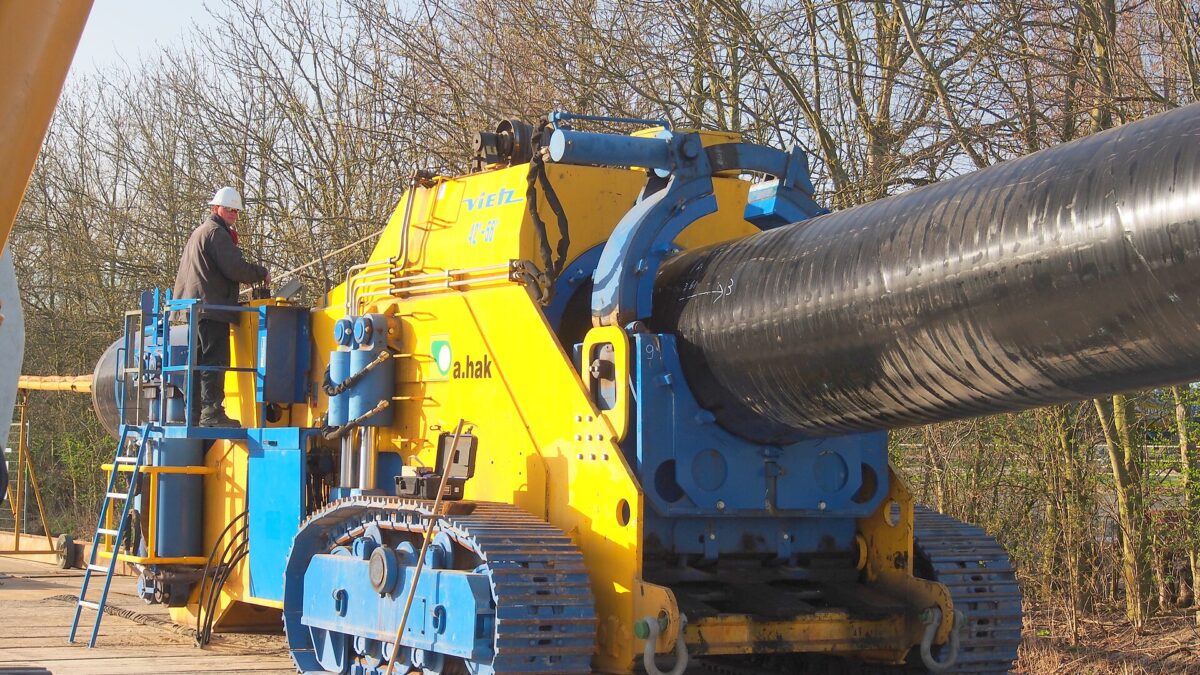
You need to bend some round steel. The tool store sells a “pipe bender.” The fab sites sell a “tube bender.” They look like they do the same job, so does the pipe bender vs tube bender question even matter? It does. Pick the wrong one and your first bend can come out flat, kinked, or simply the wrong size for the die.
Here’s the short version. Pipe and tube are sized in different ways. And the two kinds of bender push the metal in different ways. A bottle-jack pipe bender shoves the middle of a thick-walled pipe. A rotary-draw tube bender pulls the tube around a round die and supports it the whole way. That one difference decides what each tool is good at.
In this guide we’ll walk through it like a friend in the next garage bay. You’ll learn how to tell pipe from tube, how each bender works, and why a ram bender kinks tubing. You’ll also learn when a pipe bender is actually the right call, and the one place where this choice is about safety, not just looks.
A pipe bender is usually a hydraulic ram (bottle-jack) press made for thick Schedule 40 or 80 pipe. A tube bender is usually a rotary-draw machine that pulls tube around a round die.
- Bumpers, sliders, frames or cages? Use a rotary-draw tube bender.
- Heavy pipe for gates, rails or farm jobs? A ram pipe bender can do that work.
- Sizes don’t match: 1-1/2″ pipe measures 1.900″ outside. Tube is sold by its true outside diameter.
- Never use a ram pipe bender for roll cage or roll bar tube.
📋 In this guide
- Pipe bender vs tube bender: the short version
- Pipe vs tube: NPS vs OD sizing
- How a ram pipe bender works
- How a rotary-draw tube bender works
- Why a pipe bender kinks tubing
- Side by side, and what to buy
- When a pipe bender is the right tool
- Safety: no pipe benders for cages
- Real-life lessons
- Common mistakes and fixes
- Pro tips
- FAQ
- Your checklist
Pipe bender vs tube bender: the short version
The names on the box are loose. Some makers call a tool a “tube and pipe bender.” Some stores call any bender a “pipe bender.” So don’t judge by the label. Judge by how the tool bends.
The Fabricator, a long-running trade magazine, says most tube is bent one of four ways: ram-type, roll, compression or rotary draw. In a home garage, the choice almost always comes down to two of them:
- Ram-type (press) bending. This is the classic bottle-jack “pipe bender.” A hydraulic ram pushes a curved shoe into the middle of the pipe. Two blocks hold the ends. The pipe bends around the shoe like a stick across your knee.
- Rotary-draw bending. This is what fabricators mean by a “tube bender.” The tube is clamped to a round die. The die turns and draws the tube around it, while a block supports the outside of the bend.
A ram bender is simple, quick and budget-friendly. It’s made for heavy-wall pipe. A rotary-draw bender costs more, and the dies add up. But it makes smooth, round, repeatable bends in thinner structural tube.
Some rotary-draw benders handle both. The Pro-Tools 105HD, for example, lists 1/2″ to 2″ OD round tube and NPS 1/4 to 1-1/2 pipe, each with its own dies. So the real question isn’t “pipe bender or tube bender?” It’s “ram or rotary draw, and which dies?”
If a hydraulic ram pushes the middle of the work, it’s a ram bender, whatever the box says. If the work wraps around a turning die, it’s a rotary-draw bender. Our bender type comparison shows all the main types side by side.
Pipe vs tube: NPS vs OD sizing
Before you buy any bender or die, you need to know which one you’ve got: pipe or tube. They can look identical in the rack. But they’re sized in completely different ways.
Pipe is sized by a nominal number
Pipe is sold by NPS, short for nominal pipe size. “Nominal” means “in name only.” The number is a label, not a measurement. A 1-1/2″ pipe doesn’t measure 1-1/2″ anywhere. Its outside diameter (OD) is 1.900″. According to ArchToolbox’s pipe tables, the NPS only matches the real OD from NPS 14 upward.
Pipe wall thickness is set by a schedule, such as Schedule 40 or Schedule 80. Higher schedules mean thicker walls. Here’s the catch: the same schedule gives a different wall at each size. Schedule 40 isn’t one thickness. It’s a family of thicknesses.
| Pipe size (NPS) | Real OD | Schedule 40 wall | Wall factor (OD ÷ wall) |
|---|---|---|---|
| 1/2″ | 0.840″ | 0.109″ | 7.7 |
| 3/4″ | 1.050″ | 0.113″ | 9.3 |
| 1″ | 1.315″ | 0.133″ | 9.9 |
| 1-1/4″ | 1.660″ | 0.140″ | 11.9 |
| 1-1/2″ | 1.900″ | 0.145″ | 13.1 |
| 2″ | 2.375″ | 0.154″ | 15.4 |
OD and wall figures come from ArchToolbox and match the ASME B36.10 values shown by Engineering ToolBox. Wall factor is simple division. We’ll come back to it in a minute.
Tube is sized by what you can measure
Tube is sold by its true OD and its wall thickness, such as 1.75″ × .120″. What you order is what your calipers read. Tube also comes in square and rectangular shapes. For structural round tube you’ll see names like DOM (drawn over mandrel), ERW (electric resistance welded) and seamless. Those describe how it was made, and some rulebooks care a lot about which one you use.
How a ram (bottle-jack) pipe bender works
A ram bender is about as simple as a bender gets. That’s its strength, and its limit.
The Fabricator calls ram-type bending one of the oldest and simplest methods. A hydraulically driven ram forces the work against rollers or pivot blocks. It also notes that the inside of the pipe goes unsupported, and the outside wall stretches a lot. The same article says this method can generally reach a centerline radius of about three to four times the OD.
Harbor Freight’s 12-ton bender is a good real-world example, since so many garages have one. Here’s what its maker publishes:
- Force: 12 tons (24,000 lb) from a bottle-jack ram.
- Work it’s made for: 1/2″ to 2″ Schedule 40 or 80 pipe, up to 90°.
- Dies: six cast shoes that cover its pipe sizes.
- The key warning: the owner’s manual says it’s for heavy-gauge Schedule 40 and 80 black or galvanized steel pipe. It says it’s not intended for thin-wall pipe such as conduit or exhaust.
Here’s what happens during a ram bend, step by step:
- Set the supports. Two pivot blocks sit in holes on the frame. Their spacing matches the pipe size.
- Fit the shoe. A curved shoe that matches the pipe’s size goes on the end of the ram.
- Pump the jack. The ram pushes the shoe into the middle of the pipe.
- The pipe yields. It bends around the shoe while the ends pivot on the blocks.
- Release and check. Let the ram down, then measure the angle.
Notice what’s missing. Nothing clamps the pipe to a die. Nothing supports the outside of the bend. Thick-wall pipe can take that abuse. Thin-wall tube usually can’t. Want the full story on this exact tool? Read our Harbor Freight 12-ton pipe bender guide.
How a rotary-draw tube bender works
A rotary-draw bender works more like wrapping a rope around a drum. The tube is held tight against a round die, and the die turns.
Most garage rotary-draw benders have three main parts:
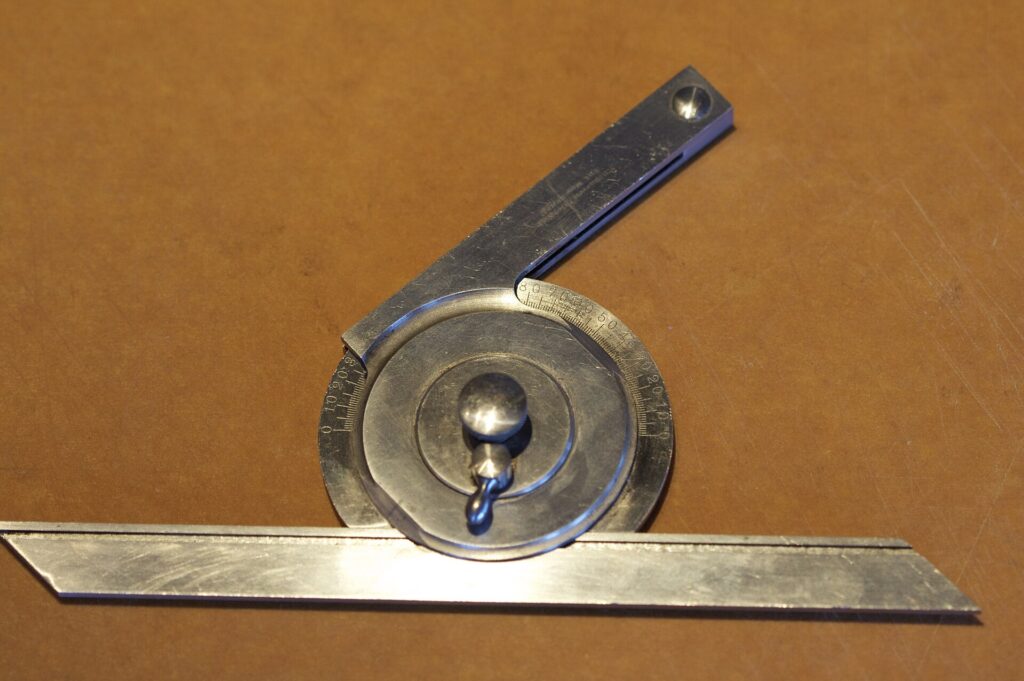
- The bend die. A round die with a groove that matches the tube’s OD. Its radius sets the bend’s centerline radius (CLR), the radius measured to the center of the tube.
- The clamp block. It locks the tube into the die’s groove, so the tube can’t slide.
- The follow or pressure block. It rides along the outside of the tube and keeps it seated in the groove as it bends.
When you pull the handle (or a hydraulic cylinder pushes), the die rotates. The tube is drawn around it. Because the tube is held and supported the whole way, it stays much rounder. The bend is smooth, the radius is fixed by the die, and a degree ring lets you repeat the same angle again and again.
How tight can it go?
Without an internal mandrel, there’s a practical limit. Pro-Tools puts the practical minimum CLR at about 3 × OD. Baileigh suggests 4 × OD as a starting estimate. Industrial machines with a mandrel go much tighter. The Fabricator mentions CLRs as small as about 0.7 times the OD in precision work.
Popular off-road dies sit in the garage sweet spot. Baileigh says the most common are 1.5″ and 1.75″ OD at about 5.5″ and 6.5″ CLR. That’s tight enough to look good and gentle enough for a manual bender.
A rotary-draw bender needs a separate die for each tube size and each CLR. Buy the die for your most common size first. Add more as projects need them. Our bend calculator shows how CLR affects arc length and cut length before you commit.
Why a pipe bender kinks tubing
This is the question that sends most people to this page. They bought a hydraulic pipe bender, tried it on tube, and got a flat, kinked mess. Here’s why that happens, in plain terms.
1. Thin wall has less to resist with
The easy way to compare walls is wall factor: OD divided by wall thickness. Higher numbers mean a thinner wall for its size, and more risk of wrinkling or collapse. Pro-Tools uses this same number, along with D of bend, to judge how hard a bend is.
Look back at the pipe table. Schedule 40 pipe from 1/2″ to 2″ has wall factors from about 8 to 15. Now look at common tube:
- 1.75″ × .120″ tube: wall factor about 14.6
- 1.75″ × .095″ tube: wall factor about 18.4
- 1.5″ × .065″ tube: wall factor about 23
- 2.5″ × .065″ tubing: wall factor about 38.5
Thicker-wall tube sits in the same range as pipe. Thinner tube is well beyond it. A ram bender is built around heavy pipe walls.
2. The force lands in one small spot
A ram pushes on the middle of the work through a short shoe. The inside of the bend gets crushed, and nothing holds the sides round. So the tube flattens first. Once it’s oval, the inside wall has nowhere to go and folds into a kink.
3. The shoes are sized for pipe, not tube
Ram shoes are made for pipe ODs. A 1.75″ tube sitting in a shoe made for 1-1/2″ pipe (1.900″ OD) has room to move. A loose fit means even less support.
A pipe bender doesn’t fail on tube because it’s weak. It fails because it pushes in the wrong place, with nothing holding the tube round.
More tonnage doesn’t fix this. A bigger ram just crushes the tube faster. The fix is a different method: rotary draw. For a deeper look at the numbers, see our guide to wall factor and D of bend.
Pipe bender vs tube bender, side by side (and what to buy)
Here’s the whole comparison in one place. Specs for named tools come from the maker’s published material, linked in this article.
| Feature | Ram (bottle-jack) pipe bender | Rotary-draw tube bender |
|---|---|---|
| How it bends | Ram pushes the middle; ends pivot on blocks | Tube clamped to a die and drawn around it |
| Made for | Schedule 40/80 pipe, sized by NPS | Round (and some square) tube, sized by true OD |
| Support during the bend | Little; inside unsupported | Die groove plus a follow or pressure block |
| Bend shape | Can flatten or kink thinner wall | Smooth, round and repeatable |
| Angle | Harbor Freight 12-ton: up to 90° | Many reach 180° with the right dies |
| Repeatability | Low; measure every bend | High; degree ring and fixed CLR |
| Cost | Budget | A bigger investment, and dies add up |
| Good projects | Gates, rails, farm and yard work in heavy pipe | Bumpers, sliders, racks, frames, roll bars, cages |
If your project uses structural tube, you want rotary draw. If it’s heavy pipe and looks don’t matter much, a ram bender can do it. Still not sure? Our Find My Bender quiz asks about your tube and projects, then explains which type fits.
A good first rotary-draw tube bender
If this guide has convinced you to go rotary draw, here’s a simple, widely available starting point. It’s based on published specs and retail listings, not hands-on testing. See how we evaluate equipment. For more picks, including hydraulic-ready options, read our best tube bender for a home garage roundup.
As an Amazon Associate I earn from qualifying purchases.
Woodward Fab WFB2 Tube & Pipe Bender
A manual rotary-draw frame for round and square tube up to 2″ with the matching die.
The WFB2 is a lever-operated rotary-draw bender with a degree ring. You bolt it down, fit a die and pull the handle. The tube is clamped and drawn around the die, so it stays round in a way a ram bender can’t match.
Who it’s for: someone who just learned that their bumper or kart frame needs a tube bender, and wants the simplest way in.
How to check it fits: measure your tube’s real OD and wall. Then buy the die for that exact OD. The 1.5″ and 1.75″ dies below are common off-road sizes.
- Type
- Manual rotary draw
- Tube size
- Round and square, up to 2″ with the matching die
- Max wall
- Retail listing for the 2″ die: .134″ mild steel
- Bend angle
- Die listings show about 110°–120°
- Sold separately
- Dies and stand
Why it fits this job
- True rotary-draw bending, so tube stays round
- Dies sized by real tube OD
- Simple design that’s easy to learn on
Know before you buy
- Manual only, so thick wall takes muscle
- Not a 180° bender
- Dies and stand add to the total
Add-ons: 1-1/2″ OD × 5″ CLR die · 1-3/4″ OD × 6″ CLR die · WFB2 stand. Affiliate links. See our disclosure.
Want room to grow? The Eastwood High Capacity bender starts manual and takes an air- or electric-hydraulic kit later. That helps if your projects grow into thicker wall or chromoly.
When a pipe bender is the right tool
None of this means ram benders are junk. They’re the right tool for the job they were built for. That job is heavy-wall pipe where speed and low cost matter more than a perfect radius.
Good jobs for a ram pipe bender
- ✅ Farm and yard work. Gate frames, livestock rails, hoop supports and simple brackets in Schedule 40 pipe.
- ✅ Plain handrails and posts in heavy pipe, where a gentle bend is all you need.
- ✅ One-off shop fixtures where looks don’t matter and the pipe is thick.
Rogue Fabrication describes ram-style benders as a quick, inexpensive option for tubular structures and fence posts, and says they suit smaller bend angles. That lines up with Harbor Freight’s own limit of 90°. Rogue Fab’s list also mentions exhaust systems. Harbor Freight’s manual rules out exhaust pipe for its 12-ton model, though, so always follow the manual for the bender you own.
Jobs that need a different tool
- ⚠️ Electrical conduit. Harbor Freight’s manual says its ram bender isn’t meant for conduit. Electricians use dedicated conduit hand benders sized for each trade size. See our conduit bending guide.
- ⚠️ Exhaust tubing. The same manual rules out exhaust pipe. Exhaust is thin-wall tube. Most garage builders buy pre-bent mandrel U-bends and J-bends, then cut and weld. Our guide to mandrel vs rotary-draw bending explains why.
- ⚠️ Structural tube. Bumpers, sliders, racks and frames want rotary draw.

Use the shoe that matches the pipe size, and set the pivot blocks where the manual says. Pump slowly and stop often to check the angle. Keep your face and hands out of line with the pipe in case it slips.
Safety: no pipe benders for roll cages
For most projects, the wrong bender just costs you tube and time. For a roll cage or roll bar, it can cost a lot more. This is the one place where the pipe-vs-tube choice is about safety.
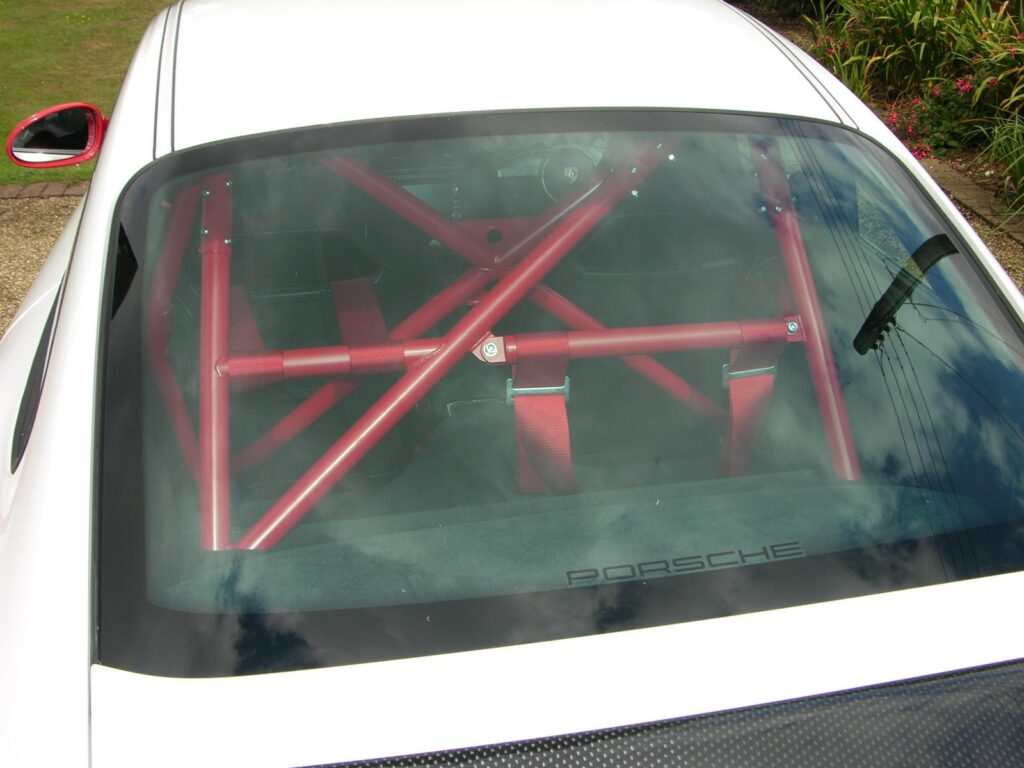
A cage is built to protect someone in a crash. Its tube size, wall, material and bend radius are set by the rulebook of the group you race with. Rulebooks describe cage material as tube, by OD and wall, and often by how it’s made. A flattened or kinked bend from a ram bender changes the shape the rule expects. It can also give an inspector an easy reason to fail the car.
Here’s an example of how specific the rules get. The SCCA Time Trials Safety Level 3 rules list seamless or DOM mild steel, 4130 or T45 alloy, or Docol R8 for cage structures, and say ERW tubing is not allowed. They also call for a bend radius of at least three times the tube diameter, measured at the centerline. Other groups, like NHRA, NASA and the FIA, publish their own rules. They don’t all say the same thing.
Use a rotary-draw bender with a die that meets your rulebook’s minimum radius. Benders Hub is not a tech inspector or an engineer. Read the current edition of your rulebook, and confirm your plan with your inspector before you buy tube.
Start with our roll cage specifications guide, which points to each sanctioning body’s official rules. Then read our general workshop safety notes.
Real-life lessons from the garage
These are composite stories. The same situations come up again and again in garage-fab forums and build threads. Each one shows a different side of the pipe bender vs tube bender question.
Someone needs a few curved top rails for a farm gate. They buy Schedule 40 pipe and borrow a neighbour’s 12-ton bottle-jack bender. The bends are gentle, under 90°, and the pipe is thick. Every bend comes out fine. The slight flattening on the inside doesn’t matter on a gate.
Lesson: a ram bender is a good tool when the work is heavy pipe and the bends are simple.
A builder wants a tube bumper and already owns a hydraulic pipe bender. They load a stick of 1.75″ structural tube. The first bend goes flat on the inside, then kinks. A second try with slower pumping kinks too. They end up buying a rotary-draw bender and a 1.75″ die, and wish they’d started there.
Lesson: more patience and more tonnage won’t fix a method mismatch. Tube wants rotary draw.
Someone buys a 1-1/2″ tube die, then picks up “1-1/2 inch” material at a local yard. It won’t go in the die. The yard sold them 1-1/2″ pipe, which measures 1.900″ outside.
Lesson: say “tube” and give the real OD and wall when you order. Measure with calipers before you cut.
Common mistakes (and how to fix them)
Most pipe-vs-tube trouble comes from a short list of mix-ups. Here they are, with the fix for each.
❌ Buying by the word on the box. “Pipe bender” and “tube bender” are used loosely.
✅ Fix: check how it bends. A ram pushing the middle means press bending. A turning die means rotary draw.
❌ Using a ram pipe bender on structural tube. The tube flattens and kinks.
✅ Fix: keep ram benders for heavy Schedule 40/80 pipe. Use a rotary-draw bender for bumpers, frames and cages.
❌ Mixing up NPS and OD. 1-1/2″ pipe is 1.900″ outside, so it won’t fit a 1-1/2″ tube die.
✅ Fix: measure the OD with calipers and buy dies for the real number.
❌ Thinking more tons will help. Extra force crushes thin wall faster.
✅ Fix: change the method, not the jack. Support the tube with a rotary-draw die.
❌ Bending exhaust or conduit in a ram bender. Harbor Freight’s manual says its bender isn’t meant for either.
✅ Fix: use pre-bent mandrel sections for exhaust and a conduit hand bender for conduit.
❌ Ignoring the rulebook on cage material. Some bodies ban certain tube types outright.
✅ Fix: read the current rules for your class and talk to your inspector before buying tube.
Pro tips for choosing and using either bender
These habits come up again and again among experienced fabricators. None of them cost much, and all of them save tube.
- 💡 Order by the right words. For tube, give OD × wall × material, like “1.75 × .120 DOM.” For pipe, give NPS and schedule, like “1-1/2 Schedule 40.”
- 💡 Keep a cheap caliper by the rack. One quick measurement tells you pipe from tube and saves a wasted trip.
- 💡 Check the wall factor. Divide OD by wall. If the number is high, you need more support during the bend, not more force.
- 💡 Match the die to the real OD. Some rotary-draw benders sell both tube dies and pipe dies. They’re not interchangeable.
- 💡 Test on scrap. Bend a short offcut first and measure the springback before you touch your project stick.
- 💡 Draw a reference line. A straight marker line along the tube shows if it twists in the die between bends.
- 💡 Plan with numbers. Our bend calculator works out arc length, tangent length and cut length from your CLR.
Ask yourself: “Would a flat spot or a kink matter on this part?” If the answer is yes, you want a rotary-draw tube bender. If it’s a farm gate in thick pipe, a ram bender is probably fine.
Pipe is a plumbing size. Tube is a real measurement. Get that straight and half the bender decision is already made.
New to the terms in this guide? Our glossary explains CLR, wall factor, DOM and the rest in plain English.
Frequently asked questions
What is the difference between a pipe bender and a tube bender?
A typical pipe bender is a hydraulic ram press that pushes the middle of thick Schedule 40 or 80 pipe. A typical tube bender is a rotary-draw machine that clamps tube to a round die and draws it around. The rotary-draw method supports the tube and keeps it round.
Can I bend tubing with a pipe bender?
Not well. Ram pipe benders leave the inside of the bend unsupported, so thinner tube tends to flatten and kink. Harbor Freight’s manual for its 12-ton bender says it isn’t intended for thin-wall pipe such as conduit or exhaust.
Can a tube bender bend pipe?
Some can, with pipe dies sized to the pipe’s real OD. The Pro-Tools 105HD, for example, lists NPS 1/4 to 1-1/2 pipe as well as round tube. Check the maker’s die list before you buy.
Why is 1-1/2″ pipe bigger than 1-1/2″ tube?
Pipe uses nominal sizes. A 1-1/2″ NPS pipe has a 1.900″ outside diameter. Tube is sold by its true OD, so 1-1/2″ tube measures 1.5″ outside.
Can I build a roll cage with a hydraulic pipe bender?
No. Use a rotary-draw bender and tube that meets your rulebook. SCCA Time Trials, for example, lists allowed tube types and a minimum bend radius. Confirm everything with your current rulebook and inspector.
Your pipe-or-tube checklist
Run through this list before you buy a bender, a die or a single stick of material.
- I’ve measured the real OD and wall with calipers
- I know whether my material is pipe (NPS + schedule) or tube (OD × wall)
- I’ve worked out the wall factor (OD ÷ wall)
- My project is structural tube, so I’m choosing rotary draw
- Or my project is heavy pipe with simple bends, so a ram bender is fine
- I’m not bending conduit or exhaust in a ram bender
- My die matches the real OD, not the nominal size
- My CLR is at least about 3 × OD without a mandrel
- For a cage or roll bar, I’ve read the current rulebook and talked to my inspector
- I’ve bought extra material for test bends
That’s the whole story. Pipe is a label, tube is a measurement, and the bender has to match both the material and the job. Get those right and your first bend is far more likely to come out round. 🔧
Not sure which bender type fits your project?
Answer a few quick questions and get a recommendation with the reasons behind it. Or plan your bend lengths with the calculator.
Keep reading
Best Tube Bender for a Home Garage (2026 Guide): What to Buy, What to Skip
Looking for the best tube bender for a home garage? Compare rotary-draw benders by capacity, dies and upgrade path, and avoid the…